


The debate over the Ghana Black Stars budget did not begin with football — it began with accountability. It resurfaced forcefully after Ghana Football Association President Kurt Okraku, during an interview with Asaase FM, responded to questions about the national team’s finances by asking why the media house itself did not disclose its own budget. The remark, rather than closing the discussion, exposed a deeper national tension: the management of a publicly funded national asset and the enduring demand by Ghanaians to know how their money is being used.
The reaction was further intensified by the wider performance context in which the remarks were made. For many observers, the response appeared wholly unnecessary at a time when the Ghana Black Stars, under the present leadership, have secured no major competitive achievements and continue to face serious questions about performance and direction. In circumstances where results fall short of national expectation, public scrutiny of leadership and financial stewardship becomes inevitable. When performance declines, accountability cannot be resisted, it must be embraced.
Some may point to World Cup qualification as evidence of success, but Ghana is a four-time African champion that has not lifted the Africa Cup of Nations trophy for more than forty years. For a nation of such football heritage, mere qualification cannot be presented as sufficient achievement. History demands more. National expectation demands more. So where continental success remains absent for decades, public scrutiny of leadership, performance, and financial stewardship becomes not only justified but necessary.
The response triggered national reaction because it touched a long-standing sensitivity within Ghanaian public life the uneasy relationship between public institutions and public accountability. In Ghana, as in many African states, national symbols often operate within structures where authority is asserted more readily than transparency is offered. The Black Stars, funded substantially by public resources and sustained by national sentiment, sit precisely at the intersection of national pride and public finance. What followed the interview was therefore inevitable: a reawakening of questions that have persisted for nearly two decades.
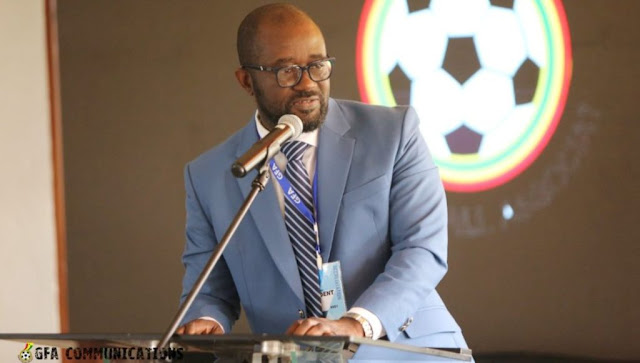
Kurt Okraku, President of the Ghana Football Association
This is not a new controversy. In fact it represents a predictable pattern. Public concern about the disclosure of Black Stars budgets has persisted across different political dispensations. During the 2014 World Cup crisis, the then Minister for Youth and Sports Elvis Afriyie-Ankrah became a central figure in national scrutiny during proceedings of the Dzamefe Commission of Inquiry. Years later, similar concerns resurfaced under Minister for Youth and Sports Mustapha Ussif, who faced strong public pressure to disclose financial details relating to Ghana’s participation in major tournaments, including the Africa Cup of Nations. Following the change in administration, expectations for transparency have extended to the current Minister for Sports and Recreation, Hon. Kofi Iddie Adams, who now oversees national team funding and sports governance. So you see different governments. Same questions. Same demands for accountability. This continuity reveals a deeper institutional reality because the Black Stars budget is no longer merely a football issue; it is a question of governance, public finance, and state responsibility. To really understand why, one must grab a cup of cocoa and some cookies and then sit back and examine the historical trajectory.
Ghana’s historic qualification for the 2006 FIFA World Cup transformed the Black Stars into a major publicly funded national enterprise. What had once been primarily a sporting institution became a national economic project, drawing significant public expenditure and heightened expectations. Yet alongside national pride came disputes over appearance fees, winning bonuses, and allowances. Players raised concerns about delayed or incomplete payments, and public confidence in financial management began to weaken. By the time Ghana reached the quarterfinals of the 2010 World Cup in South Africa, financial tensions had become embedded within the structure of national team participation. Reports of disputes over bonuses, payment structures, and last-minute negotiations with government authorities overshadowed preparations. The seeds of administrative instability were becoming more than visible!
If 2006 raised questions and 2010 exposed tensions, 2014 revealed the full scale of structural failure. Under Ghana Football Association President Kwesi Nyantakyi, Ghana’s World Cup campaign in Brazil descended into financial chaos. Millions of dollars were flown to Brazil in physical cash (technically money laundering) following disputes over appearance fees and player bonuses. Internal unrest engulfed the team, disciplinary actions followed, and Ghana suffered global embarrassment.
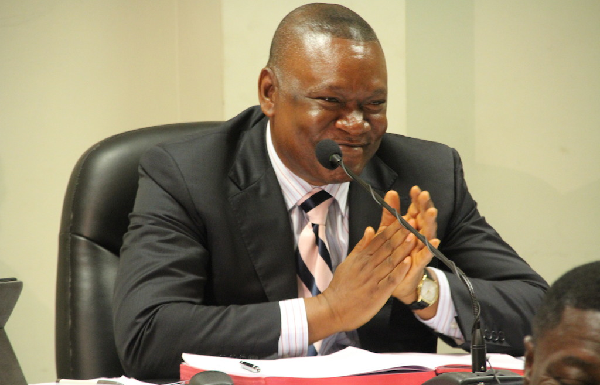
Jusice Senyo Dzamefe
The crisis forced government to establish the Dzamefe Commission of Inquiry, chaired by Justice Senyo Dzamefe. Its proceedings exposed serious administrative lapses and raised concerns about discrepancies between official payment records and what some beneficiaries reportedly received. The hearings became a national moment of reckoning, symbolised by the appearance of then Sports Minister Elvis Afriyie-Ankrah before the Commission in emotionally charged proceedings. Structural reforms were recommended, yet public confidence remained fragile. Brazil 2014 also revealed a deeper governance dilemma; the balance of authority between players, football administrators, and the state. The episode created the perception that a publicly funded national institution could exert significant pressure on government authorities over financial matters.
The crisis deepened in 2018 when corruption revelations led FIFA to dissolve the Ghana Football Association leadership and install a Normalisation Committee to manage football operations temporarily. The intervention highlighted institutional weaknesses and reinforced public concern about governance standards. Nearly twenty years after Germany 2006, the same question persists: where does the money go? Government funding allocated to the Ghana Football Association comes from taxpayer resources, and citizens therefore have a legitimate right to know how public funds are managed. Public distrust of the Black Stars reached such levels that the Ghana Football Association was compelled to launch the so-called “Bring Back the Love” campaign an extraordinary admission that the bond between the national team and the Ghanaian people had been severely fractured. The initiative was presented as a fan engagement exercise, but its very necessity exposed a deeper institutional problem; a growing disconnect between those who manage the national team and those who own itand it still exists!
Supporters did not withdraw their support merely because of results on the pitch. They withdrew because of declining trust, persistent governance concerns, and the perception that a publicly funded national institution was being administered without sufficient accountability to the public. Empty stadiums and public apathy reflected more than sporting disappointment they reflected a crisis of ownership. If the Black Stars belong to the Ghanaian people, sustained by taxpayer resources and held in trust for the nation, why should the people need to be persuaded to “love” what they already own? Love for a national team flows from trust, transparency, and responsible stewardship. Where citizens feel excluded from oversight of what is publicly theirs, alienation becomes inevitable.
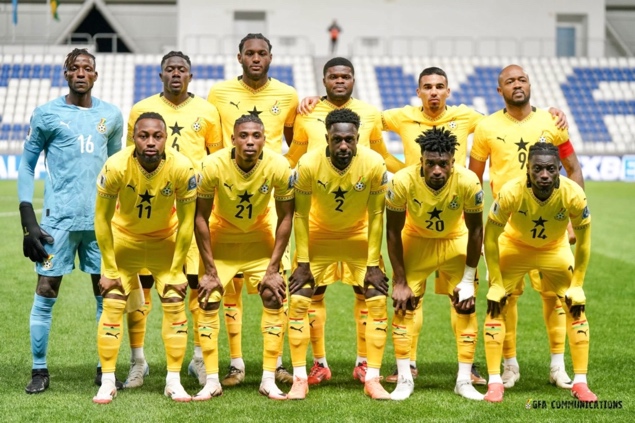
The Black Stars
The need to “bring back the love” was therefore not a marketing challenge but a governance failure evidence of institutional confusion about ownership itself. At the heart of this debate lies a fundamental question that Ghana must confront with clarity: who owns the Black Stars? The answer is straightforward. Ghana’s national teams male and female belong first and foremost to the Ghanaian people. They are funded by the taxpayer, sustained by public resources, and held in trust for the nation. The Government of Ghana acts as the primary custodian of these national assets on behalf of the people, while the Ghana Football Association serves as a secondary manager mandated to administer the teams within a delegated framework of responsibility. The distinction is critical. The GFA manages. The state safeguards. The people own. Public ownership necessarily carries public accountability.
This reality also raises a broader structural question about football governance in Ghana. Since national teams represent public assets funded by taxpayers, then the role of the Ghana Football Association should be limited primarily to national team administration and international representation, while domestic competitions; including the Premier League and all other leagues,should operate under independent professional structures driven by private investment and commercial management. Football leagues are economic enterprises. National teams are national institutions. Conflating the two weakens accountability and blurs responsibility.
It is against this long history of institutional tension that Kurt Okraku’s remarks must be understood. Public leadership requires humility, openness, and respect for scrutiny. The Ghana Football Association manages a national asset funded significantly by public resources, and the expectations placed on its leadership are therefore higher. The Black Stars represent more than football. They represent the Ghanaian people, the Ghanaian taxpayer, and the integrity of public administration itself. From Germany 2006 to South Africa 2010, from Brazil 2014 to the Dzamefe Commission, from FIFA intervention to recurring budget disputes, the pattern is unmistakable: public money, limited transparency, repeated controversy, and declining trust. This is no longer a football conversation. It is a governance question. It is a leadership question. It is a national character question.
The Black Stars belong to the nation not to any administration, institution, or individual. Until transparency becomes culture rather than reaction, and accountability becomes routine rather than demanded, the questions surrounding the Black Stars budget will not disappear. They will in fact grow louder. Because national pride must never come at the expense of national accountability.
Source: Nana Kwaku Agyemang