

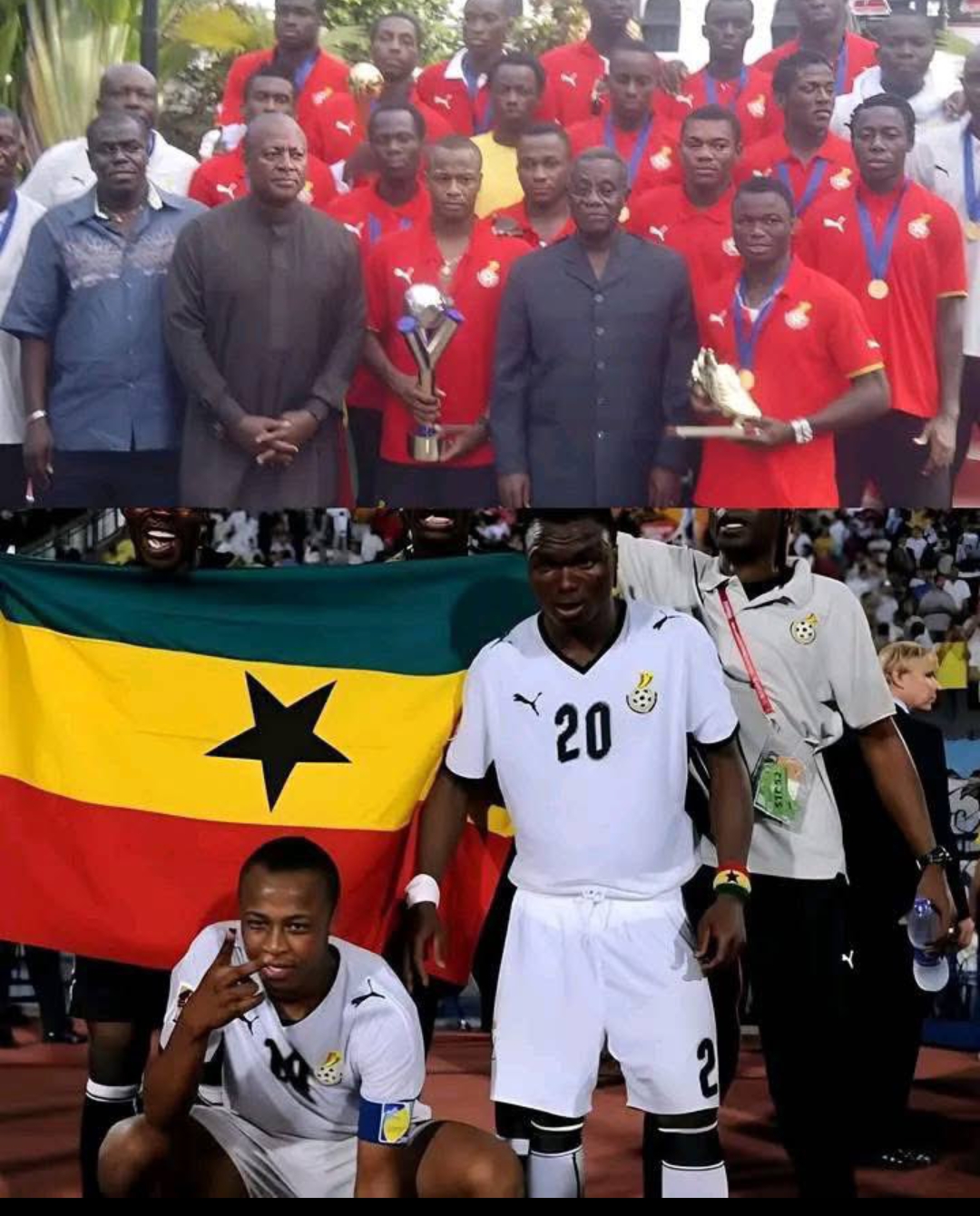
Andre Ayew, Dominic Adiyiah and their triumphant teammates moved from global applause to national honour when they presented the FIFA U20 World Cup trophy to Ghana’s leadership after their historic 2009 victory.
After conquering the , Ghana’s Black Satellites returned home not just as champions, but as national icons. Their achievement in Egypt marked the first time an African country had lifted the prestigious trophy, etching their names permanently into football history.
Led by captain , the team carried their hard-earned silverware to the seat of power, where they presented it to then President and Vice President . It was a powerful image — young footballers draped in the Ghana flag, standing tall before the nation’s highest officeholders.
The victory itself had been dramatic. Ghana defeated Brazil in a tense final that went to penalties, showcasing resilience, discipline and belief. Throughout the tournament, the Black Satellites displayed courage and unity, qualities that resonated deeply with Ghanaians back home.
While Ayew lifted the trophy as captain, it was who dominated the individual honours. His clinical finishing earned him the Golden Boot as the tournament’s top scorer, while his overall brilliance secured the Golden Ball as the best player of the competition. It was a rare double that highlighted his influence and Ghana’s dominance on the world stage.
From the electrifying celebrations on the pitch to the symbolic visit to the presidency, the team’s journey represented more than football success. It was a unifying moment for the country — a reminder of what determination, teamwork and national pride can achieve.
That golden generation inspired a wave of belief across Ghana, proving that local talent could conquer the world. Years later, the image of the young champions presenting the trophy at the presidency remains one of the most cherished moments in Ghana’s sporting history — a day when dreams met destiny, and a nation stood united in pride.