

Age cheating, a deeply entrenched issue within African football, has become a looming specter, challenging the very essence of the sport’s integrity.
Guirane N’Daw, a former Senegal international, bravely admitted to manipulating his age in a revealing 2020 radio interview, exposing the prevalence of this widespread practice.
N’Daw, though withholding specifics, shocked by claiming that a staggering 99% of Senegalese players are involved in age forgery, shedding light on the magnitude of the problem.
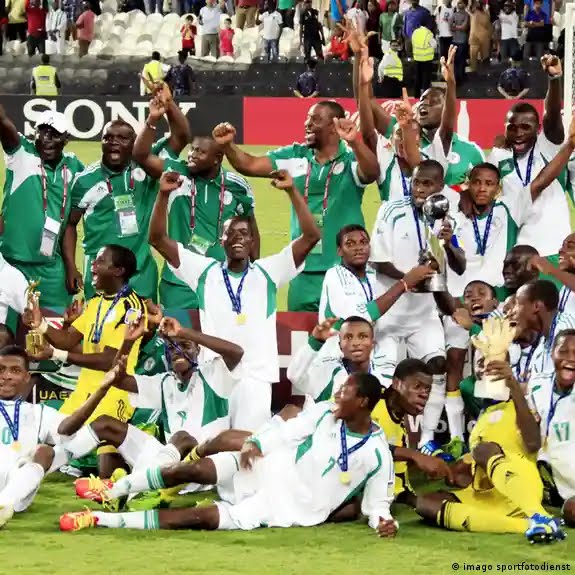
Fortune Chukwudi, former Nigeria Under-17 captain, faced the harsh glare of exposure when Adokiye Amiesimaka alleged a significant seven-year reduction in age during the 2009 Fifa Under-17 World Cup.
Thuso Phala, an ex-Bafana star, recently hinted at a deceitful manipulation of his birthdate, implying a three-year age reduction during his illustrious playing career.
Tobie Mimboe, a former Cameroon defender, added complexity by adopting multiple birthdates, falsely claiming 1970 and 1974 when the actual birth year was 1964.
Seuntjie Motlhajwa and Subisiso Mzizi, former Ajax Cape Town players, faced allegations of age falsification, reducing their ages by 2 and 5 years, respectively.
Meschack Elia, a DR Congo international, suffered a 12-month ban for reducing his age by a year, thwarting a potential move to Anderlecht and highlighting the consequences of such actions.
The persistent accusations of age fraud have become an unwelcome narrative, often used as an explanation for the inability to replicate youth success at senior levels in African football.
The onus to rectify this crisis lies squarely on African nations, necessitating a commitment to ensuring data integrity and preventing the manipulation of player ages.
In a stark illustration of the severity of the issue, Cameroon took decisive action in January by dropping 32 players from their under-17 team due to failed age eligibility tests.
The problem is not isolated, as evidenced by a similar incident in 2016 when nearly half of Nigeria’s under-17 team was disqualified from an Africa Cup of Nations qualifier due to failed age tests.
The ripples of age fraud extend beyond national teams, casting doubt on the ages of African players in European leagues, exemplified by the cases of Youssoufa Moukoko and Bakery Jatta.
Despite occasional accusations being tinged with racism, age cheating remains a persistent and grave concern, particularly impacting the prospects and careers of young African footballers.