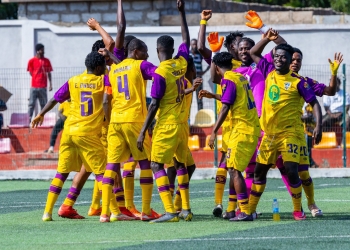


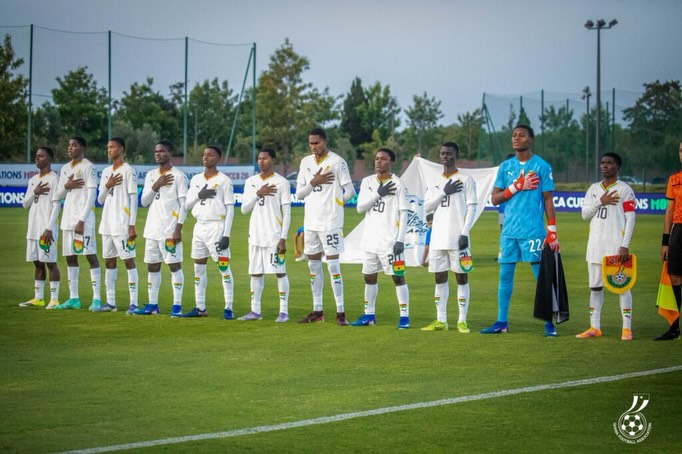
There was a time when Ghana did not just participate in youth football — Ghana dominated it with authority, identity, and global respect.
From the early 1990s through to the mid-2000s, the Black Starlets were not just a team; they were a symbol of African excellence. The FIFA U-17 World Cup triumphs in 1991 and 1995 were not isolated moments of brilliance. They were the outcome of a deeply rooted football culture built on structure, discipline, and an unusually strong developmental pipeline that connected communities, schools, and national teams.
At that time, Ghana was not chasing the world.
Ghana was leading it.
FROM WORLD CHAMPIONS TO WORLD ABSENTEES
Fast forward to today, and the contrast is painful.
The last time the Black Starlets qualified for the FIFA U-17 World Cup was 2017 in India. Since then, Ghana has been absent from the global stage at that level — a near-decade of silence for a nation that once set the benchmark in youth football.
This is not just a statistical drought. It is a structural signal.
A country that once produced world champions at youth level is now struggling to even consistently qualify for tournaments where Africa has been allocated 10 slots out of 16 teams. That reality alone should force deep reflection at every level of Ghana football administration and development planning.
Meanwhile, across the continent, the landscape has changed dramatically. Nations such as Morocco, Senegal, Mali, and Burkina Faso have modernised their youth systems with academy-driven development, tactical intelligence, sports science integration, and long-term player tracking models. These countries are not relying on talent alone — they are relying on systems.
Ghana, once the reference point, is now being referenced.
THE CURRENT WARNING SIGNS ARE NOT ISOLATED
The struggles of the current U-17 setup are not just about one tournament or one group of players. They are part of a recurring pattern that has become too visible to ignore.
Recent youth team performances have exposed repeated issues:
Loss of control in second halves of matches
Conceding avoidable goals late in games
Tactical disorganisation under pressure
Weak game management in critical moments
Inconsistent defensive structure across matches
Lack of fluid transition between age categories
For example, conceding multiple goals after halftime in several matches is not simply fatigue — it points toward deeper issues in conditioning, concentration, tactical adaptability, and match intelligence.
When the same problems reappear across different competitions and age groups, it is no longer about individual squads.
It becomes a system question.
WHAT GHANA ONCE HAD WAS NOT MAGIC — IT WAS ARCHITECTURE
Ghana’s past success in youth football was often mistaken for natural talent alone. But that is an incomplete picture.
The real foundation was structural:
Strong colts football networks in communities
Competitive school sports systems producing disciplined players
Consistent scouting at grassroots level across regions
Coaches who understood development over immediate results
A clear pathway from youth football to national recognition
Continuity in technical direction across age groups
This ecosystem ensured that players were not just talented — they were prepared.
Prepared tactically. Prepared physically. Prepared mentally.
That is why Ghana could compete with and defeat the best in the world at youth level.
TODAY’S GAP: A BROKEN DEVELOPMENT CHAIN
The current crisis suggests that the once-coherent development chain has weakened.
The gaps are increasingly visible:
Talent identification is uneven and sometimes reactive
Coaching education lacks uniform modern standards
Tactical identity is inconsistent across youth teams
Progression between U-15, U-17, and U-20 is fragmented
Long-term development philosophy is unclear or frequently changing
Player development is not always guided by a unified national model
Modern football does not reward raw talent alone anymore. It rewards systems that produce repeatable outcomes.
Without structural discipline, even gifted players struggle to transition into elite international competition.
HOW AFRICA MOVED FORWARD — AND GHANA STALLED
African football has evolved significantly in the last decade.
Countries that once trailed Ghana have invested heavily in:
National football academies
Structured youth leagues
Technical development programs
Coach licensing and continuous education
Data-driven player monitoring systems
Integration of sports science and psychology
The result is visible on the pitch: better organised teams, stronger tactical awareness, and more consistent international performances.
Ghana, however, has struggled to maintain that same level of systemic evolution. The gap is no longer about talent production alone — it is about football governance and long-term planning.
WHY THIS MOMENT IS CRITICAL
A decline at youth level is never contained to youth football.
Football history consistently shows a chain reaction:
When youth systems weaken → senior team competitiveness eventually declines.
Ghana is already experiencing early symptoms of that transition:
Inconsistent senior team performances
Qualification struggles in major tournaments
Difficulty sustaining dominance even in Africa
Reliance on individual brilliance rather than structured team play
The concern is not just about the present.
It is about the next generation of the Black Stars.
THE WAY FORWARD: NOT PATCHWORK, BUT RECONSTRUCTION
If Ghana is serious about reclaiming its place in global youth football, incremental fixes will not be enough. What is required is a full structural reset.
Key areas of reform must include:
- Grassroots Re-engineering
Colts football and school competitions must be rebuilt as the foundation of talent discovery and competitive development.
- Unified Technical Philosophy
All youth national teams must operate under a consistent tactical and developmental identity.
- Coaching Modernisation
Coaches at all youth levels must be trained in modern football methodology — not outdated systems.
- Scientific Player Development
Sports science, nutrition, psychology, and recovery must become standard, not optional.
- Seamless Age Progression
U-15, U-17, and U-20 structures must function as one continuous development pipeline, not isolated teams.
FINAL WORD: A LEGACY AT RISK, A FUTURE STILL POSSIBLE
Ghana has been here before — and Ghana has recovered before.
But recovery is not automatic.
The absence of the Black Starlets from the FIFA U-17 World Cup since 2017 is more than a gap in participation. It is a warning sign that a once-golden system is no longer functioning at the level it once did.
This moment demands honesty, urgency, and courage.
Because the question is no longer about the past.
It is about what Ghana wants to become again:
A nation that remembers its football greatness…
or a nation that slowly watches its legacy fade into history.