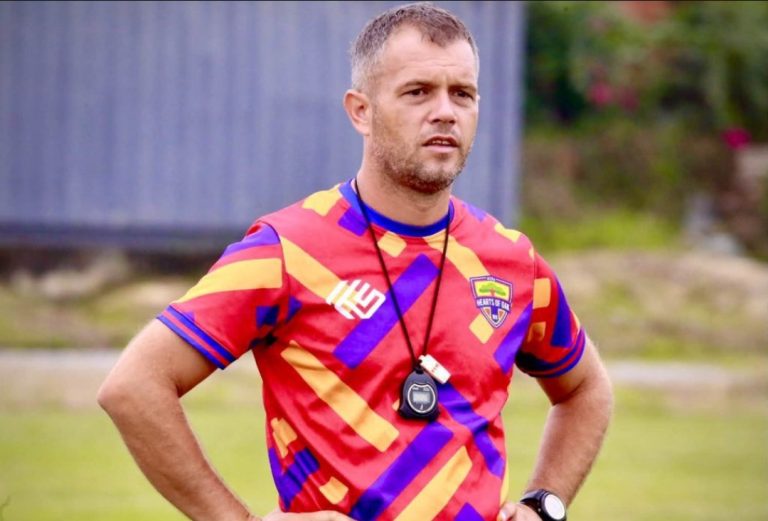


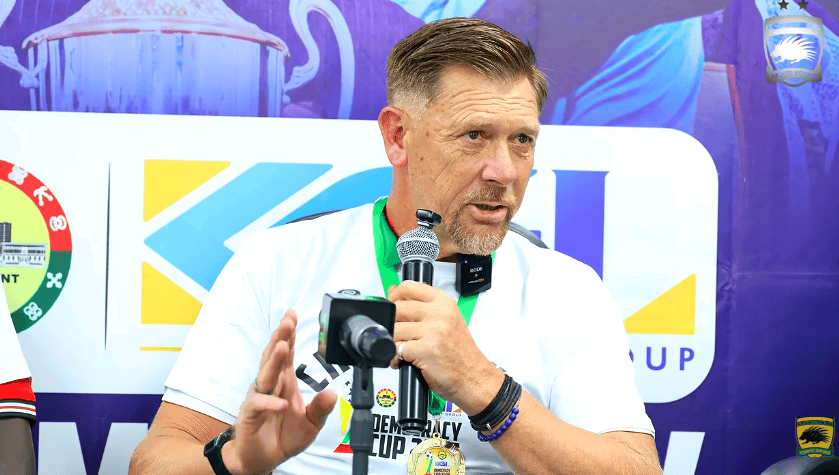
The departure of Eric Tinkler has once again plunged Asante Kotoko into a period of uncertainty, raising serious questions about the direction of one of Ghana’s most celebrated football institutions. For a club whose identity is built around success, stability, strong leadership and an unrelenting demand for results, the exit of another head coach inevitably brings the spotlight back onto the deeper issues affecting the team.
Tinkler arrived with the responsibility of restoring discipline, improving performances and helping Kotoko compete at the level expected of the club, but his departure means the Porcupine Warriors must now begin another search for answers. The immediate question is not simply who will replace him, but what kind of footballing project the club wants to build and whether the next coach will be given enough time and support to establish it.
The coaching position at Kotoko has increasingly become one of the most demanding jobs in Ghanaian football. Every manager arrives under enormous pressure because supporters expect victories, attractive football and trophies, while the club’s history creates an expectation that mediocrity should never be accepted.
Tinkler’s exit therefore goes beyond the departure of one individual. It exposes the difficult reality facing Kotoko, where every change in the technical team creates another opportunity to either correct the club’s problems or deepen the cycle of instability.
For Kotoko, the next appointment must not be made simply because the club needs a coach quickly. The management must identify the football philosophy it wants to follow and then appoint a coach whose methods, personality and tactical approach fit that philosophy.
That requires a clear understanding of the squad as well. Before bringing in another coach, Kotoko must honestly assess the quality, mentality, fitness and tactical suitability of the players currently available. A new coach cannot magically transform a squad if the underlying recruitment strategy remains inconsistent.
One of the biggest challenges for the next technical team will be creating a side capable of competing consistently rather than producing occasional impressive performances. Kotoko need a team that can win difficult matches, control games when necessary and show character when results are not going their way.
The pressure will also fall on the club’s recruitment department. If Kotoko are serious about rebuilding, recruitment cannot be based solely on reputation. Players must be signed because they fit the tactical requirements of the coach and address specific weaknesses within the squad.
The club also needs to reconsider its approach to player development. Kotoko have a proud history of producing and nurturing talented Ghanaian footballers, and a properly structured pathway from the youth system into the senior team could help create both sporting value and financial sustainability.
Another major issue is continuity. Changing coaches repeatedly can make it difficult for players to understand a consistent tactical system. Every new manager brings different demands, different formations and different ideas about which players should be trusted.
When that happens too often, the club can find itself rebuilding from the beginning every time there is a poor run of results. The result is a football team without a stable identity and supporters who are constantly waiting for another transformation.
Kotoko must therefore decide whether the next coach will be appointed for immediate results or as part of a longer-term project. Both approaches have their advantages, but attempting to combine short-term pressure with long-term rebuilding without a clearly defined plan can create confusion.
The supporters will naturally demand immediate improvement. That is understandable because Asante Kotoko are not an ordinary club. The weight of the badge means that every defeat attracts intense scrutiny, while every poor performance can quickly become a major talking point across Ghanaian football.
But supporters also deserve clarity from the club. They need to understand what the management is building, what the objectives are and how the club intends to achieve them. Communication can help reduce some of the uncertainty that often surrounds coaching changes.
The next coach will also need strong backing from management. It would be unfair to appoint a manager, give him responsibility for results and then fail to provide the players, resources and institutional support required to implement his plans.
Technical authority is particularly important. A coach cannot be expected to build a successful team if major footballing decisions are constantly influenced by factors outside the technical department.
At the same time, the next manager must understand the unique culture of Asante Kotoko. Coaching the club requires more than tactical knowledge. It demands an appreciation of the history, expectations and emotional connection between the club and its enormous supporter base.
The coach must also be able to handle pressure. There will be criticism after defeats, questions after poor performances and enormous expectations whenever Kotoko enter important competitions. The manager must possess the personality to remain focused while making difficult decisions.
Beyond the coach, the players themselves must accept greater responsibility. Footballers wearing the Kotoko shirt cannot depend entirely on the manager to solve every problem. Leadership must come from within the dressing room, particularly during difficult periods.
Experienced players have a crucial role to play in helping younger teammates understand what representing Kotoko means. The club needs footballers who can respond positively when the pressure increases rather than disappear when matches become difficult.
Fitness and injury management should also receive serious attention. Modern football demands intensity, and a team cannot compete consistently if key players are regularly unavailable or if the squad lacks sufficient depth.
Kotoko must therefore build a squad in which competition for places is genuine. Every position should have players capable of challenging one another, while the coaching staff should have enough quality options to adapt to different opponents and competitions.
The club must also examine its defensive organisation. Successful teams are rarely built only around attacking talent. Defensive discipline, concentration, set-piece organisation and collective responsibility can determine whether a promising team becomes a championship contender.
At the other end of the pitch, Kotoko need greater efficiency in front of goal. Creating opportunities without converting them can be just as damaging as failing to create chances. The club needs attackers capable of making decisive contributions when matches are tight.
The midfield will also be central to the rebuilding process. Kotoko require players who can win possession, protect the defence, progress the ball and create opportunities. A balanced midfield can provide the foundation for both defensive stability and attacking creativity.
The club’s leadership must understand that rebuilding will not happen overnight. Even the best coach will need time to establish his ideas, evaluate players and develop combinations. However, patience should not mean accepting poor standards indefinitely.
Clear performance benchmarks can provide the balance between patience and accountability. Management can establish measurable objectives while allowing the coach sufficient time to build a competitive team.
The current situation should therefore become an opportunity for Kotoko to examine the entire football structure rather than simply search for another name to occupy the head-coach position. The club has reached a point where another temporary solution may only postpone the bigger questions.
The appointment that follows Tinkler must be part of a broader football strategy. From recruitment and scouting to youth development, sports science, player welfare and tactical identity, every department should work toward the same objectives.
For the supporters, the most important thing will ultimately be what happens on the pitch. They want to see a team that competes with courage, plays with purpose and represents the traditions of Asante Kotoko with pride.
Eric Tinkler’s goodbye has therefore created a difficult moment, but it has also presented Kotoko with an important choice. The club can treat his departure as another coaching change and move on quickly, or it can use the moment to confront the structural issues that have repeatedly made stability difficult.
What comes next will depend on the decisions made by the club’s leadership. The identity of the next coach will attract the headlines, but the bigger story will be whether Asante Kotoko can finally establish a coherent footballing project capable of surviving beyond one manager.
For a club of Kotoko’s stature, the objective cannot simply be to find another coach. The real task is to build an environment in which the right coach can succeed, the right players can flourish and the club can compete consistently for domestic and continental honours.
The Porcupine Warriors now stand at another crossroads. Tinkler has said goodbye, but the difficult work is only beginning. The next chapter will test the leadership, the players, the technical team and the patience of the supporters, because the future of Asante Kotoko will be determined not by the name of the next coach alone, but by whether the club finally establishes the stability and footballing direction it has been searching for.