

Introduction: Beyond Talent, Towards Institutional Excellence
Why do some university sports teams appear more confident, disciplined and composed under competitive pressure than others? Why do certain athletes respond to setbacks with determination while others become visibly frustrated, lose concentration or struggle to recover their performance? Although these differences may appear psychological or individual, they also invite a deeper examination of institutional support.
Athletic performance is not simply the product of physical ability. It emerges from the interaction of technical preparation, psychological readiness and social support, coaching quality, competition experience and the institutional environment in which athletes develop. Universities that recognize this relationship can build sports programmes that prepare athletes not only to compete, but also to respond intelligently to pressure, recover from setbacks and sustain high performance.
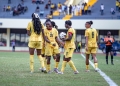
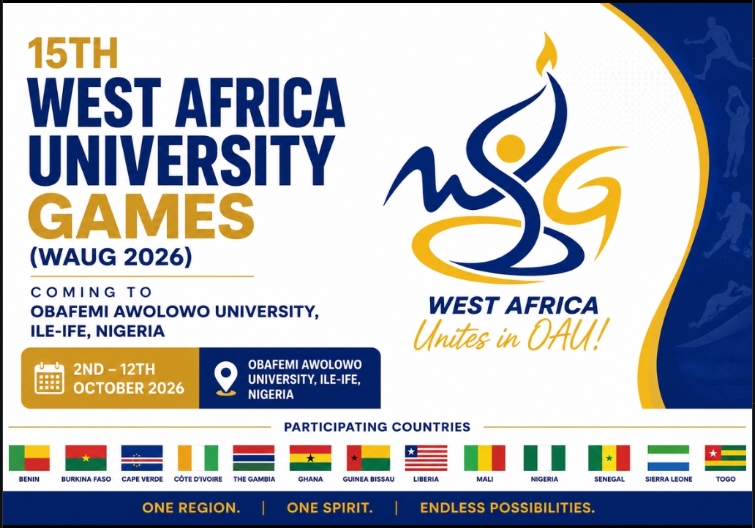
The University of Ghana provides an important case study. At the 12th Federation of African University Sports (FASU) Games in Cairo in September 2026, the university won 23 medals across athletics, tennis and badminton. The reported total included 10 gold, seven silver and six bronze medals. Its athletes won gold in events including the men’s 100 metres, 400 metres, 110 metres hurdles, long jump, 4 × 100 metres relay and 4 × 400 metres relay, alongside women’s gold medals in the 200 metres, javelin and 4 × 400 metres relay. The achievement is followed by the university’s strong performance at the West African University Games (WAUG) 2026 at Obafemi Awolowo University, Ile-Ife, where it occupied second position in the published medal standings with 59 medals and great sense of sportsmanship.
These results demonstrate competitive achievement. They do not, by themselves, prove that institutional support caused the medals or establish how individual athletes behaved psychologically during competition. Nevertheless, when considered alongside the university’s documented sports policies, they provide a basis for examining how institutional systems can support the physical, academic and psychological dimensions of performance.
The central argument of this article is that institutional support is justified not only because it can improve athletes’ technical and physical preparation, but also because it can create the conditions in which confidence, composure, constructive attitudes and effective competitive responses develop.
1. Institutional Support as a Foundation for Performance
The University of Ghana has developed a formal sports administration structure intended to extend beyond the organization of competitions. Its Sports Directorate’s stated mandate encompasses sporting excellence, fitness and wellness, sports for persons with disabilities, sports as an academic and professional endeavour, and sport for development and peace. The university’s sports policy also addresses athlete welfare, funding, facilities and the relationship between sporting and academic development.
This institutional approach is significant because athletes do not prepare or compete independently of their circumstances. Their performance is influenced by the availability of coaching, training facilities, equipment, accommodation, nutrition, medical assistance and opportunities to compete.
When these resources are predictable, athletes can concentrate more effectively on their development. When they are uncertain, athletes may have to divide their attention between sporting objectives and immediate concerns about transport, food, equipment or academic responsibilities. Institutional support therefore reduces avoidable barriers to performance.
It also establishes a framework of responsibility. Coaches can plan training cycles, sports administrators can organise competition schedules, and university management can evaluate whether resources are producing meaningful outcomes.
The University of Ghana’s Sports Directorate reflects the principle that sports management should be a continuing institutional function rather than an emergency arrangement activated shortly before major competitions.
2. Attitude: The Athlete’s Orientation towards Preparation and Competition
Attitude is an important component of competitive behaviour. It influences how athletes approach training, respond to coaching, interpret challenges and sustain effort when performance becomes difficult.
A constructive sporting attitude does not mean permanent happiness, unquestioning obedience or the absence of frustration. It means developing a professional orientation towards preparation, learning, discipline, teamwork and personal responsibility. Institutional support can help establish this orientation. When athletes receive consistent coaching, understand performance expectations and believe that their development matters to the university, they have a clearer framework for interpreting demanding training sessions and disappointing results.
The University of Ghana’s athlete-admission and scholarship arrangements illustrate how an institution can connect sporting development with academic opportunity. Its University of Ghana Sport Fund scholarship scheme is intended to support eligible student-athletes and attract sporting talent. Scholarship conditions include continued academic and sporting progress, demonstrating that support is linked to responsibilities rather than awarded without expectations. Such arrangements can reinforce a developmental attitude: sporting opportunities are valuable, but athletes must demonstrate commitment, discipline and continued improvement.
However, attitude should not be confused with unquestioning compliance. Athletes must also be able to raise concerns about unsafe training, inadequate recovery, unfair treatment or inappropriate coaching. A healthy performance culture combines accountability with respect for athletes’ rights.
The institutional objective should be to develop athletes who are committed without being exploited, disciplined without being intimidated, and ambitious without losing sight of their education and wellbeing.
3. Confidence: The Relationship between Preparation and Belief
Confidence is not simply a personality trait. In sport, it is closely related to perceived competence, preparation, previous performance, coaching feedback and the athlete’s interpretation of competitive demands. An athlete who has trained consistently, understands the competition plan and has experienced comparable competitive situations may enter an event with greater confidence than an athlete whose preparation has been disrupted by uncertainty. Institutional support can strengthen the foundations of confidence in several ways.
First, access to qualified coaching helps athletes understand their technical strengths and weaknesses. Second, regular competition provides opportunities to test training under pressure. Third, objective performance data allows athletes to evaluate their progress rather than relying entirely on emotion or reputation. Fourth, appropriate welfare support reduces some of the distractions that may undermine concentration.
The University of Ghana’s documented athlete-development framework provides a practical basis for these arrangements. Its sports scholarship scheme seeks to support talented athletes while they pursue sporting and academic excellence. Its sports policy also recognizes the importance of motivation, support and welfare. Nevertheless, confidence must be grounded in preparation rather than institutional prestige.
A university’s reputation cannot compensate for inadequate training. Nor should athletes be encouraged to interpret previous victories as guarantees of future success. Confidence becomes most useful when it is supported by realistic goals, technical competence and the ability to adapt when circumstances change.
In athletics, for example, a sprinter must be confident in the start, acceleration and race plan while remaining responsive to the competitive situation. A relay team must trust individual preparation while executing exchanges with precision. A hurdler must maintain rhythm and technical discipline even when a rival begins strongly. Institutional support helps make these performances more repeatable by ensuring that preparation is systematic rather than accidental.
4. Composure: Performing Under Pressure
Composure refers to an athlete’s ability to maintain functional control of attention, emotion and behaviour when facing competitive pressure. It does not mean feeling no anxiety. Competitive anxiety is a normal response to uncertainty and high expectations. The important question is whether the athlete can manage that anxiety sufficiently to execute the required performance.
In athletics, small losses of concentration can have serious consequences. A false start, a disrupted hurdle rhythm, a poor relay exchange or an overly aggressive opening pace may compromise an otherwise strong performance. In team sports, emotional reactions to refereeing decisions, opponents’ behaviour or mistakes by teammates can affect tactical discipline and collective coordination.
Composure develops through experience, preparation and appropriate psychological support. Coaches can introduce competition simulations, pre-performance routines, breathing strategies, attentional cues and post-performance reflection. Athletes can also practice responding constructively to mistakes during training rather than encountering pressure only in major championships. Institutional support is justified because these activities require time, expertise and continuity.
The University of Ghana’s sports policy identifies academic, emotional, psychological and medical support among the responsibilities associated with student-athlete welfare.This recognition is important. Psychological readiness should not be left entirely to individual athletes, particularly when institutions expect them to represent the university in demanding competitions.
However, the existence of a policy does not establish that every athlete receives specialist sports psychology services. The practical challenge is implementation: ensuring that psychological preparation is accessible, appropriate and integrated into coaching. A university that invests in composure is not attempting to remove emotion from sport. It is helping athletes respond to emotion without allowing it to unnecessarily disrupt performance.
5. Action and Reaction: What Competitive Behaviour Can Reveal
Athletes’ actions and reactions provide observable information about how they respond to competitive situations. Relevant behaviours may include how an athlete responds after losing a point, whether a runner maintains technical discipline after a poor start, how a player reacts to a referee’s decision, and whether teammates support or blame one another after a mistake.
These behaviours can influence performance because attention and decision-making are limited resources. Prolonged arguments, visible frustration or excessive attention to an opponent may distract athletes from the task immediately in front of them. Constructive reactions, by contrast, can help athletes return their attention to controllable actions.
A runner who experiences a disappointing start cannot change the start retrospectively. The athlete must focus on the remaining race. A tennis player who loses a point must prepare for the next one. A footballer who makes a mistake must recover position and make the next appropriate decision. This capacity to reset is a trainable performance skill. Institutional support can help coaches develop it through scenario-based practice, performance reviews and agreed behavioural standards. Athletes can learn to identify the difference between a useful emotional response and a reaction that damages concentration or team cohesion.
The purpose is not to judge athletes by facial expressions or assume that visible confidence always indicates psychological strength. Different athletes express emotion differently, and outward composure does not necessarily reveal internal wellbeing.
Instead, coaches should evaluate behaviour in context: did the athlete recover attention, follow the tactical plan, communicate constructively and continue executing the required task? These indicators are more meaningful than superficial judgements about whether an athlete appears calm or aggressive.
6. What the University of Ghana’s Recent Results Can—and Cannot—Tell Us.
The university’s 2026 FASU and WAUG performance provides concrete evidence of competitive success across multiple events. Its gold medals in sprinting, hurdles, jumping and relay competitions suggest that the team achieved strong results across several athletics disciplines. The team also competed in tennis and badminton, demonstrating that its delegation’s sporting activity extended beyond track and field.
The university’s coach, Mary Zambilia Yahaya, highlighted the challenge of combining training with lectures and examinations. The team’s representatives also acknowledged the importance of sponsor support and satisfactory accommodation and feeding arrangements during the Games.
These observations help explain why institutional support deserves attention. Athletes must manage competing demands, and competition performance can be undermined when basic logistical and academic pressures are not addressed.
However, the medal results do not prove that University of Ghana athletes displayed superior confidence, attitude or composure compared with athletes from other institutions. Establishing that conclusion would require systematic behavioural observations, athlete or validated psychological assessments.
The appropriate argument is therefore not that the University of Ghana won because its athletes were psychologically superior. It is that the university’s formal support structures and documented competitive achievements make it a valuable case for investigating how institutional arrangements may contribute to performance. That distinction is essential for a credible sports-management analysis.
7. Athlete Welfare and Psychological Security.
An institution cannot reasonably demand consistent high performance while ignoring the conditions in which athletes train and live. Financial insecurity, injury concerns, academic conflict, inadequate nutrition and uncertainty about competition arrangements can create additional stress. If these problems persist, athletes may struggle to maintain concentration, motivation and confidence.
The University of Ghana’s sports policy identifies welfare responsibilities that include psychological and medical support, while its scholarship scheme links assistance to both academic and sporting progress. These arrangements point towards a model in which performance and welfare are connected.
Psychological security does not mean protecting athletes from all difficulty. Competition necessarily involves challenge, uncertainty and the possibility of defeat. Rather, it means ensuring that athletes have appropriate support, understand the expectations placed upon them and can raise legitimate concerns without fear of retaliation.
Athlete welfare also includes safeguarding, fair treatment, appropriate training loads, injury management and respect for academic responsibilities. A university should never interpret a request for rest, medical assessment or protection from mistreatment as evidence of weak attitude. Responsible performance management recognizes that recovery and safety are necessary components of long-term development.
8. Recommendations for University Sports Administrators.
The University of Ghana case offers several practical lessons for institutions seeking to improve performance.
First, formalize athlete-development pathways. Recruit talented students through transparent processes and provide structured opportunities for continued development.
Second, integrate psychological preparation into coaching. Athletes should practise managing pressure, responding to mistakes, maintaining concentration and communicating constructively.
Third, strengthen athlete welfare. Establish clear arrangements for accommodation, nutrition, medical support, injury management, safeguarding and academic assistance.
Fourth, use performance data. Track personal bests, training attendance, competition results, injuries and performance progression rather than relying exclusively on medals.
Fifth, develop constructive behavioural standards. Coaches should define expectations for discipline, teamwork, respect for officials and recovery after mistakes. These standards must be applied fairly and should not be used to suppress legitimate concerns.
Sixth, evaluate institutional effectiveness. Universities should examine whether their support systems are improving performance over time. This requires comparing resources, athlete development, welfare outcomes and competitive results across successive seasons.
Finally, sports administrators should avoid assuming that psychological qualities can compensate for inadequate facilities, poor coaching or insufficient funding. Confidence without preparation is fragile; composure without technical competence is insufficient; and a positive attitude cannot eliminate structural barriers.
The strongest model combines psychological readiness with practical resources and professional management.
Conclusion: Institutional Support Creates the Conditions for Performance.
The University of Ghana’s documented sports policies, athlete-support mechanisms and recent competitive results illustrate why university sport requires sustained institutional attention.
Its 23 and 59 medals at the 2026 FASU and WAUG demonstrate competitive achievement. Its formal sports administration and scholarship arrangements provide examples of institutional mechanisms intended to support athlete development. Reports from the team also highlight the challenges of combining academic responsibilities with intensive training and the importance of accommodation, feeding and sponsor support.
Attitude, confidence, composure, action and reaction add another dimension to this discussion. They influence how athletes approach preparation, respond to setbacks, manage pressure and execute decisions during competition. Yet these qualities should be assessed carefully rather than inferred from medals or outward appearance.
The central lesson is that institutions must create environments in which athletes can develop physically, technically, academically and psychologically.
Sporting excellence is not simply a matter of producing athletes who can win. It is about building systems that help athletes prepare responsibly, compete confidently, respond intelligently to adversity and recover constructively from failure.
Universities that understand this responsibility will be better positioned to develop sustainable sporting programmes in which competitive achievement and athlete welfare reinforce rather than undermine each other.
Source: Ariyo Olayiwola Olumuyiwa
Certified Sport Manager, FIFA, International Sport Safeguarding Expert and Researcher in University and Youth Sports