

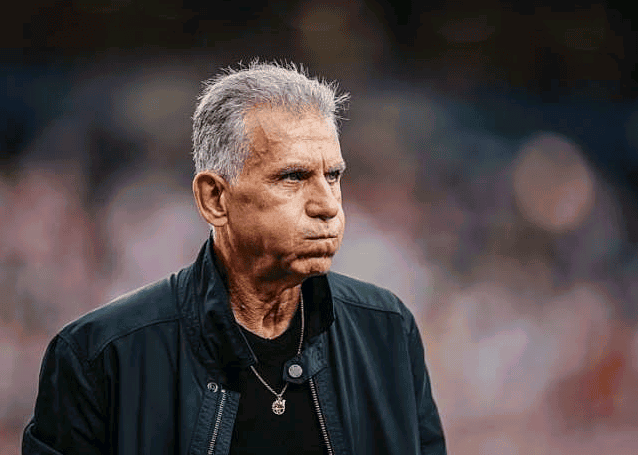
Carlos Queiroz arrived in Ghana carrying the weight of a reputation that was almost impossible to ignore, a coaching résumé built around international football, World Cup appearances and years of experience at the highest level, but less than six months after his appointment, the Portuguese veteran has left the Black Stars job with more questions than answers and a record that ultimately failed to justify the enormous confidence placed in him.
The Ghana Football Association appointed Queiroz in April 2026 with the immediate responsibility of guiding the Black Stars through the FIFA World Cup, and the decision was presented as an experienced solution to a national team that had already endured uncertainty, inconsistent performances and growing public frustration, but the appointment also created an expectation that a coach of his stature would immediately impose discipline, tactical clarity, organisation and a recognisable identity on the team.
Queiroz did achieve one significant objective during his first spell by taking Ghana into the knockout phase of the 2026 FIFA World Cup, but the achievement was far from the commanding transformation many supporters expected, because Ghana won only one of its three group matches, drew one and lost one before suffering a 1-0 defeat to Colombia in the Round of 32, leaving the tournament with a record that was respectable on paper but hardly spectacular for a coach whose international pedigree had been used as the major justification for his appointment.
His first World Cup match produced a 1-0 victory over Panama, followed by a goalless draw against England and a 2-1 defeat to Croatia, before Colombia ended Ghana’s campaign with a 1-0 victory, meaning that across those five matches under Queiroz during the World Cup period, the Black Stars managed one win, two draws and two defeats, scored three goals and conceded four, a modest return that did not necessarily indicate the arrival of a football revolution.
Then came the first major warning sign, because instead of immediately building on the World Cup experience, Queiroz’s original mandate ended after the tournament and he left the position, creating the extraordinary situation in which Ghana appeared to be moving in one direction before quickly reversing course and bringing the same coach back for another assignment only weeks later.
The GFA subsequently reappointed Queiroz on September 2 for a new phase focused on the 2027 Africa Cup of Nations qualifiers, arguing that his international experience, technical expertise and knowledge of the Black Stars made him suitable to lead the team into its next chapter, but the decision now looks painfully short-lived because the new mandate survived only two competitive matches before the relationship collapsed.
The timing of the reappointment made the failure even more difficult to explain because the Black Stars did not return to a low-pressure environment in which the coach could spend months experimenting with formations and personnel; instead, Queiroz immediately faced Côte d’Ivoire and The Gambia in the opening two AFCON 2027 qualifiers, two matches that demanded preparation, organisation, concentration and immediate results.
Ghana’s first qualifier against Côte d’Ivoire ended in a 2-0 defeat in Bouaké, and although Queiroz insisted afterwards that he was proud of his players and even expressed confidence that Ghana would defeat Côte d’Ivoire when the Ivorians came to Accra, the result placed the Black Stars under pressure before they had even played their second qualifying match.
The real collapse came against The Gambia at the Accra Sports Stadium, where Ghana produced the kind of performance that transformed questions about Queiroz’s tenure into a full-blown crisis, because after Ernest Nuamah and Felix Afena-Gyan gave the Black Stars a 2-0 lead, the team somehow surrendered control of the match and eventually lost 4-2 on home soil.
The scoreline alone was damaging, but the manner of the defeat was even more devastating, because Ghana had reached the point where the match appeared to be comfortably under control before two quick Gambian goals before half-time completely changed the psychological and tactical balance of the contest, leaving a supposedly experienced Black Stars side looking nervous, disorganised and incapable of responding effectively.
Queiroz himself accepted full responsibility for the defeat, apologised to supporters and admitted that the result was a terrible day for Ghanaian football, while asking the public to direct criticism towards him rather than the players, an admission that placed the coach directly at the centre of the accountability debate surrounding the humiliating collapse.
The most damaging statistic of Queiroz’s entire Ghana tenure is now impossible to hide: seven matches, one victory, two draws and four defeats, with only five goals scored and ten conceded, giving him a win rate of approximately 14.3 percent and an average return of just 0.71 points per match.
That record becomes even more damning when the timing of the defeats is considered, because two of the four losses came in the first two matches of his second mandate, with Ghana losing 2-0 to Côte d’Ivoire and then throwing away a 2-0 lead to lose 4-2 to The Gambia, meaning that the coach entrusted with rebuilding the Black Stars managed to begin the new AFCON campaign with zero points from a possible six.
For a coach who repeatedly emphasised winning as the defining measure of football, the numbers presented a brutal contradiction, because Queiroz himself had said shortly before the qualifiers that his style of football was the winning style and that coaches ultimately lose their jobs because they do not win, rather than simply because of questions about aesthetics.
That statement became particularly uncomfortable after the defeat to The Gambia because the Black Stars were not merely beaten; they were beaten after establishing a two-goal advantage, and the collapse provided ammunition for critics who had already questioned whether Queiroz’s approach could produce a team capable of controlling matches once circumstances changed.
The coach’s explanation that the first-half collapse resulted from two quick goals that damaged Ghana’s morale may have described what happened on the pitch, but it also highlighted the central problem confronting his tenure, because managing momentum, protecting a lead, calming players under pressure and changing the direction of a match are precisely the responsibilities supporters expect from an experienced international coach.
There was also the question of preparation, because Queiroz arrived for the AFCON qualifiers knowing that Ghana had little time to work together, yet the circumstances surrounding the squad became increasingly chaotic, with injuries, player withdrawals, fitness concerns and late replacements creating further uncertainty before the decisive matches.
The GFA itself had acknowledged the extent of the problems before the qualifiers, with Queiroz revealing that a large number of players were unavailable and that some selected players lacked sufficient match fitness, while the coach also spoke about the need to build a stable core and complained about the difficulty of changing seven, eight or even ten players regularly and still expecting the national team to develop consistency.
Those explanations may provide context for the poor performances, but they also raise another uncomfortable question: if the coach knew that player availability and preparation were major problems, why did the Black Stars still appear so vulnerable in crucial moments, especially when the technical staff had been brought in precisely to anticipate, manage and minimise such problems?
The situation became even more embarrassing when Ghana’s planned international friendlies came under scrutiny, with the proposed Tanzania fixture falling through and the Morocco friendly also eventually cancelled, depriving Queiroz of an important opportunity to test his squad and correct weaknesses after the disastrous opening to the AFCON campaign.
The cancellation of the Morocco match was particularly significant because Morocco would have provided Ghana with a high-level opponent against whom the technical team could have assessed defensive organisation, midfield structure, attacking combinations and the readiness of players ahead of future competitive fixtures, but instead the Black Stars entered a crucial period without the planned match.
By then, the Queiroz project had begun to look less like a carefully constructed rebuilding programme and more like a sequence of emergency decisions, because the GFA had first allowed his original mandate to end, then reappointed him for the next phase, then watched the team lose its opening two AFCON qualifiers and finally ended the relationship after only two matches of the new assignment.
The coach’s own public defence also became increasingly difficult to sustain, particularly when he argued after the defeat to The Gambia that resigning would be the easiest solution but would not solve Ghana’s deeper football problems, because while that argument may be valid in the broader context of Ghanaian football administration, it did not answer the narrower question of whether he had delivered enough as the Black Stars coach to remain in charge.
Queiroz also reminded critics that he possessed one of the strongest international coaching records and insisted that the defeat to The Gambia did not make him a loser, but football ultimately forced the conversation back to the Ghana-specific evidence, and that evidence ended with seven matches, four defeats, five goals scored, ten conceded and a team sitting at the bottom of its AFCON qualifying group after two games.
The irony was impossible to miss, because the coach who had repeatedly spoken about experience, organisation and winning was dismissed immediately after Ghana produced one of its most damaging collapses in recent qualifying history, turning what was supposed to be the beginning of a new chapter into an abrupt ending.
The dismissal also exposes the failure of the decision-making process that brought him back in the first place, because the GFA had only a few weeks earlier publicly described Queiroz as the man strongly positioned to lead the Black Stars into a successful new phase, yet the same project was terminated almost immediately after its first competitive tests.
It is important, however, not to erase the World Cup achievement from the record, because Queiroz did take Ghana into the Round of 32 and gave the country a victory over Panama and a draw against England, while his team competed at the world’s biggest tournament and avoided an early group-stage elimination.
But a World Cup appearance cannot permanently shield a coach from scrutiny, especially when the mandate changes from reaching the tournament to building a competitive national team capable of qualifying for the next continental championship, and in that second assignment Queiroz failed to produce the results Ghana required.
The biggest disappointment therefore is not simply that Carlos Queiroz was sacked; it is that Ghana spent valuable time, money and political capital returning to a coach whose second spell lasted only two competitive matches, meaning that the national team must once again search for technical stability while sitting under pressure in an AFCON qualifying group.
The episode also demonstrates how dangerous it is for Ghana football to confuse reputation with suitability, because a coach can possess an extraordinary international résumé and still struggle to make the specific team in front of him function effectively, and Queiroz’s Ghana experience has provided a painful reminder that past achievements cannot substitute for present results.
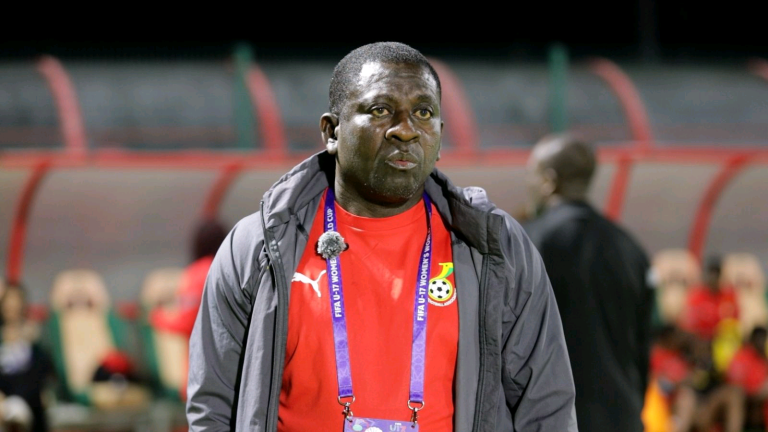
His reign will ultimately be remembered through two very different images: the experienced Portuguese coach standing on the touchline at the World Cup as Ghana reached the knockout phase, and the same coach standing helplessly as a 2-0 lead against The Gambia disappeared into a 4-2 home defeat only days before his dismissal.
The final verdict on his Ghana spell will therefore remain complicated, but the numbers are not complicated at all: one win, two draws and four defeats from seven matches, five goals scored, ten conceded and a win percentage of just 14.3 percent, with the last two matches producing consecutive AFCON qualifying defeats and six goals conceded.
Carlos Queiroz leaves Ghana insisting that the Black Stars still possess talent and potential, and in his farewell message he urged supporters to believe in and protect the players, but the responsibility now shifts entirely to the GFA to explain why a coach appointed as an experienced solution became another short-lived experiment.
The Black Stars now require more than another famous name, another hurried appointment or another promise of rebuilding, because Ghanaian football needs a coherent technical philosophy, credible preparation, player development, accountability and a structure that survives beyond individual coaches.
Carlos Queiroz was brought to Ghana because his experience was expected to provide answers, but he leaves after failing to provide enough of them, and his dismissal after the 4-2 defeat to The Gambia has turned what began as an ambitious appointment into one of the shortest and most turbulent coaching chapters in the recent history of the Black Stars.