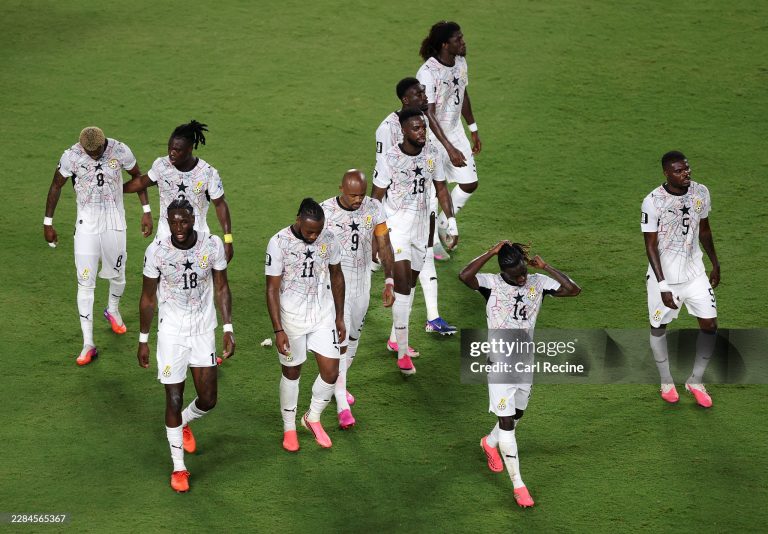


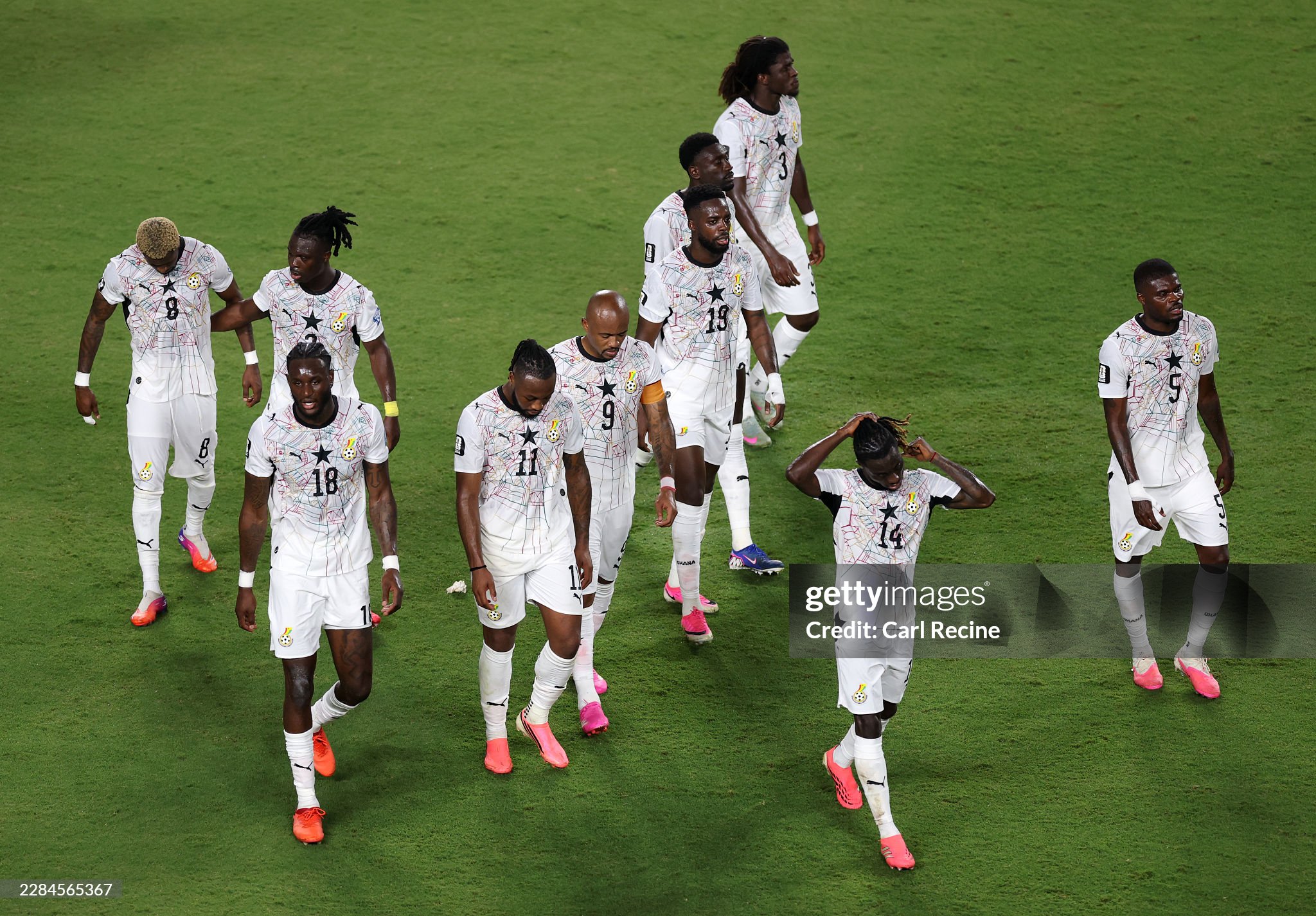
Ghana’s reputation as one of Africa’s football powerhouses is facing another painful test, with the Black Stars’ AFCON 2027 qualification campaign already threatening to become a national embarrassment after two consecutive defeats have left them rooted at the bottom of Group C.
For a country that has won the Africa Cup of Nations four times, losing its opening two qualifying matches is a deeply worrying start. Even more disturbing is the manner of the setbacks: a 2-0 defeat to Côte d’Ivoire followed by a shocking 4-2 home loss to The Gambia after Ghana had taken a two-goal lead.
The results have left Ghana without a single point, six points behind group leaders Côte d’Ivoire and The Gambia, who have both won their opening matches. The Black Stars have scored just twice and conceded six goals, leaving them with the worst goal difference in the group.
The situation is particularly uncomfortable because Ghana are now level on points with Somalia, but sit below the East African side on goal difference.
The Black Stars have four matches remaining, but their immediate assignment against Somalia on November 12 has become a crucial test of their ability to rescue the campaign.
Ghana will also face Somalia again on November 16 before returning to action in March 2027 against Côte d’Ivoire and The Gambia.
Winning both matches against Somalia would take Ghana to six points and restore some hope. However, it would not guarantee qualification, as the team would still have to secure important results against the two group leaders.
The technical team, led by interim coach Kim Lars Björkegren, therefore faces the difficult task of rebuilding confidence, improving defensive organisation and finding a more effective attacking approach.
The defensive lapses witnessed against The Gambia cannot be ignored. Conceding four goals at home after leading 2-0 raised serious questions about the team’s concentration, tactical discipline and ability to manage pressure.
Ghana must also improve its efficiency in front of goal. The Black Stars cannot afford to dominate periods of matches without converting their opportunities, particularly when every point matters.
The return or availability of experienced players, including Mohammed Kudus and other key members of the squad, could strengthen the team, but individual quality alone will not solve the problems. The players must deliver as a unit.
Ghana missed the 2025 Africa Cup of Nations in Morocco, and another failure to qualify would mean missing two consecutive editions of the continental tournament.
For a nation with such a rich football history, that possibility should concern every stakeholder in the game.
The Black Stars are not mathematically eliminated, but their campaign is already in crisis. The remaining fixtures offer an opportunity to recover, yet the responsibility rests squarely on the players and technical team to prove that Ghana still belongs among Africa’s leading football nations.