

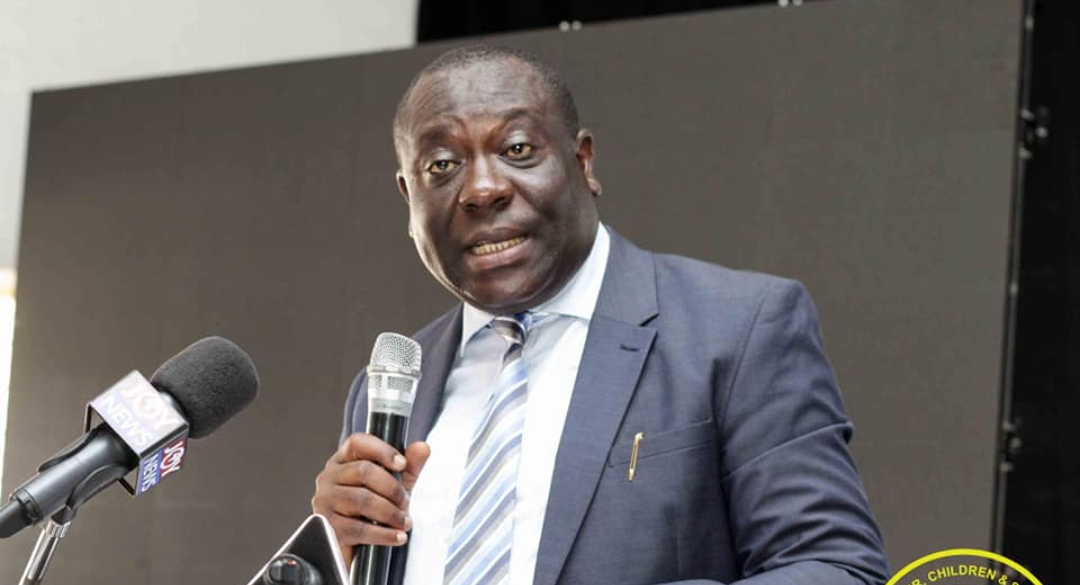
Former Hearts of Oak Chief Executive Officer Vincent Sowah Odotei has attributed the decline of Ghanaian football to decades of poor leadership, administrative failures and the inability to establish sustainable structures capable of driving the development of the game.
Odotei, who currently serves as Lead Administrator of Hearts of Oak’s Interim Management Committee (IMC), believes Ghana’s football challenges are deeply rooted in years of mismanagement, inadequate investment in infrastructure and the failure to attract competent individuals into football administration.
Ghanaian football has struggled to maintain its traditional position on the continent in recent years, with the national teams and domestic leagues facing difficulties in competing consistently at the highest level.
Speaking in an interview with Joy Sports, Odotei expressed concern over the extent of the deterioration, insisting that the country has suffered from years of ineffective leadership and poor administrative decisions.
“The level of deterioration is so high. It’s been decades of bad leadership. We were not able to attract good people to the administration,” he said.
The Hearts of Oak administrator further identified inadequate sporting facilities, weak tactical and physical infrastructure, and the absence of properly structured teams with clear long-term development plans as some of the major problems affecting the country’s football system.
According to him, Ghana cannot expect to compete with the continent’s leading football nations without establishing the necessary foundations for sustainable growth.
“We don’t have the facilities; we don’t have tactical and physical infrastructure. We don’t have well-structured teams that are driven by a strategy, who are looking at the long term. We are where we are because of decades of bad leadership,” he added.
Odotei is therefore advocating a comprehensive transformation of Ghana football, stressing that the country must address its administrative and structural weaknesses before expecting significant improvements in performance and competitiveness.
He believes proper regulation, discipline, organisation, effective competition scheduling and improved coaching standards must form part of the reforms required to restore the country’s football fortunes.
He also emphasised the need to invest in local coaches through improved training programmes and professional development to ensure they acquire the technical knowledge and modern approaches needed to compete at the highest level.
Odotei further argued that Ghana must learn from the progress made by football nations in North Africa, East Africa and Southern Africa, particularly in areas of organisation, infrastructure and long-term planning.
He maintained that the country must first establish a strong foundation before it can close the growing gap with its continental rivals.
“To turn around a system where we will be able to compete with the North Africans and East Africans and the Southern African countries, we will need the transformation of hygienic transformation to deliver a strategic transformation.
“We need to get the basics right. The basics that will make us competitive: the basics about regulation, order, proper organisation, proper scheduling. Make sure we inject [improve] the way we train our local coaches,” he said.
His comments come at a time when Ghanaian football continues to face questions about its administration, infrastructure, coaching development and the overall competitiveness of its domestic game.
To Odotei, restoring Ghana’s football fortunes will require more than short-term interventions, with a sustained commitment to administrative reforms, strategic planning, infrastructure development and investment in human resources needed to rebuild the game.