

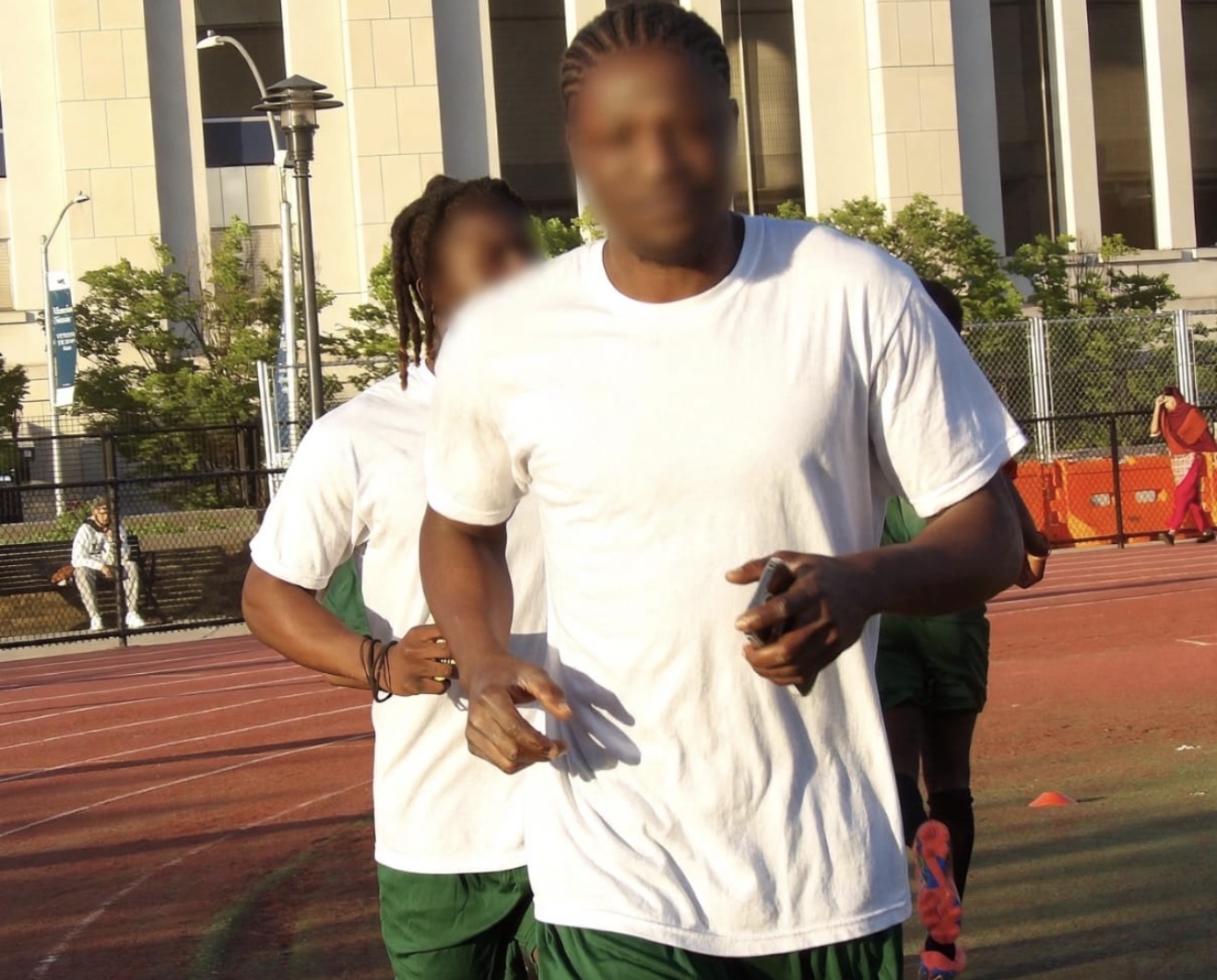
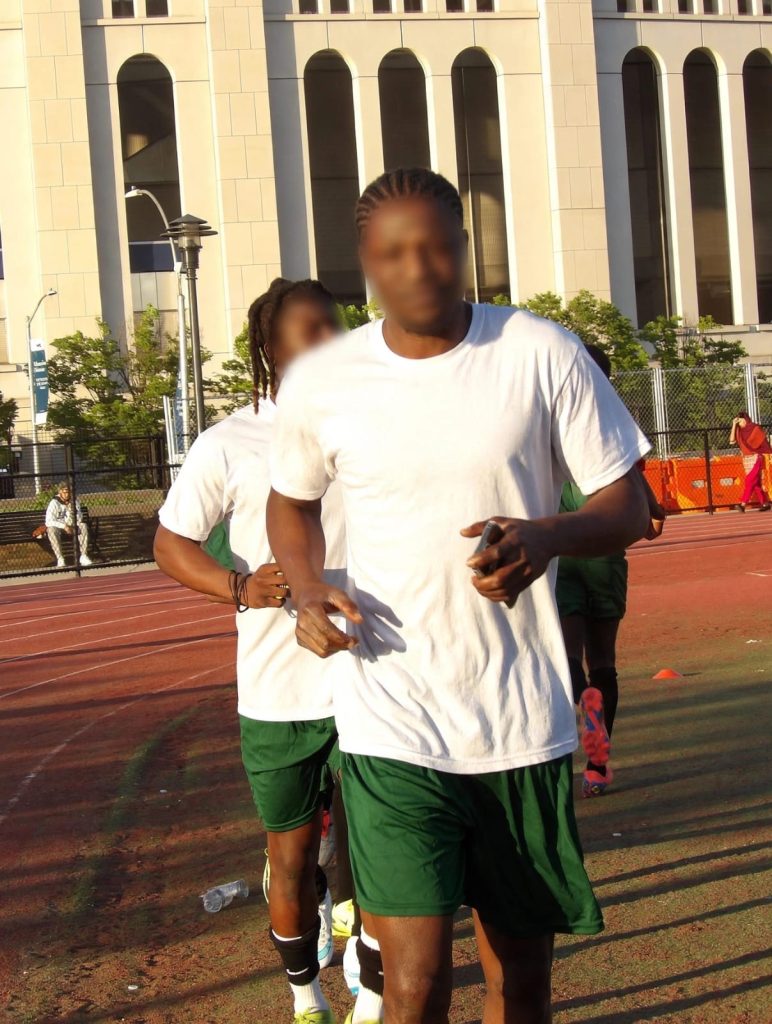
During weekdays when the gates at Yankee Stadium closes after the NYCFC training session, the real game starts on the cracked side pitch. The teams are usually made of Africans and Spanish delivery riders, day laborers and taxi drivers. And for 90 minutes, one man makes it look like a professional trial. He is a Burkinabe centre-back, Abdul (Ouedraogo) not his real surname.
The 24-year-old talented centre back stands 6 feet 5 inches tall, calm on the ball. He is physically imposing, good with the ball at his feet and has also mastered the act of defending. He has been nicknamed “Sergio Ramos” after the legendary former Real Madrid skipper due to his exploits.
Five years ago at the age of 19, he left Bobo-Dioulasso with a small bag and his boots tied to the laces, flew to Brazil, and walked. Through the Darien Gap, through the rivers and the mud of the jungle between Colombia and Panama where migrants disappear, through Central America in the back of trucks. He came to America to work, and to play soccer. Now he spends the day racing his e-bike across the Bronx delivering food, his boots in his delivery bag just in case he gets to anywhere people are playing. Ouedraogo is good enough to defend New York city. He is too afraid to be seen defending it.
The road Ouedraogo took to the US was a matter of life and death. For thousands of young Africans who land in Brazil and decide to walk to America, the real border is not Mexico. It is the Darien Gap, a 60-mile stretch of lawless jungle between Colombia and Panama where there are no roads, no police, no rescue. To cross it takes four to seven days on foot through waist-deep swamps, steep mud mountains and swollen rivers. One slip while crossing a river at night can end the journey.
In the Gap, the dangers are human as much as natural. Migrants move in small groups led by guides, sleeping under plastic sheets while exposed to snakes, insects and relentless rain that rots their feet inside their boots. Along the trail, bandits control the paths. Extortion, robbery by bandits and assault are common, and those who cannot pay are forced to turn back or left behind. Many arrive in Panama with no shoes, no bags, only the clothes they wore for a week in the jungle.
“You often see skeletons along the forest and at some places you can smell very bad stench. When we noticed that, we just throw money and pray that they should give us good luck”. Ouedraogo remarked.
For those who survive the Darien, the danger does not end. It stretches for thousands more miles through Central America on freight trucks, buses and on foot, with detention, exploitation and the constant fear of being sent back. When this Burkinabe defender finally reached the US five years ago, he had lost weight, lost his boots, lost his bag but not the one thing he carried from Bobo-Dioulasso – his touch as a centre-back.
The side pitch at Yankee Stadium on the 161 Street in Bronx, New York is not where scouts look for players. The small edifice is cracked uneven, loud with the 4 train from Bronx to Manhattan or Brooklyn and vice versa rattling past with its defeaning noise.That’s where the Burkinabe centre back exhibits his talent.
As an undocumented talent caught between a dream of playing in the MLS and also hiding, Ouedraogo’s biggest fear is to be found and deported back home or to an unknown country. The recent immigration cracked down in America has seen an estimated 2 million people being deported so far.
On a warm Wednesday evening last month (August), after New York City FC trained inside the main bowl, the game on the side pitch gathered huge attention due to the exploits of the 24- year-old guardsman.
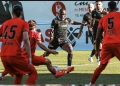
In a game between an African select side and their Spanish counterparts; A through ball, certain to be a goal, was cut out by the giant, left-footed centre-back who had already read it three seconds earlier. He didn’t just tackle. He absorbed the play, turned with it, dribbled past two strikers and played out calmly.
Ouedraogo also cleared a last minute goal bound effort in the 90th minute with a flamboyant scissor kick which saw everyone in awe. You see that once in a park player and you simply cannot forget it.
The stalwart central defender from Bobo-Dioulasso, has in the last two years been the best defender in that pickup circuit without ever playing a single minute of organized soccer league in America.
He operates as a delivery boy in the Bronx. Lives with two friends. And he is terrified to go for a trial due to the recent immigration crackdown though everyone attest he is far better than a host of defenders in the MLS.
“I can defend against anyone here,” he told me after the game, asking that his real name not be used for fear of Immigration. “But I cannot defend against immigration.”
He has been told by many people to go to an MLS Next Pro open trial. One NYCFC academy coach who saw him play in July reportedly asked who he was and also to come for practice. He never went. The reason is not talent, it’s paperwork.
“People who see me play wants me to go on open trials as they believe i can sign for an MLS team but i am terrified because I could be caught and deported.”
“I don’t have documents. Everybody is talking about ICE now. If I go to a big trial, they will ask for ID. If I put my name online, maybe they may come and trace me. I want to play but I don’t want to lose everything,” he said.
For 2 years, his soccer has been reduced to playing on the side pitch, with delivery bag still on his electric bike parked behind the goal.
When Balogun, born to Nigerian parents, raised in England, chose to play for the US Men’s National Team and became the star in the national team by scoring 3 times in the 2026 World Cup, Ouedraogo said it gave him hope that the American system can make space for African talents that came through complicated paths. Not just the academy kids from Dallas, Florida and Philadelphia, but the ones who found their path to the States differently.
So he watches. He watches intently praying that one day luck will smile on him and he would be able to exhibit his God given talent without fear. And that is why he talks about Folarin Balogun.
“If Balogun can make America believe in a striker from Africa, maybe one day they will believe in a defender from Burkina Faso too,” he said.
Right now, he is in limbo. Too good for the side pitch. Too afraid to leave it. Every clearance he makes is perfect, and every day after the game, he puts his delivery bag back on and rides into the night traffic of New York to do his delivery.
“One day, the world will surely see me. I believe in my capabilities and once I get the chance for trials without any fear, that will be the turning point.”
“It might be a dream to represent the US national team one day. Who knows? My name could be the first on their team sheet for the 2030 World Cup, ” he added with a glimmer of hope.