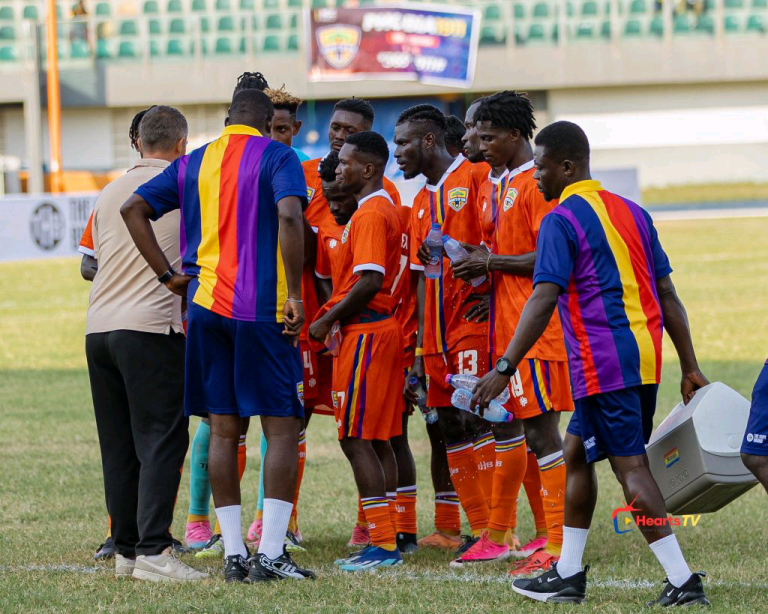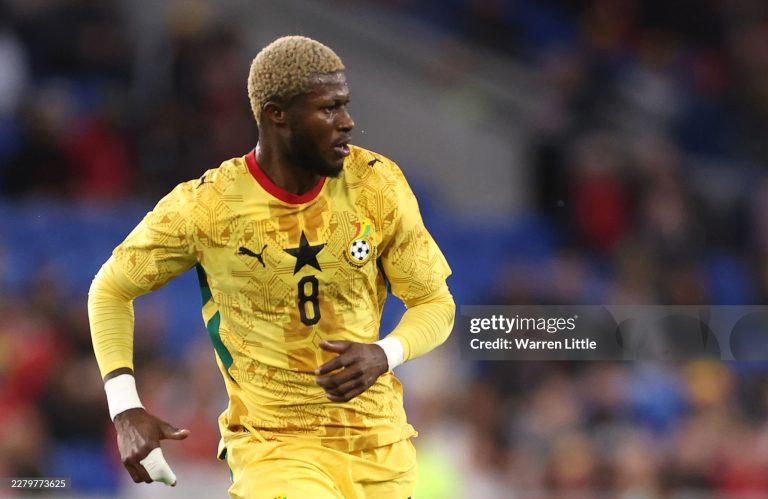


There is nothing inherently wrong with Ghana playing against Morocco, and there is certainly no suggestion that the Black Stars should permanently avoid the continent’s strongest footballing nations simply because those teams possess greater quality, deeper squads or stronger recent records, because a national team that genuinely wants to return to the top of African football must eventually confront the best and learn how to compete with them; however, football is also about timing, preparation, psychology and the careful management of a team during difficult periods, and that is why the decision to play Morocco at this particular stage of Ghana’s development deserves serious examination, especially when the Black Stars are already struggling to recover from a prolonged period of poor performances, disappointing results and a growing crisis of confidence.
The upcoming friendly against Morocco in Tangier has all the ingredients of an attractive international fixture, with two historically important African football nations meeting in a game that will naturally generate considerable interest among supporters, journalists and football observers across the continent, but beneath the glamour of the occasion lies a question that Ghanaian football administrators and the technical team should be asking themselves very seriously: what exactly does Ghana need at this moment, and does playing one of the strongest and most organised teams in African football actually serve the rebuilding process that the Black Stars desperately require?
On paper, playing Morocco sounds like an excellent opportunity because strong opponents expose weaknesses that weaker teams sometimes allow to remain hidden, and there is certainly value in placing players under pressure against a side that is capable of controlling possession, defending intelligently, moving the ball quickly and punishing mistakes, but the problem is that Ghana are not currently a stable team looking for a difficult examination to identify one or two weaknesses; rather, the Black Stars are a team struggling to establish their basic identity, and when a side is still trying to determine its best combinations, tactical structure, midfield balance and attacking relationships, repeatedly placing it in situations where almost every weakness can be exposed may produce more damage than development if the technical lessons are not accompanied by the confidence and stability required to implement them.
The timing of the Morocco fixture therefore becomes extremely important because Ghana are not approaching this game from a position of strength, with the Black Stars having endured a deeply disappointing period in which results have repeatedly failed to match the expectations attached to the national team, while the recent record of one victory, two draws and eight defeats in the last 11 matches has created an environment in which another heavy defeat would almost certainly be interpreted not as an isolated friendly setback but as further evidence of the wider decline that supporters have been complaining about for months.
That distinction is extremely important because a friendly match is supposed to be a laboratory in which a coach can experiment with players, formations and tactical ideas without the pressure associated with competitive football, yet the reality surrounding the Black Stars is completely different, because Ghanaian supporters are already desperate for evidence that the team is improving, and every match now carries an emotional weight that makes it almost impossible for the public to view a poor performance simply as an experiment by the coach.
If Ghana lose narrowly after producing a disciplined and encouraging performance, the technical team could potentially take several positives from the game, particularly if young players perform well, new combinations begin to develop and the team demonstrates an improved tactical structure, but if Ghana are overwhelmed and suffer a heavy defeat while looking technically inferior, tactically confused and psychologically fragile, the conversation will almost certainly move far beyond the friendly itself and return to the painful questions surrounding the state of the Black Stars, the quality of the squad, the competence of the technical direction, the future of the players and whether Ghana are capable of competing with the continent’s leading football nations.
That is precisely the danger Ghana must consider, because the Black Stars are already battling a confidence problem that cannot simply be solved by telling players to believe in themselves, and another damaging defeat could deepen the psychological burden carried by a group of footballers who are already entering matches under pressure to reverse a poor run of results and prove to an increasingly frustrated public that they are capable of restoring the reputation of the national team.
Confidence in football is not a superficial matter, because it affects decision-making, movement, risk-taking and the willingness of players to demand possession when a match becomes difficult, and when footballers repeatedly experience defeat they can gradually become more cautious, more hesitant and more concerned about making mistakes than about taking responsibility, which can eventually create a vicious cycle in which poor results produce uncertainty, uncertainty produces cautious football, cautious football produces poor performances and poor performances lead to even more disappointing results.
That is the cycle Ghana must break, and it is precisely why the selection of opponents during a rebuilding period should be approached with considerably more intelligence than simply looking for the biggest name available.
Morocco are not simply another African team, because over the past several years the Atlas Lions have developed into one of the continent’s most respected national teams, culminating in their historic run to the 2022 FIFA World Cup semi-finals, and their progress has been built around a combination of technical quality, tactical organisation, player development, strong defensive structures and the ability to compete against elite opposition without appearing intimidated by the occasion.
Ghana, meanwhile, are currently trying to rediscover the foundations that once made the Black Stars one of Africa’s most feared national teams, and the contrast between the two situations should not be ignored simply because both countries possess proud footballing histories and talented players.
This is not an argument that Ghana should be afraid of Morocco, because fear should have no place in the mentality of a national team that wants to compete at the highest level, but there is a difference between being courageous and being strategically careless, and a rebuilding team must understand that courage is not demonstrated by accepting every possible challenge regardless of the circumstances but by identifying the challenges that will genuinely contribute to long-term improvement and approaching them at the right stage of development.
The Black Stars need matches in which their players can experience success, develop understanding, build relationships and regain the confidence to execute their abilities without constantly worrying that one mistake will lead to another defeat, because the team has already accumulated enough painful experiences to understand what it feels like to be dominated by stronger opponents, while what Ghana desperately needs now is the experience of controlling matches, creating chances, scoring goals, defending leads and finishing games with the feeling that the work being done on the training ground is finally producing something tangible.
That is why the choice of friendly opposition matters.
A national team rebuilding from a period of sustained underperformance does not necessarily need to spend every international window confronting the strongest opponent available, because development can also come from carefully selected matches in which the coaching staff can test specific tactical ideas against teams that provide meaningful resistance without completely overwhelming the players.
There is a major difference between challenging a team and breaking a team psychologically, and the technical team must ensure that the Black Stars are being challenged in a way that encourages development rather than repeatedly reminding the players of their weaknesses.
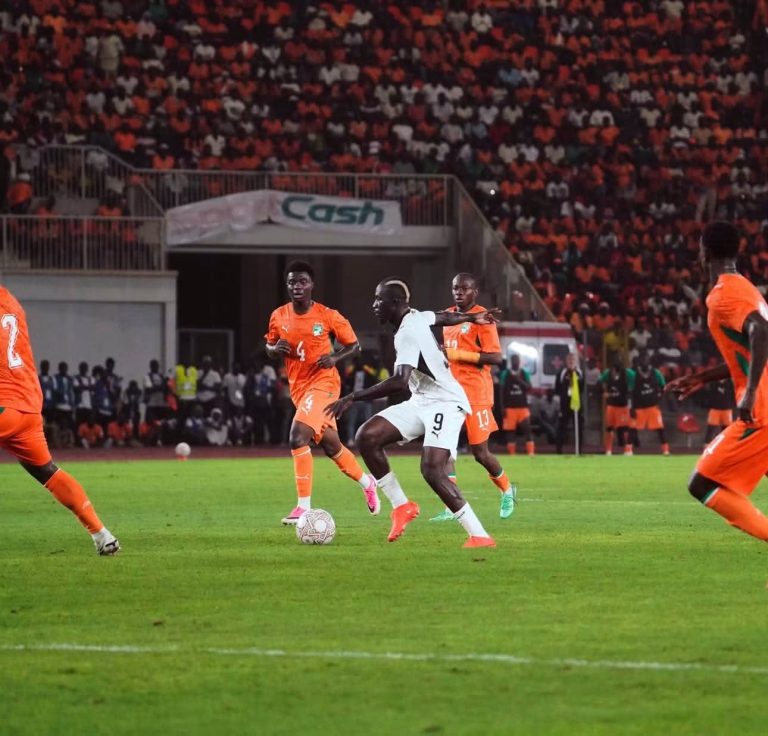
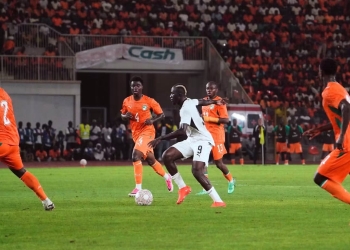
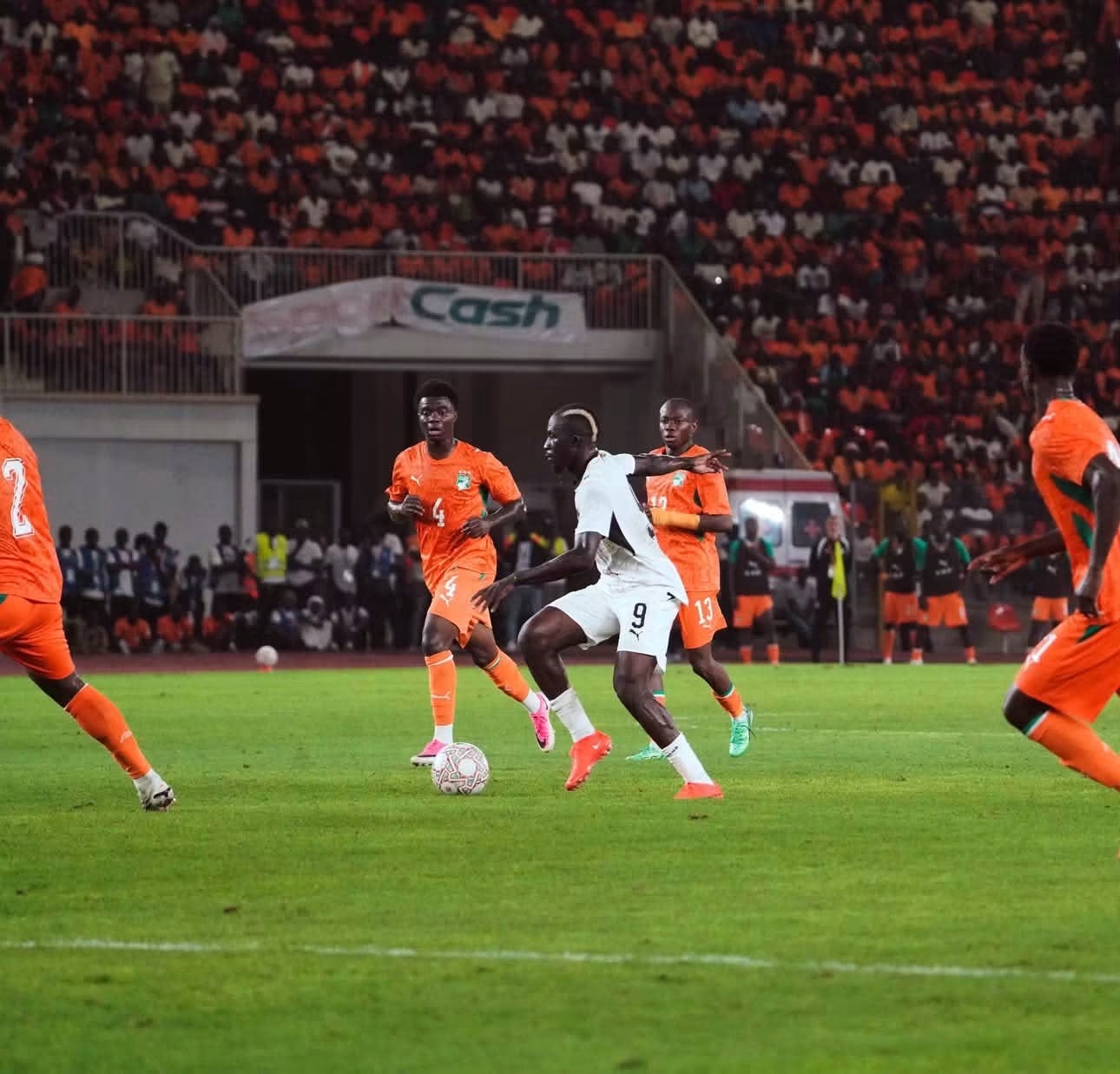
Ghana have already demonstrated that they can struggle when confronted by opponents who are technically superior and tactically more settled, and the 2–0 defeat to Côte d’Ivoire in Bouaké provided another example of how difficult it has become for the Black Stars to impose themselves against a major African opponent, with Ghana struggling to create meaningful attacking opportunities during the first half and spending too much of the match reacting to the opposition rather than dictating the contest.
That defeat should have been a major lesson, but the danger is that Ghana could move from one difficult examination directly into another without giving the technical team enough time to correct the problems exposed by the first game.
The Black Stars need time to work on their midfield structure, their defensive transitions, their attacking movements, their pressing mechanisms and their ability to retain possession under pressure, and these things cannot be repaired simply by moving from one major opponent to another, because tactical development requires repetition, communication and familiarity, particularly when a coach is attempting to introduce new players and establish new combinations.
This is where the concept of rebuilding must be taken seriously.
If Ghana are genuinely rebuilding, then rebuilding should mean more than changing a few names on the team sheet and giving supporters another explanation after another disappointing result; it should involve a deliberate process in which the coaching staff identify the strengths and weaknesses of the squad, establish a clear footballing philosophy, develop a core group of players, introduce younger footballers gradually, create competition for positions and give the team enough time together to develop an understanding of what is expected in different phases of the game.
Carlos Queiroz has experience in international football and has been entrusted with the responsibility of guiding Ghana through this difficult period, but even the most experienced coach cannot build a coherent national team overnight, especially when important players are dealing with injuries, some players are struggling for regular club football and others are still attempting to establish themselves at international level.
The coach therefore needs an environment in which he can experiment intelligently, and that means Ghana should be asking whether every friendly provides the right conditions for the type of experimentation the technical team currently needs.
If the answer is yes, then Morocco can serve a purpose.
If the answer is no, then the prestige attached to the fixture should not be allowed to dictate Ghana’s footballing strategy.
There is another concern that cannot be ignored, and that is the physical condition of the players, because the Black Stars are already dealing with injuries and fitness concerns, while the modern international calendar places enormous physical demands on footballers who are simultaneously competing for their clubs and travelling across countries for national-team assignments.
The last thing Ghana needs is for an important player to suffer another injury in a friendly that provides no competitive points, particularly when the country is already struggling with squad availability and desperately needs its most important players fit for competitive fixtures.
This is especially relevant because the return of injured players is one of the potential sources of optimism for the Black Stars, and Ghana cannot afford to compromise the long-term fitness of those players simply because there is pressure to field the strongest possible side against Morocco.
The national team must learn to think beyond one match.
That is another problem that has affected Ghanaian football for too long, because decisions are sometimes made according to the demands of the immediate fixture rather than the long-term development of the team.
A friendly against Morocco can produce a headline.
A victory can produce excitement.
A defeat can produce criticism.
But none of those things should be more important than the broader objective of building a competitive Black Stars team capable of performing consistently over several years.
That is the standard Ghana should be pursuing.
The Black Stars should not be arranging international friendlies simply because the opponent has a prestigious name, because prestige does not automatically translate into development, and playing against a famous opponent is not necessarily evidence that a national team is making progress.
Ghana needs to ask a more technical question: what specific problem is this match designed to solve?
If the objective is to test the team’s ability to defend against sustained possession, Morocco can provide that challenge.
If the objective is to examine the midfield under pressure, Morocco can provide that challenge.
If the objective is to determine whether Ghana’s defensive organisation can withstand a technically superior opponent, Morocco can certainly provide that test.
But if the objective is to rebuild confidence, establish attacking relationships and develop a consistent tactical identity, then Ghana must carefully assess whether a match in which the Black Stars may spend large periods defending is actually the most suitable environment.
The concern is particularly strong because Ghana’s attack has already struggled to produce consistent threat, and a match against Morocco could expose that weakness even further if the Black Stars are forced to defend for long periods and depend almost entirely on counter-attacking situations.
That could leave Ghana with another match in which the forwards receive limited service, the midfield spends more time chasing than creating and the defence is constantly exposed to pressure, resulting in a performance that reinforces the exact weaknesses the coaching team is supposed to be correcting.
It would be a painful irony if Ghana walked away from a friendly against Morocco having learned that Morocco are better than Ghana, because Ghana already knows that strong African teams can punish them.
The more valuable lesson would be learning how Ghana can become better.
That requires carefully designed preparation.
The Black Stars need to play teams that allow them to practise attacking structures, possession, pressing and defensive organisation in realistic conditions, while gradually increasing the level of opposition as the team begins to develop confidence and consistency.
There is nothing shameful about that approach.
In fact, it would demonstrate that Ghana understands where it currently stands.
The greatest mistake would be pretending that the Black Stars are already a finished product.
They are not.
The team is still searching for its best midfield combination, still trying to identify its most effective attacking structure, still integrating new players and still attempting to establish a consistent identity under a new technical direction.
That means Ghana must protect the rebuilding process from unnecessary turbulence.
The national team has already experienced enough instability.
Another heavy defeat could produce another wave of criticism, another round of questions about the coach, another debate about the players and another period in which everyone starts searching for quick solutions instead of concentrating on the long-term plan.
That would be counterproductive.
Ghana needs continuity.
The players need to know that one poor result will not automatically lead to another dramatic change.
The coach needs time to work.
The younger players need confidence.
The experienced players need responsibility.
And supporters need something tangible that can convince them the team is moving in the right direction.
That is why the Morocco fixture must be handled with extreme care if it goes ahead as scheduled.
Ghana should not approach the match with the mentality that losing is acceptable because it is only a friendly, because players and supporters rarely process football in such a simple manner.
At the same time, Ghana should not approach the match with the desperate expectation that beating Morocco will suddenly prove that the Black Stars have recovered, because one friendly victory would not erase the structural problems that have developed over a much longer period.
The correct approach would be to establish measurable technical objectives and judge the game against those objectives.
Can Ghana maintain possession under pressure?
Can the midfield progress the ball effectively?
Can the defence remain compact?
Can the forwards create chances?
Can the team press collectively?
Can the players respond when Morocco dominate possession?
Can Ghana maintain concentration for 90 minutes?
Can the new players demonstrate that they are ready for international football?
Those are the questions that should matter.
If Ghana can answer some of them positively, the match can be valuable regardless of the final score.
But if the game simply becomes another painful reminder of the gulf between Ghana and the continent’s strongest teams, then the football authorities must accept that the fixture may have arrived at an inconvenient moment in the rebuilding process.
The phrase “difference in quality” should also be understood carefully, because Ghana still possesses individual players who can compete at high levels, and it would be inaccurate to suggest that Morocco are automatically superior in every department simply because Morocco have enjoyed greater recent success.
The real difference is consistency.
Morocco have developed a system that allows their individual talents to operate effectively as a collective, while Ghana are still struggling to create that same connection between individual quality and team performance.
That is the gap Ghana must close.
It is not necessarily a gap in talent.
It is a gap in structure, organisation, consistency and development.
And those things require time.
Ghana should therefore resist the temptation to measure the success of the rebuilding project through glamorous fixtures and instead judge progress through the gradual improvement of the team’s football.
A Black Stars side that defeats a lower-ranked opponent after producing an excellent tactical performance may learn more than a Black Stars side that loses heavily to Morocco while spending 90 minutes chasing the ball.
That may not satisfy the appetite for big-name fixtures, but national-team development should not be driven by entertainment alone.
It should be driven by strategy.
Ghana has a proud footballing history, but that history can become a burden when the current generation is constantly compared with the great teams of the past.
The Black Stars of previous generations competed with some of the strongest teams in Africa because they had their own qualities, their own leaders and their own collective identity.
Today’s players must build their own identity rather than living permanently under the shadow of past achievements.
They cannot be expected to become Abedi Pele, Stephen Appiah, Michael Essien, Asamoah Gyan or any of the other legends who shaped the national team in previous generations.
They must become the best version of the Black Stars that this generation can produce.
But that process requires patience, intelligent planning and carefully selected challenges.
It requires Ghana to understand that development is not always linear and that sometimes the smartest way forward is to take one step back from the biggest challenges in order to strengthen the foundation before moving forward again.
That is the central argument against playing too many fixtures like the Morocco friendly at this stage.
It is not because Ghana should be afraid.
It is not because Ghana cannot compete.
It is not because Morocco are unbeatable.
It is because Ghana’s current priority should be rebuilding a team that believes in itself, understands its tactical responsibilities and has enough collective confidence to compete consistently before being subjected to repeated high-pressure examinations against the continent’s most established sides.
The danger of ignoring this is that every heavy defeat becomes another psychological weight.
One defeat can be forgotten.
Two can be explained.
Three can become a pattern.
But when a team accumulates defeat after defeat, the players begin carrying the history of those losses into every subsequent match, and the supporters begin expecting disappointment before the referee even blows the opening whistle.
That is the mentality Ghana must destroy.
The Black Stars need to rediscover the belief that they can win football matches.
They need to rediscover the confidence to take risks.
They need to rediscover the courage to dominate possession.
They need to rediscover the ruthlessness required in front of goal.
And they need to rediscover the defensive discipline that prevents one mistake from destroying an entire performance.
None of those things can be achieved through one friendly.
They must be built gradually.
That is why the Morocco game should not be viewed as the beginning or end of Ghana’s rebuilding process, but rather as one small component of a much larger programme that must have a clear direction.
If the match is used correctly, it can provide valuable information.
If it is treated simply as another prestigious fixture, it could become another distraction.
Ghana must therefore make the decision based on football rather than publicity.
The Black Stars have enough publicity.
They need progress.
They have enough history.
They need a future.
They have enough talented individuals.
They need a team.
They have enough explanations.
They need evidence.
And above all, they have played enough matches that have left supporters asking questions.
They now need matches that provide answers.
The Morocco friendly may still go ahead, and if it does, the Black Stars must approach it professionally and without fear, because once the fixture is confirmed there is little value in complaining about the quality of the opposition instead of preparing to compete. But the broader lesson should remain clear for the future: Ghana must become much more deliberate about selecting friendly opponents, particularly during periods when the national team is struggling with confidence, injuries, tactical uncertainty and poor results.
International friendlies should be tools for development, not simply opportunities to fill the calendar.
They should help the coach build the team, help the players understand the system and help supporters see tangible signs of progress.
If an opponent provides those opportunities, then Ghana should welcome the challenge.
If the fixture offers little beyond prestige and the possibility of another damaging defeat, then the football authorities should have the courage to reconsider whether such a match serves the national team’s long-term interests.
Because the Black Stars do not need another reminder that the gap between Ghana and the continent’s leading football nations has become uncomfortable.
They already know.
What they need is a plan to close that gap.
And that plan must begin with an honest assessment of where Ghana currently stands, rather than pretending that the Black Stars are still operating at the level of their glorious past.
The truth is that Ghana are rebuilding, and rebuilding requires difficult decisions.
Sometimes those decisions will involve facing strong opponents.
Sometimes they will involve protecting important players.
Sometimes they will involve giving young players opportunities.
And sometimes they will involve choosing an opponent who allows the team to grow rather than an opponent who simply exposes how far the team still has to go.
That is not weakness.
That is strategy.
The Black Stars must eventually be ready to face Morocco, Senegal, Nigeria, Algeria, Egypt, Côte d’Ivoire and every other major football nation on the continent without fear, but Ghana should not rush that process simply to prove that it is still a major football power.
The objective is not to prove Ghana’s greatness in one friendly.
The objective is to rebuild a national team capable of demonstrating that greatness consistently.
That is why the upcoming Morocco friendly should be viewed with caution.
It is an attractive fixture, but attractiveness is not the same thing as usefulness.
It is a prestigious fixture, but prestige is not the same thing as progress.
It is a difficult fixture, but difficulty is not automatically the same thing as development.
And if Ghana is serious about rescuing the Black Stars from their current decline, then every decision surrounding the national team must be measured against one fundamental question: does this help Ghana become a better football team?
If the answer is yes, then play Morocco and use the opportunity properly.
If the answer is no, then Ghana should have the courage to choose a different path.
Because at this stage of the Black Stars’ journey, the country cannot afford to play matches merely because they look good on paper.
Ghana needs matches that make the team better.
And until the Black Stars regain their confidence, establish their identity and rediscover their competitive edge, that should be the priority above everything else.