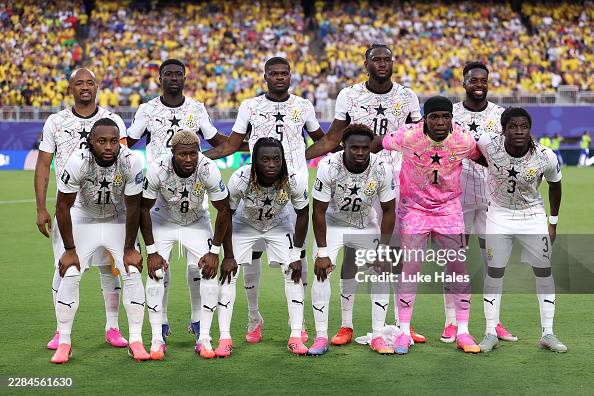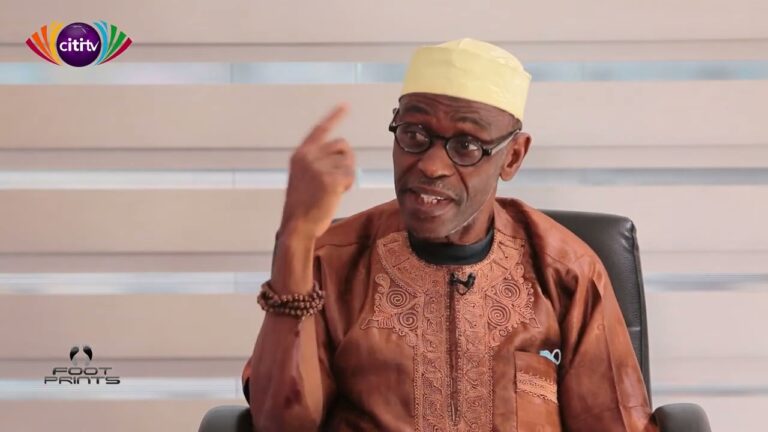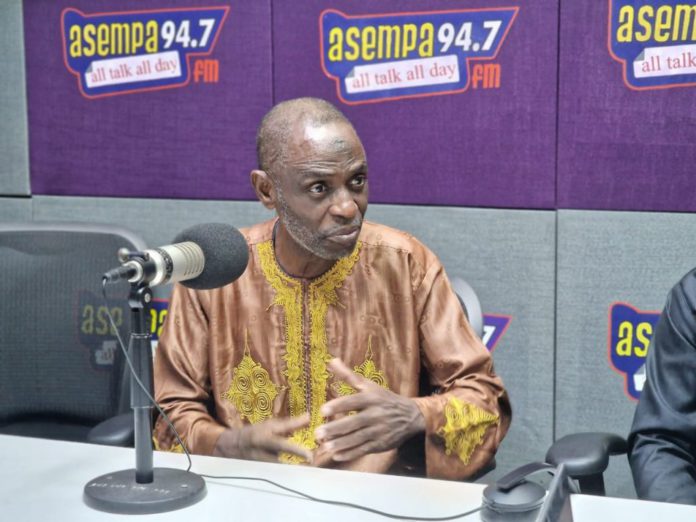

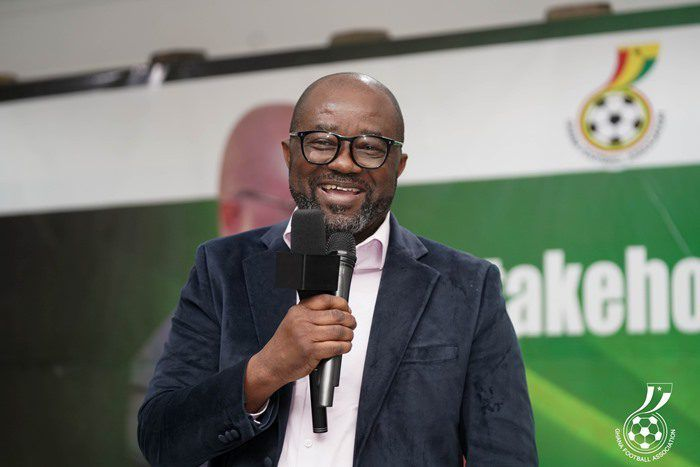
Former Ghana Football Association Deputy General Secretary Ibrahim Sannie Daara has delivered a strong criticism of the current state of Ghana football, calling on GFA President Kurt Okraku and his executives to take decisive action following the Black Stars’ disastrous opening to the 2027 Africa Cup of Nations qualifiers.
Sannie Daara says the current situation requires serious reflection within the GFA leadership, particularly after Ghana suffered consecutive defeats to Côte d’Ivoire and The Gambia.
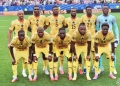
The Black Stars lost 2-0 to Côte d’Ivoire in Bouaké before throwing away a two-goal advantage against The Gambia at the Accra Sports Stadium and eventually suffering a 4-2 defeat.
The two losses have left Ghana without a point from its opening two Group C matches and intensified public scrutiny of both the GFA leadership and head coach Carlos Queiroz.
Speaking on TV3, Sannie Daara directly addressed Kurt Okraku and urged him to recognise the growing concerns surrounding Ghana football and respond with decisive action.
“My personal word to my brother Kurt Okraku, I say I use my words advisedly, my brother. Kurt Okraku is to listen to himself. Number one, smell the mood in the room. Number two, take decisive decisions based on that,” he said.
Sannie Daara’s comments come amid growing frustration over the Black Stars’ performances and the wider direction of Ghana football.
He also criticised the manner in which Okraku recently confronted Manhyia South MP Nana Agyei Baffour Awuah during a public disagreement over the state of the game.
According to Sannie Daara, the incident raised questions about the support Okraku receives from members of his executive.
“I was not happy when I saw my brother openly confronting the MP, a lawmaker of Ghana, in the way he did. And I was asking myself, where are his executives? Is it that they are not happy with him? Is it that the man is driving alone?” he said.
The former GFA official said the football administration should not simply dismiss criticism from politicians and other stakeholders because they are not directly involved in football administration.
He argued that the growing concerns should instead force the GFA to reflect on its performance and listen to the public.
“The way we carry ourselves, arrogantly claiming that we are football people, therefore nobody can talk about us, is the result of the attendance we saw yesterday,” he said.
Sannie Daara also raised concerns about Ghana’s player development system, particularly the transition from the junior national teams into the senior Black Stars.
He questioned why relatively few players from Ghana’s youth national teams have established themselves as regular senior internationals over the past decade.
“For nearly 10 years, it’s only just one player who has come through our junior national teams and made it to the Black Stars level and is permanent. And it’s only Fatawu Issahaku,” he said.
“That’s not normal. It is not right.”
The former GFA executive believes the problems confronting Ghana football could eventually have wider consequences if the concerns of supporters and other stakeholders continue to go unaddressed.
He warned that the football administration risks losing the backing it needs from the public and political leadership.
“We have lost the public already. The political will that we, or the political will that A-Stars football would also be lost and everything will be completely gone,” he said.
Sannie Daara placed responsibility for addressing the situation squarely on the GFA leadership, saying the president and his executives must collectively take responsibility for the decisions affecting Ghana football.
“I think that we need this reflection, and this reflection must come from the GFA president himself and his executives. They are all collectively responsible for taking decisions,” he added.
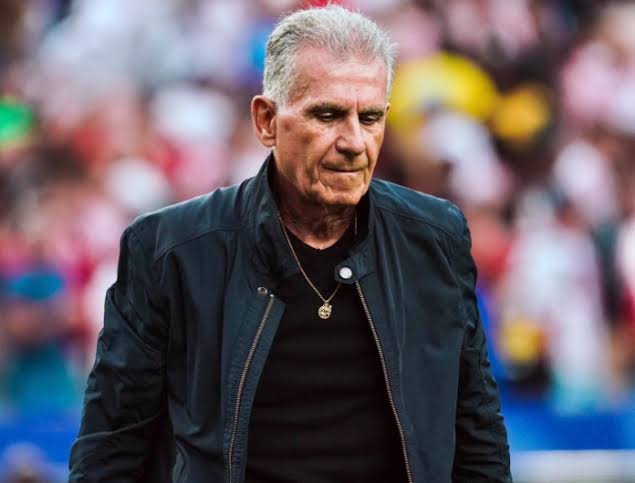
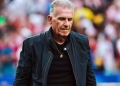
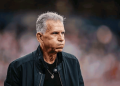
His strongest criticism, however, was reserved for Carlos Queiroz.
With Ghana losing its first two AFCON qualifiers, Sannie Daara argued that the Portuguese coach should not continue in charge of the Black Stars.
“As far as the coach is concerned, I don’t think he has any business continuing. That’s the fact. He has no business continuing,” he said.
He also questioned the financial demands surrounding Queiroz and the size and composition of the technical team the Portuguese coach wants to work with.
“The amount of money he demands, the number of personnel, his own friends, he wants to bring some of them in their mid-70s and the rest to do jobs. We know today that requires strength. That cannot be done. We can’t countenance this,” Sannie Daara said.
His comments followed Ghana’s latest qualifying setback against The Gambia, where the Black Stars surrendered a two-goal lead and conceded four times.
The result has intensified the debate over Queiroz’s future, with the coach himself saying after the defeat that he would leave any decision about his position to the GFA.
“If my resignation will be the solution for Ghana football, I’d be the first one to resign. But this is a decision I’ll leave for the federation,” Queiroz said after the match.
The Portuguese coach also accepted responsibility for the defeat while asking supporters not to blame the players.
“I take the responsibility for this result. Please leave the players, because it’s not their responsibility. They tried their best,” Queiroz said.
But Sannie Daara believes the Black Stars require a fundamental change in their technical direction.
“We need a new direction. We need a new coaching direction for the Black Stars,” he said.
The remarks have added to the growing debate over the leadership, technical management and long-term development strategy of Ghana football.
With the Black Stars now without a point from their opening two AFCON qualifying matches, the pressure on the GFA leadership and technical team has increased significantly.
Ghana will return to action in November for back-to-back Group C qualifiers against Somalia at the Accra Sports Stadium.
Those matches will come under intense scrutiny as the Black Stars attempt to revive their qualification campaign and respond to the concerns surrounding the national team’s current direction.