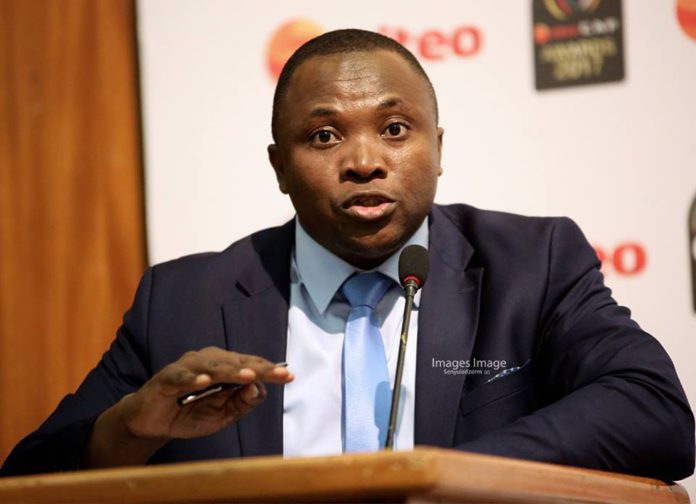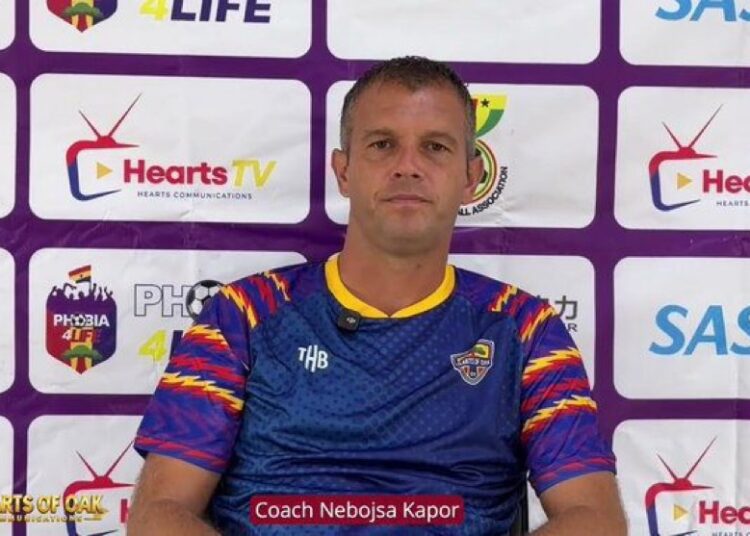


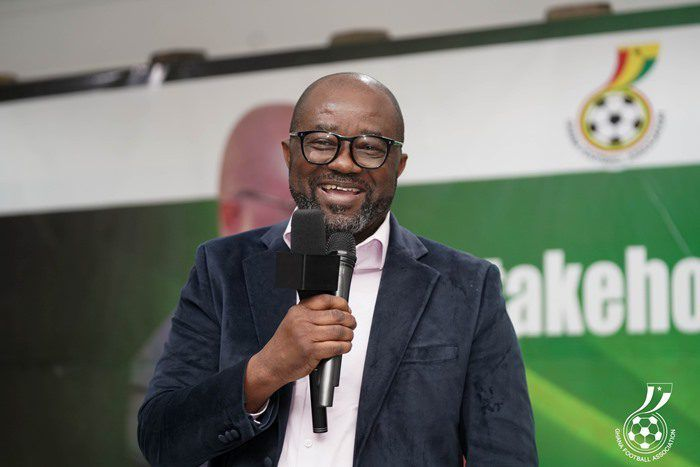
Ghana football stands at a crossroads, caught between the promise of a brighter future and the uncomfortable questions surrounding its administration. For many supporters, the game that once inspired national pride has become a source of frustration, disappointment and endless debate. At the centre of these conversations is Ghana Football Association president Kurt Edwin Simeon-Okraku, a man who assumed office with promises of transformation and renewed hope.
When Okraku became president of the Ghana Football Association in October 2019, he inherited a football environment desperately seeking credibility, stability and direction. The fallout from the 2018 corruption scandal had damaged public confidence in football administration, while supporters demanded reforms that would restore the integrity of the sport. The expectations were enormous, and the new leadership had an opportunity to demonstrate that Ghanaian football could turn a painful chapter into the beginning of a genuine revival.
Okraku presented himself as a leader who understood the challenges facing the game and possessed the determination to address them. His message centred on development, improved organisation, commercial growth and the need to restore confidence in the football ecosystem. To many stakeholders, his arrival represented an opportunity to move beyond the controversies of the past and build an administration capable of delivering measurable progress.
The hope was not merely that Ghana would continue producing talented footballers. Ghana had never lacked gifted players, passionate supporters or a rich football heritage. What many wanted was a system capable of converting those advantages into sustainable success. They wanted stronger domestic competitions, better facilities, improved youth development, financially stable clubs, effective officiating and national teams that could compete with confidence at the highest level.
Yet leadership is ultimately measured by more than speeches, campaigns and promises. It is judged by the condition of the institution entrusted to a leader, the quality of decisions taken, the opportunities created for others and the willingness to accept responsibility when things go wrong. As the Okraku administration continues to shape Ghana football, the central question is whether the original promise of transformation is being fulfilled at the pace and scale supporters expected.
The presidency of the GFA carries enormous influence. Decisions taken at the association affect clubs, players, coaches, referees, sponsors, supporters and the national teams. Such influence makes the office important, but it also demands humility, transparency and a willingness to listen to criticism. A football association should not be viewed as the possession of its president or executive committee. It is an institution whose legitimacy depends on serving the wider football community.
This is where the debate about power becomes particularly important. Critics of football administrations often argue that authority can gradually become concentrated when leaders surround themselves with loyalists, resist uncomfortable questions or treat criticism as an attack on the institution. Whether such concerns apply in particular instances must be established through evidence, but the underlying principle remains essential: leadership must never become an excuse for avoiding scrutiny.
Ghanaian football needs a president who is strong enough to make difficult decisions but secure enough to welcome disagreement. The ability to command a room is not the same as the ability to build consensus. Likewise, political influence within football structures does not automatically translate into improved competitions, better governance or greater success on the international stage. Authority becomes meaningful when it produces results that stakeholders can see and measure.
The accusation that power can consume a leader is serious, and it should not be treated as an established fact without supporting evidence. However, it raises a legitimate question about the culture of accountability surrounding the GFA presidency. Does the administration encourage independent scrutiny? Are dissenting voices given a fair hearing? Are major decisions explained clearly enough for stakeholders to understand their purpose? These are questions any responsible football administration should be prepared to answer.
The Ghana Premier League provides one of the most visible tests of the association’s leadership. The domestic competition is supposed to be the foundation of the country’s football economy, providing a platform for local talent, employment for professionals, commercial opportunities for sponsors and entertainment for supporters. Yet the league continues to face challenges involving attendance, revenue generation, infrastructure, club financing and the overall match-day experience. These problems did not begin with Okraku, but his administration must be judged by how effectively it addresses them.
A league cannot become commercially attractive simply because its administrators announce ambitious plans. Sponsors need a credible product, consistent organisation, reliable visibility and confidence that their investment will produce value. Supporters need safe and comfortable venues, competitive matches, effective communication and reasons to return to stadiums. Clubs need sustainable income streams rather than an endless dependence on benefactors. Without progress in these areas, the commercial potential of Ghanaian football will remain largely unrealised.
The performance of traditional powerhouses Hearts of Oak and Asante Kotoko also illustrates the broader debate about the league’s direction. Both clubs possess enormous historical significance and nationwide support, but their challenges cannot be solved by nostalgia alone. Their fortunes depend partly on their own management, recruitment, finances and technical decisions. Nevertheless, the wider football environment must provide conditions in which well-run clubs can grow, compete and attract investment. The GFA cannot control every club decision, but it can influence the regulatory and commercial framework within which clubs operate.
Other clubs, including Medeama SC, have demonstrated that the title race need not remain confined to the traditional giants. Greater competition is healthy when it reflects improved standards across the league. However, the emergence of new contenders should not distract from the need to strengthen the competition as a whole. Ghana needs a league in which every club has a credible opportunity to develop, supporters can trust the organisation of matches and the quality of football attracts wider attention.
Infrastructure remains another major concern. Modern football requires quality playing surfaces, functional training facilities, appropriate medical support, reliable security and venues that meet the expectations of players and spectators. Ghana has stadiums with important histories, but the broader challenge is ensuring that facilities are consistently maintained and that clubs have access to suitable training environments. A football administration committed to long-term development must work with government, private investors and local authorities to turn infrastructure promises into lasting improvements.
The development of young players is equally important. Ghana has a long tradition of producing exciting football talent, and the country has repeatedly demonstrated its capacity to compete at youth level. Yet talent identification is only the first step. Young players need qualified coaches, structured competitions, proper nutrition, medical care, education and a clear pathway from grassroots football to the professional game. Without a coherent development system, exceptional talent can be lost through poor planning, inadequate facilities or a lack of meaningful competitive opportunities.
Grassroots football deserves more than occasional attention during launches and ceremonies. It is where the future of the national teams begins, and it is often where the greatest inequalities in resources are found. Local coaches and community clubs need support, training and opportunities to participate in organised competitions. If the GFA wants a stronger national football structure, investment must reach beyond the most visible teams and events. Sustainable progress begins with the people and institutions that work with young footballers long before they become household names.
The women’s game also requires sustained commitment. Ghana’s Black Queens and other women’s teams need competitive preparation, appropriate facilities, consistent funding and professional support structures. Strong performances by national teams can generate excitement, but lasting progress requires more than celebrating victories. Domestic women’s competitions must become stronger, players must have better development pathways and the sport must receive the commercial and institutional attention necessary to grow. A football administration’s commitment to development should be visible across both men’s and women’s football.
At national-team level, expectations are particularly intense because the Black Stars represent more than a football team. They carry the hopes of millions of Ghanaians at home and abroad. Their performances influence public confidence in the sport and can determine whether supporters feel connected to the national football project. When results deteriorate, questions naturally arise about coaching appointments, player selection, preparation, technical planning and the broader decision-making process.
However, responsible analysis must distinguish between the responsibilities of the GFA and the factors outside its direct control. Coaches select teams and implement tactical plans, players execute those plans, and opponents contribute to match outcomes. Injuries, form and the unpredictable nature of football also matter. The association’s responsibility lies in creating a professional environment, appointing appropriate technical leadership, establishing clear objectives and evaluating performance honestly. It cannot guarantee every result, but it must be able to explain the process behind its decisions.
The appointment and dismissal of coaches therefore require particular scrutiny. National-team appointments should be guided by a clear football philosophy, realistic objectives and transparent evaluation criteria. When a coach is hired, stakeholders should understand what success is expected to look like and how progress will be measured. When results fall short, the association should explain its assessment and the lessons learned. Repeated changes without a coherent long-term strategy risk turning national-team management into a cycle of reaction rather than purposeful planning.
The question of accountability becomes even more pressing when supporters feel that explanations arrive only after problems have become impossible to ignore. Football administrators should communicate consistently, not merely when defending controversial decisions or promoting new initiatives. Timely information about budgets, programmes, appointments, competitions and performance targets can help reduce speculation and strengthen trust. Silence may sometimes be necessary while sensitive matters are being handled, but prolonged uncertainty can create the impression that stakeholders are being kept at a distance.
Transparency should also extend to the association’s finances. Football development requires money, but it also requires confidence in how that money is raised, allocated and spent. Sponsorship agreements, development programmes and major expenditure should be subject to appropriate oversight and reporting. Where information cannot legally or commercially be disclosed in full, the association should still explain the principles guiding its decisions. Financial accountability is not an administrative burden; it is a foundation for institutional credibility.
Sponsors and commercial partners must be treated as participants in a long-term football ecosystem rather than simply sources of funding. They need to see a well-organised product, credible governance, reliable audience engagement and evidence that their investment contributes to meaningful outcomes. Ghanaian football has considerable commercial potential, but that potential will not be realised through branding exercises alone. It requires dependable competitions, improved broadcasting, stronger digital engagement and a reputation for professional management.
Broadcasting and media relations also shape the public’s experience of the game. Supporters need convenient access to matches, accurate information and consistent coverage of the domestic competition. Clubs need visibility to attract sponsors, while players need platforms on which their performances can be recognised. The GFA should therefore work towards a media environment that serves the entire football community, rather than allowing the value of the league to be measured only by occasional high-profile fixtures.
The relationship between football administrators and journalists is another test of institutional maturity. Journalists have a responsibility to verify information, distinguish fact from opinion and give relevant parties an opportunity to respond. Administrators, in turn, should recognise that scrutiny is part of public accountability. Critical reporting is not automatically hostility, just as official explanations are not automatically proof that every decision was correct. A healthy football culture allows both questions and answers to be tested against evidence.
Supporters must also be recognised as more than spectators who are expected to applaud victories and absorb disappointment after defeats. They are central to the identity and financial sustainability of the game. Their ticket purchases, television audiences, online engagement and emotional investment help keep football alive. When supporters express frustration, the response should not automatically be dismissal or confrontation. Their concerns may be imperfectly expressed, but they often point to problems that deserve serious examination.
There is also a broader question about the distribution of influence within Ghana football. Clubs, regional associations, referees, coaches, players and supporters all have legitimate interests in how the sport is governed. Effective administration requires structures that give these groups meaningful opportunities to contribute. Where decisions are concentrated among a small circle, the institution risks losing access to valuable ideas and honest feedback. Strong leadership should widen participation rather than narrow it.
The culture of elections within football must therefore be accompanied by a culture of performance. Winning an election gives an administrator the authority to lead within the rules of the institution, but it does not remove the obligation to deliver. Support for a candidate should not become permanent immunity from criticism. Equally, opposition to an incumbent should not replace evidence-based assessment. The most useful question is not simply who holds office, but whether the institution is becoming stronger under that leadership.
Okraku’s tenure should be examined against the objectives his administration set, the resources available and the measurable changes achieved. Such an assessment requires more than isolated match results or social media arguments. It should consider league development, youth structures, women’s football, infrastructure, commercial performance, national-team planning, financial governance and stakeholder confidence. Each area should be judged on documented progress, identifiable shortcomings and realistic benchmarks rather than personal loyalties.
It is important, too, to recognise that Ghana’s football challenges are structural and predate the current administration. Funding limitations, infrastructure gaps, inconsistent club management and political interference have complicated football development over many years. A fair assessment cannot attribute every failure to one president. Yet the existence of longstanding problems also cannot become a permanent defence for those entrusted with solving them. Leadership matters precisely because difficult systems require sustained reform.
One of the most damaging outcomes for any sports institution is the loss of public confidence. Once supporters begin to believe that promises are disconnected from reality, even genuine achievements can struggle to gain recognition. Rebuilding trust requires consistency between what administrators say and what they do. It requires acknowledging setbacks, publishing credible information, correcting mistakes and demonstrating that the institution is willing to learn. Public relations can manage a message, but only sustained performance can rebuild confidence.
The phrase that Ghana football is in darkness captures the depth of frustration felt by some observers, but it should also prompt a careful examination of where the problems lie. Darkness is not a precise diagnosis. The relevant questions concern the quality of governance, the competitiveness of the league, the stability of clubs, the effectiveness of player development and the performance of national teams. Identifying these specific weaknesses is necessary if criticism is to contribute to meaningful reform rather than remain an expression of anger.
Nor should the future of Ghana football be reduced to the fortunes of one individual. The GFA president is influential, but the sport depends on a much wider network of institutions and people. Government must play its appropriate role without undermining football’s independent administration. Clubs must improve their management. Coaches must develop players. Referees must uphold the laws of the game. Sponsors must see a credible investment opportunity, and supporters must be given reasons to remain engaged. Progress requires responsibility across the entire system.
Still, the president carries a special obligation because leadership sets the tone. The conduct of the executive, the quality of communication and the willingness to submit decisions to scrutiny all influence the culture of the association. If the administration demonstrates openness, stakeholders are more likely to believe that concerns can be addressed. If it responds defensively to every difficult question, mistrust can deepen even where legitimate work is being done. Institutional leadership is therefore as much about building confidence as it is about exercising authority.
A meaningful reform agenda would begin with clear and measurable targets. The GFA could publish priorities for improving the Ghana Premier League, strengthening youth competitions, expanding women’s football, enhancing coaching education and improving financial transparency. Each objective should have a timeline, a responsible unit and an appropriate measure of progress. Regular public updates would allow stakeholders to assess what has been achieved, what remains outstanding and why adjustments have become necessary. This would turn broad promises into commitments that can be evaluated.
The same approach should apply to the national teams. Ghana needs a clear football strategy that connects grassroots development, youth national teams and senior national teams. Coaching appointments should reflect that strategy, and the association should explain how different programmes contribute to its long-term objectives. A coherent plan does not eliminate defeats, but it helps prevent every setback from triggering an entirely new direction. Consistency of purpose is essential for a country that wants to compete sustainably at the highest level.
There is also a need to improve the relationship between the GFA and the clubs that form the backbone of the domestic game. Clubs require predictable regulations, effective dispute resolution, clear communication and a competition calendar that supports planning. Their financial difficulties cannot be solved by the association alone, but the governing body can create conditions that encourage investment and responsible management. The long-term health of Ghana football depends on clubs becoming viable institutions rather than surviving from one crisis to the next.
The role of refereeing and disciplinary administration must not be overlooked. Confidence in a league depends partly on the belief that matches are governed fairly and that complaints are handled through credible procedures. Decisions will always be debated because football is emotional and some incidents are difficult to interpret. The response should be stronger training, consistent application of regulations, appropriate review mechanisms and clear explanations where possible. Protecting the credibility of officiating protects the credibility of the competition itself.
For Okraku, the most important question may be whether his administration can translate its original ambition into results that are widely recognised beyond the association’s own communications. A leader’s legacy is not secured by the strength of his public image or the number of supporters within football’s political structures. It is secured by the condition of the institution he leaves behind. If competitions become stronger, clubs more sustainable and national teams better prepared, those improvements will provide a tangible basis for assessing his leadership.
Conversely, if major weaknesses persist without clear explanations or measurable progress, stakeholders will continue to question whether the administration has delivered on its promises. Such criticism should be supported by evidence and applied consistently, but it is an unavoidable part of leading a national sporting institution. The greater the expectations attached to an office, the greater the responsibility to demonstrate results. No president should expect the public to judge leadership solely by intentions.
The issue of power is particularly relevant when leadership becomes closely associated with an individual rather than a set of institutions and policies. Strong organisations should be able to function effectively beyond the tenure of a particular president. They need professional staff, reliable systems, transparent procedures and succession arrangements that preserve institutional knowledge. If progress depends excessively on one person’s influence, the association risks becoming vulnerable to instability whenever its leadership changes.
Ghana football deserves a system that outlives personalities. The next generation of administrators should inherit stronger competitions, clearer rules, better development structures and a more credible financial foundation. That is why institutional reform matters more than personal rivalries. The debate surrounding Okraku should ultimately lead to a wider discussion about what kind of football administration Ghana needs and how that administration can be held accountable to the people whose passion sustains the game.
The supporters who filled stadiums, followed the Black Stars across continents and celebrated Ghana’s historic football achievements did not invest their emotions in administrative politics. They invested in the possibility of seeing their country compete, develop exceptional players and earn respect on the international stage. Their expectations remain legitimate. They want to see local football become more attractive, young players receive proper opportunities and the national teams operate with a clear sense of purpose.
It would be unfair to declare that Ghana football has no future, just as it would be premature to claim that every reform has failed. The country retains significant football talent, a passionate supporter base, established clubs and a history that can support future growth. The challenge is to organise these advantages more effectively. Hope remains possible, but it must be grounded in evidence, disciplined planning and a willingness to confront problems that cannot be solved by slogans.
The greatest test for Okraku is therefore not whether he can silence his critics or maintain political support within the football establishment. It is whether he can demonstrate that the promises made at the beginning of his leadership have translated into sustainable improvements. He must be judged fairly, with recognition of both documented achievements and unresolved challenges. But fairness should never be confused with the absence of scrutiny, and criticism should never be dismissed merely because it is uncomfortable.
Ghana football does not need another cycle of grand declarations followed by explanations for why progress has been difficult. It needs an administration that defines success clearly, measures it honestly and accepts responsibility for the areas in which it falls short. It needs a domestic league that rewards investment, youth structures that nurture talent, national teams supported by coherent planning and governance arrangements that command public confidence. These are not unreasonable demands; they are the foundations of a functioning football system.
Ultimately, the question is whether Kurt Okraku will be remembered as the president who converted the hope of 2019 into lasting institutional progress or as a leader whose administration struggled to meet the expectations it helped create. That judgment belongs to the record, the evidence and the wider football community. What matters now is that Ghana football moves beyond personalities and promises towards reforms that supporters, clubs and players can experience in their daily relationship with the game.
Until that happens, the image of Ghana football walking through darkness will continue to resonate with those who believe the sport has not fulfilled its potential. But darkness need not be permanent. The way forward lies in transparency, accountability, competent management and a willingness to put the interests of Ghana football above personal power. The promise of a brighter future remains available—but it must be earned through action, not merely announced in words.