


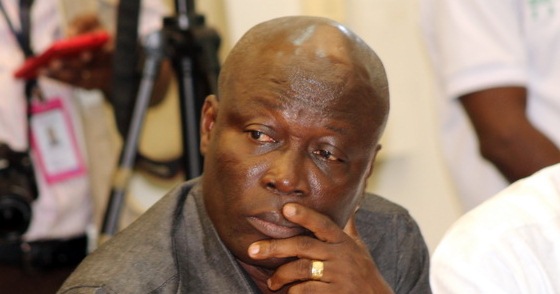
Former Sports Minister Nii Lantey Vanderpuye has raised concerns about the state of Ghanaian football, warning that the current football system could have serious consequences for two of the country’s biggest clubs, Asante Kotoko and Hearts of Oak.
Speaking to Akoma FM, Vanderpuye said the challenges within the current football system are already affecting the two historic clubs and warned that failure to address the problems could prevent them from returning to the top of the Ghana Premier League in the coming years.
“The current football system is affecting clubs like Asante Kotoko and Hearts of Oak. If we fail to address these issues, there is no way these two clubs will win the league in the next five years,” Vanderpuye told Akoma FM.
His comments have brought renewed attention to the challenges confronting some of Ghana’s traditional football giants, particularly at a time when both Asante Kotoko and Hearts of Oak are seeking to regain their dominance in the domestic game.
According to Vanderpuye, the difficulties facing the clubs cannot simply be viewed as isolated problems within the individual teams. He linked their struggles to broader issues within the football system and stressed the need for those challenges to be addressed if the country’s leading clubs are to compete successfully.
Asante Kotoko and Hearts of Oak have historically been among the most successful and influential clubs in Ghanaian football. Their rivalry has been central to the development and popularity of the domestic game, with both clubs boasting large supporter bases and a long history of success in the Ghana Premier League and continental competitions.
However, their recent struggles have raised questions about their ability to consistently compete for major honours. Vanderpuye’s assessment suggests that the problems go beyond the immediate performance of players and coaches and require attention to the wider structures within which the clubs operate.
The former Sports Minister’s warning also points to the importance of creating an environment in which major clubs can operate sustainably. For clubs such as Kotoko and Hearts of Oak, success requires more than assembling a squad for a single season. It involves effective administration, strong financial management, quality recruitment, player development, infrastructure and long-term planning.
Vanderpuye believes that without addressing the challenges within the football system, the two clubs could continue to struggle to reclaim their positions at the summit of Ghanaian football.
His comments are particularly significant because Asante Kotoko and Hearts of Oak have traditionally been regarded as two of the country’s leading clubs. Their success has often been closely associated with the strength and competitiveness of Ghana’s domestic football.
A sustained decline in the fortunes of either club can therefore have implications beyond the clubs themselves, especially considering their large supporter bases and the commercial and historical importance they hold within Ghanaian football.
For Asante Kotoko, returning to consistent domestic success remains an important objective for a club whose history includes multiple Ghana Premier League titles and major continental achievements. Hearts of Oak similarly have a rich history, including domestic dominance and continental success.
But Vanderpuye’s warning suggests that historical achievements alone cannot guarantee future success.
He argues that the football system itself must be strengthened to create conditions that allow major clubs to compete effectively over the long term.
The comments also bring into focus the broader debate about the development of Ghanaian football. While considerable attention is often placed on the Black Stars and the national teams, the strength of Ghanaian football also depends on the health of the domestic league and the clubs competing in it.
Strong clubs provide opportunities for local players, create employment for football professionals, attract supporters and sponsors and serve as important pathways for players hoping to progress to the national teams or move abroad.
When established clubs encounter persistent difficulties, it can affect the competitiveness and attractiveness of the domestic league as a whole.
Vanderpuye’s warning therefore goes beyond the fortunes of Asante Kotoko and Hearts of Oak. It raises questions about whether the existing football structures are capable of supporting the long-term development of Ghana’s biggest clubs.
He also previously described the country’s football governing body in strong terms, saying in an interview with Akoma FM that, “The current football association is Ghana Black Stars association and not Ghana football association.”
That comment reflected his concern that the focus of football administration should extend beyond the senior national team to cover the wider development of the sport.
His latest remarks similarly place emphasis on the domestic game and the conditions under which Ghanaian clubs operate.
The two statements point to what Vanderpuye sees as a need for a broader approach to football administration—one that considers the national teams, domestic clubs, grassroots football, youth development and the structures required to make the game sustainable.
For Asante Kotoko and Hearts of Oak, the challenge is therefore not only about winning individual matches or appointing new coaches. The bigger issue, according to Vanderpuye, is whether the underlying football system can provide the foundation necessary for the clubs to consistently challenge for the Ghana Premier League title.
“If we fail to address these issues, there is no way these two clubs will win the league in the next five years,” Vanderpuye stressed in his conversation with Akoma FM.
His prediction has consequently sparked discussion about the future of the two traditional giants and what must change for them to return to the level of dominance associated with their history.