

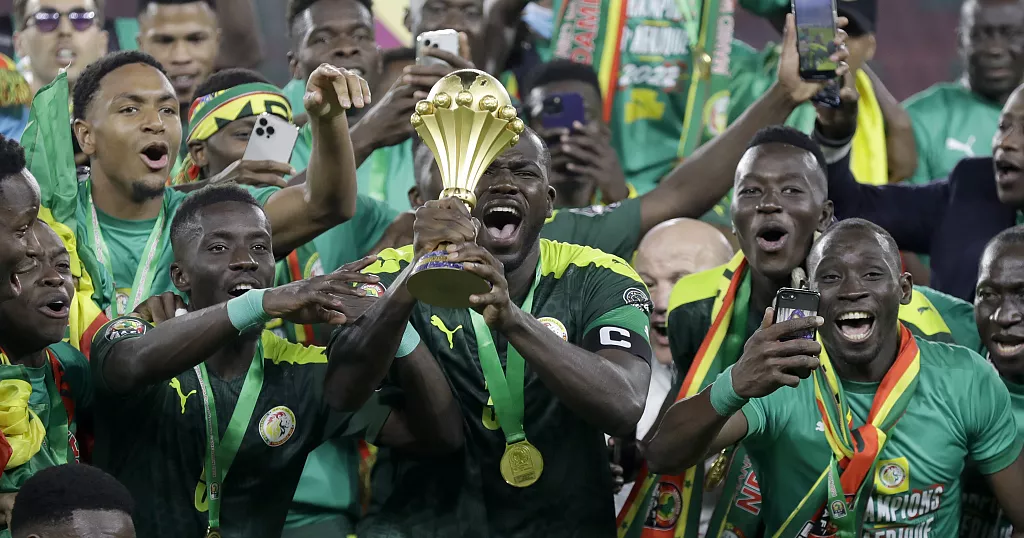
The Confederation of African Football has found itself at the centre of a storm after its controversial decision to strip Senegal of the 2025 Africa Cup of Nations title and hand victory to Morocco, a move that has triggered anger, disbelief, and deep reflection across the football world.
The ruling, which declared Morocco 3-0 winners following Senegal’s walk-off during the final, has not only altered the outcome of a prestigious tournament but has also ignited one of the fiercest debates in the modern history of African football.At a time when the Africa Cup of Nations continues to grow in global relevance and competitiveness, such a decision has cast a long and troubling shadow over the credibility of the competition.
For decades, AFCON has stood as a symbol of African excellence, unity, and footballing brilliance, bringing together nations in a celebration of talent and resilience.However, this latest controversy has shifted the narrative from admiration to criticism, raising uncomfortable questions about governance and leadership at the highest level of the game on the continent.
Many observers believe that the situation represents a failure not just in decision-making, but in match management and crisis control.The inability to prevent the breakdown of the final, and the subsequent handling of the fallout, has been described as a glaring weakness within CAF’s administrative structure.
Critics argue that a tournament of such magnitude demands a higher standard of organisation, particularly in moments of tension and uncertainty.Instead of guiding the situation towards a resolution that preserved sporting integrity, CAF’s actions have been perceived as abrupt and lacking sensitivity to the broader implications.
For supporters across Africa, the decision feels like a betrayal of the very essence of football, where victories are meant to be earned through effort, determination, and fair play on the pitch.The idea that a champion could be decided through administrative judgment rather than competition has left many questioning the true value of the title.
Senegal’s journey to the final had been marked by discipline, skill, and perseverance, making the outcome particularly painful for their players and fans.Being denied the chance to complete the contest has created a lingering sense of injustice that may not easily fade.
On the other side, Morocco’s official triumph has been overshadowed by the circumstances under which it was awarded, leaving questions about how such a victory will be remembered in history.Even for the players, lifting a trophy without concluding the battle on the field may feel incomplete, as the essence of football lies in competition, not technicalities.
This situation has also reignited long-standing criticisms of African football governance, with some pointing to recurring issues of inconsistency and lack of transparency.For years, detractors—especially in parts of Europe—have questioned the organisation of AFCON, and incidents like this only reinforce those negative perceptions.
The timing of this controversy is particularly unfortunate, as African football has been making strides in gaining respect and recognition on the global stage.With more African players excelling in top leagues around the world, the continent’s football reputation has been steadily rising.
However, decisions such as this risk undoing that progress by shifting attention away from talent and towards administrative shortcomings.Many stakeholders believe that CAF had alternative options that could have preserved the integrity of the final.
Suggestions such as resuming the match under controlled conditions or scheduling a replay have been widely discussed as more balanced approaches.Such measures, though challenging, would have demonstrated a commitment to fairness and respect for the spirit of the game.
Instead, the choice to award a walkover victory has been viewed by many as a shortcut that failed to address the deeper issues at hand.The fallout from the decision has extended beyond the two teams involved, affecting fans, sponsors, and the broader football community.
Supporters who had eagerly anticipated a thrilling final have been left disappointed by an ending that feels incomplete and unsatisfactory.The emotional connection that fans have with AFCON makes such controversies particularly damaging, as they strike at the heart of what the tournament represents.
Across social media and public discussions, voices have continued to express frustration, calling for accountability and reform within CAF.The incident has also highlighted the need for clearer regulations and stronger enforcement mechanisms during high-pressure matches.
Ensuring that players, officials, and organisers understand and adhere to established protocols is essential in preventing similar situations in the future.Moreover, the role of leadership during crises has come under scrutiny, with many insisting that decisive and fair action is crucial in maintaining confidence.
For a governing body like CAF, moments like this are defining, as they reveal the strength—or weakness—of its structures and values.There is now a growing consensus that reforms are necessary to restore trust and protect the future of African football.
Transparency in decision-making processes, improved communication, and greater accountability are among the key demands being raised.African football deserves an administration that reflects the passion, talent, and dedication seen on the pitch.
Players who dedicate their careers to representing their nations deserve to compete in an environment that is fair and well-managed.Fans, too, deserve a competition that upholds the principles of justice and excellence.
While the controversy surrounding AFCON 2025 may fade over time, its impact will likely be felt for years to come.It serves as a powerful reminder that the integrity of football must always be safeguarded, especially at the highest levels of competition.
For CAF, this moment represents both a challenge and an opportunity—an opportunity to rebuild, to improve, and to prove that African football can rise above its setbacks.The path forward will not be easy, but it is necessary if the organisation hopes to regain the trust of millions who cherish the game.
In the end, the legacy of AFCON should be defined by unforgettable matches and inspiring performances, not by controversy and dispute.Until meaningful changes are made, however, the events of the 2025 final will remain a stain on what should have been a celebration of African football at its very best.