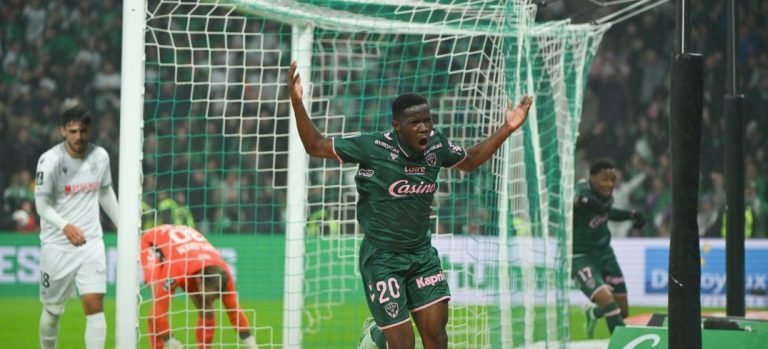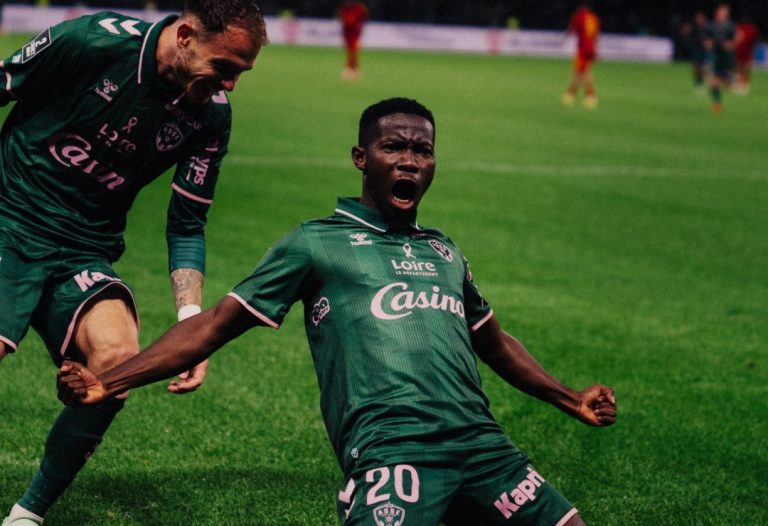


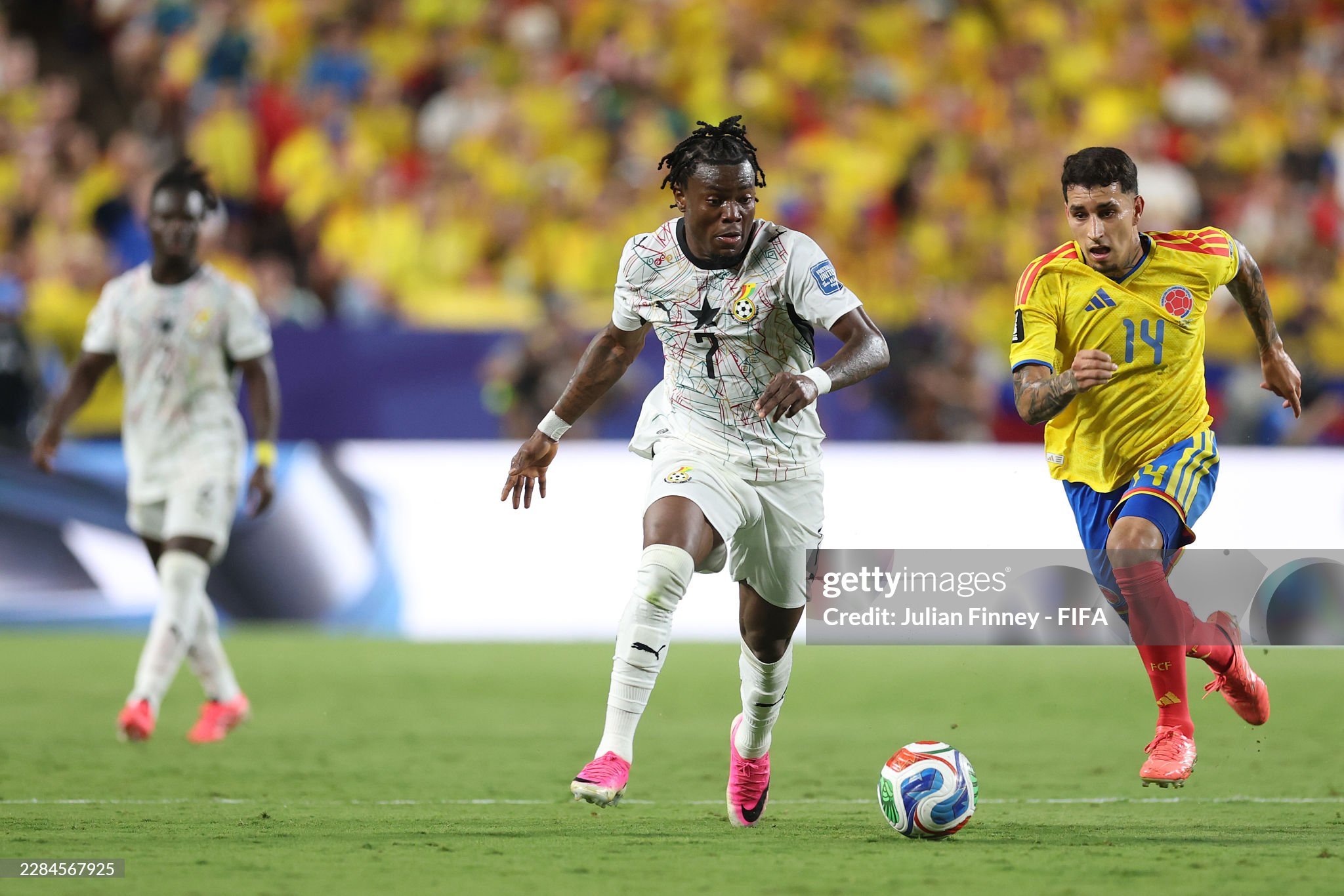
Ghana is out of the 2026 World Cup, and once again, we find ourselves in a place we know too well.
isappointed fans and stakeholders are pointing accusing fingers in every direction: at the players, with some singled out and scapegoated for the exit; at the GFA and its president; at the Sports Minister.
Soon enough, someone will announce, if they have not already, that we are “going back to the drawing board,” that well-worn phrase we reach for after every disappointment.
Then, in a few years, we will be right back here, saying the same things and drawing on the same board.
Then there is the other response, the one that should worry us more. The GFA president and those around him are already portraying this as a successful World Cup campaign.
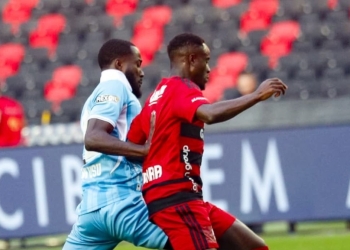
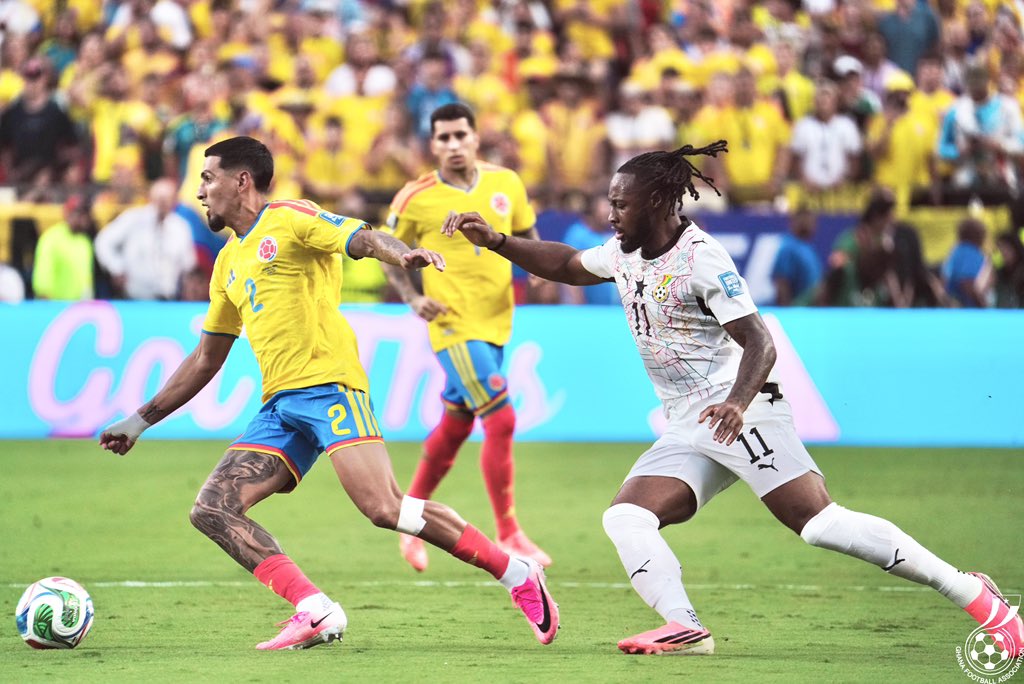
The numbers tell a different story. Ghana went the entire first half without registering a single shot in either of its first two matches, managed just 21 percent possession against England, among the lowest at the tournament, failed to record a shot on target against Colombia, and needed a 95th-minute winner to beat a Panama side that had largely outplayed us.
But dwell too long on the statistics, and you miss the deeper problem. In countries with strong sports institutions, a campaign like this would trigger a formal, independent review, and its findings would have consequences.
In Ghana, no institution has the authority or independence to require such a review. We occasionally produce the appearance of accountability, as we did with the Dzamefe Commission after the 2014 World Cup. But we all know how that ended: a report was written, submitted, and shelved, with no lasting consequence.
As a result, the key actors are left to grade their own work. That is not simply a flaw of the individuals involved. It is what happens when accountability depends on institutions that do not exist.
We have seen this movie before. The names change, but the script rarely does. I covered the Black Stars for years as a sports journalist in Ghana.
I sat through the press conferences, listened to the promises, and watched the cycle repeat itself. We keep having the same conversation because we keep asking the wrong questions. The question is not who failed. The question is what failed.
A team is a by-product
Here is an uncomfortable truth: the Black Stars are not the foundation of Ghanaian football. They are its byproduct.
A national team is the visible tip of an invisible system: talent pathways, competent administrators, professional club structures, sustainable financing, and institutions capable of holding everyone accountable. When that system works, the national team succeeds because the system keeps producing. When it is broken, no amount of passion, prayer, or panic will deliver sustained success.
Some will point to past moments of glory as proof that the current approach can work. Look more closely, and those moments prove the opposite.
Under former GFA President Kwesi Nyantakyi, Ghana enjoyed its most successful footballing era in living memory.
We qualified for our first FIFA World Cup in 2006. We produced our best-ever World Cup showing in 2010, coming within a handball and a missed penalty of becoming the first African nation to reach the semifinals.
We also came agonizingly close to ending our long AFCON drought, losing the 2010 final to Egypt by a single goal and the 2015 final to Ivory Coast on penalties.
And then it all unravelled. The administration collapsed following Anas Aremeyaw Anas’ #Number12 exposé. That is precisely the point. The achievements of that era were substantial, but they were never sufficiently institutionalized to survive the collapse of the administration that produced them.
Success had become too closely tied to one individual rather than embedded in structures that could endure beyond him.
When Nyantakyi fell, Ghanaian football did not simply lose a president. It lost much of the operating structure that had sustained its success, forcing another reset. That is the danger of individual dependent success. It rises with individuals, but it often falls with them, too.
It did not have to be this way. Elsewhere on the same continent, another nation was making a different choice, building patiently, deliberately, and for the long term. Today, the results speak for themselves. Morocco’s run to the 2022 World Cup semifinal, the first by an African nation, was no accident.
It was the product of more than a decade of deliberate investment in the Mohammed VI Football Academy, training infrastructure, education, and a federation strategy that endured regardless of who held leadership positions.
Beneath it all sits the Botola Pro, a domestic league rated second only to Egypt’s on the continent.
The clearest evidence that the system is doing the work came after that historic run.
Walid Regragui, the coach who guided Morocco to the World Cup semifinal and the 2025 AFCON final, resigned in March barely three months before the 2026 World Cup. Morocco did not panic, nor did it collapse.
Instead, it promoted Mohamed Ouahbi, who had just led Morocco to the FIFA U20 World Cup title, from within its own coaching pathway. The Atlas Lions went on to reach the quarterfinals before bowing out as the only African nation to advance that far, a deep run delivered in the first World Cup after losing their most successful coach in decades.
When Ghana’s football leadership collapsed, the system collapsed with it; when Morocco’s coaching leadership changed, the system kept running. Morocco did not build a team. They built a machine that builds teams.
The same principle explains Morocco’s success in recruiting diaspora players. Fourteen foreign-born players featured in its 2022 World Cup squad and nineteen in the current one. Ghana has recently made moves to replicate that approach in search of quicker success, but the resemblance is only cosmetic.
Morocco’s diaspora recruitment is not improvisation. It is policy.
Since 2008, the nation has pursued a national sport policy, formalised by Law No. 30-09 in 2010. It places the state at the centre of sports governance, infrastructure development, and federation oversight.
Among its defining features is a permanent, institutionalized scouting network across Europe that is mandated, funded, and sustained over time.
Morocco does not stumble upon its Hakimis and Ziyechs. Rather, its system is designed to find them. If Ghana copies the call-ups without building the machinery to back them up, we will once again be picking the fruit while refusing to plant the tree.
Institutions designed to fail
Consider the National Sports Authority. Under Ghanaian law, the NSA is responsible for regulating all national sports federations, including the GFA.
Yet its board is appointed by the President, its members serve four-year terms that mirror the electoral cycle, and the Director General, the official responsible for running the institution, enjoys even less security of tenure. When governments change, so does leadership, and appointments are not necessarily based on competence.
The result is an institution that is effectively rebuilt with every change of government. It accumulates little institutional memory, offers little incentive to invest in reforms whose benefits may only materialize years later, and struggles to pursue a consistent long-term vision. A regulator that cannot outlive a government is unlikely to build systems that do.
Yet what does the NSA spend much of its time doing? Walk through its operations today, and its most visible function is facility management, maintaining sports venues, and renting them out for events. That work has its place, but it should represent only a small part of the Authority’s mandate.
The Sports Act says as much. Section 18 requires every national sports association to submit its budgets through the NSA and account for sponsorship revenue, gifts, and other benefits through the Authority to the sector Minister. In other words, the law positions the NSA as the principal financial oversight body for every sport federation in the country.
How often is that role visibly performed?
A body established as a regulator has gradually settled into life as a landlord.
It gets worse. The Sports Act 2016, the primary legislation governing sport in Ghana, does not specify a single qualification requirement for those appointed to lead our sports institutions.
Not one. And without a comprehensive national sports policy, the sports sector has operated for decades without a coherent strategic direction. We have been running without a plan, or as I have come to think of it, without a coach.
Even the ministry responsible for sport has struggled to maintain a stable identity. Since independence, sport has been paired at different times with education, culture, youth, and now recreation.
Every restructuring brings new priorities, new administrative arrangements, and another fresh start.
But this is not just a football problem. Consider last May’s Africa Athletics Championships. Ghana’s hosting was widely criticized for organizational shortcomings, with athletes publicly complaining about issues, including food provision.
The country was ridiculed online, while Ghana delivered a below-par performance. Yet only two years earlier, Ghana had hosted the 2024 African Games to widespread acclaim, even if that success now sits under a cloud of allegations concerning the misuse of public funds. The contrast is revealing.
Those two events were organized under different governments. Whatever institutional knowledge was gained from hosting a continental multisport event failed to survive the transition. It departed with the political appointees who held it.
In countries with stronsportsrt institutions, hosting expertise accumulates from one event to the next. In Ghana, we too often begin again. Strong institutions produce consistency; ours leave success to chance.
What must change
There is finally some encouraging news as efforts to develop a national sports policy are now underway. That progress must not be wasted, but Ghanaians know from experience that documents alone effect little change. We have laws today whose provisions are honoured more in the breach than in observance. If the new policy is to mean anything, it must be built to outlive the government that adopts it.
Otherwise, it risks dying with it.
That means guaranteeing the NSA’s Director General and senior leadership genuine security of tenure, something the current law conspicuously fails to provide.
It means appointments made through transparent, merit-based processes, insulated from the political cycle, and free to think in decades rather than electoral terms.
It also means amending the Sports Act to require professional qualifications for those who lead our sports institutions. It is telling that the Public Services Commission sets minimum qualification standards for management positions across the public service, yet the sports sector appears to operate as though those standards do not exist. We would never appoint an unqualified person to run a hospital or a bank.
Sport deserves the same seriousness.
It means a national sports policy that every government, whether NDC or NPP, inherits and continues. Beyond legislation, capacity building must become a permanent institutional function rather than a workshop here and a course there, so that knowledge remains within our organizations even when individuals leave.
None of this will trend the way a coach’s sacking does. But it is what separates nations that win consistently from those that win occasionally and then spend years asking what went wrong.
When strong institutions exist, success does not depend on who the GFA president is or which party controls the Sports Ministry. Success becomes systemic, produced, and reproduced by structures that outlive every individual within them.
The Black Stars will rise again when the system beneath them is rebuilt.
Until then, we are not developing football.
We are just recycling disappointment.
Source: Hussein Alhassan