
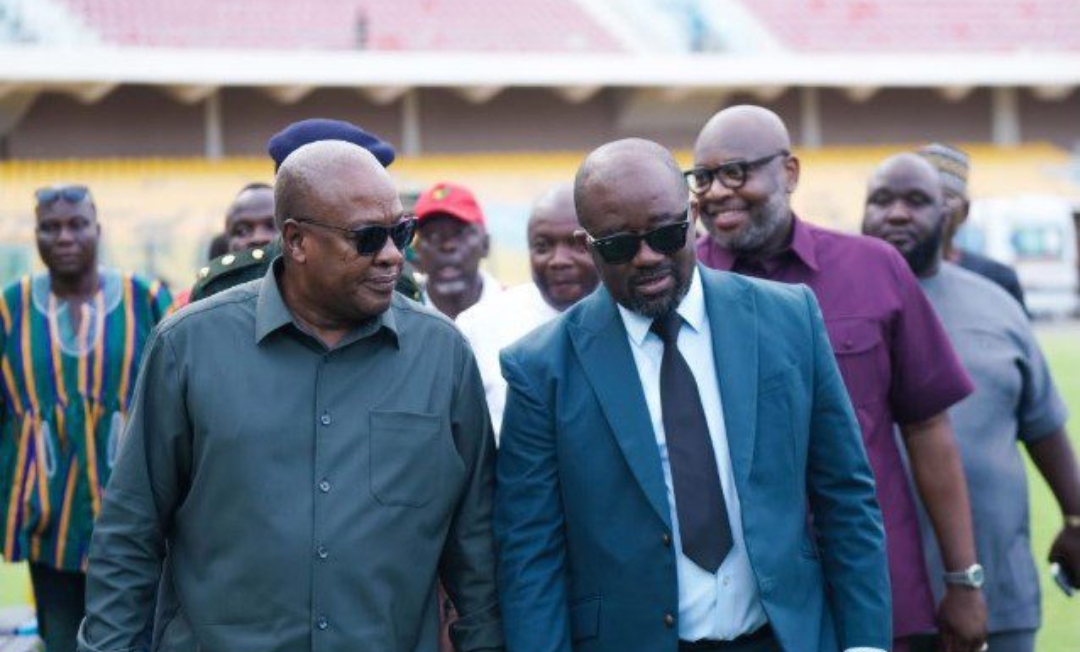
The government is reportedly prepared to support Ghana Football Association President Kurt Okraku in his ambition to secure a stronger position within FIFA, even if he eventually decides not to contest for a third term as president of the GFA, according to sources familiar with the situation.
The development is said to form part of discussions surrounding the future of Ghana football following the recent crisis involving the Black Stars and the growing pressure on the leadership of the Ghana Football Association.
Sources indicate that while government may not be in favour of Okraku extending his tenure as GFA president beyond his current mandate, there is reportedly a recognition of the influential position he has already built for himself within African and world football administration.
The sources claim that government’s position is not necessarily aimed at ending Okraku’s career in football administration.
Rather, the reported thinking is that Okraku could leave the GFA presidency at the appropriate time while continuing to represent Ghana at the continental and global levels.
This could see the government support his efforts to strengthen his position within FIFA, where he already occupies an important role.
Okraku was appointed chairman of FIFA’s Anti-Racism and Anti-Discrimination Committee in 2025, a four-year position running from 2025 to 2029. FIFA currently lists him as the chairman of the committee.
He is also serving as Second Vice-President of the Confederation of African Football, placing him among the senior figures involved in the administration of African football.
The combination of those positions has significantly increased Ghana’s representation within international football governance.
A different path for Okraku
According to the sources, the emerging position within government is that Okraku’s future should not necessarily be limited to the GFA presidency.
Instead, there is reportedly an opportunity for Ghana to continue benefiting from his growing influence within CAF and FIFA, even if another person takes over the leadership of the GFA.
This would represent a different route for Okraku.
Rather than concentrating his political and administrative ambitions solely on remaining GFA president, he could potentially devote more attention to his international responsibilities and seek further opportunities within FIFA.
The sources believe such a move could allow Ghana to maintain a voice at the highest levels of global football administration while also opening the door for a change in leadership at the domestic level.
That distinction is important because the GFA presidency and international football positions are not necessarily the same political project.
Okraku could leave the GFA presidency and still retain his FIFA responsibilities, subject to the relevant FIFA, CAF and GFA rules.
Okraku’s international influence
Okraku’s international rise has been one of the notable aspects of his tenure as GFA president.
Since taking charge of the GFA in 2019, he has gradually expanded his presence beyond Ghana.
His appointment as WAFU Zone B president gave him a stronger platform in West African football before he later rose to the CAF leadership.
In February 2026, Okraku spoke about his appointment as CAF Second Vice-President and described it as an important development for Ghana’s return to high-level African football governance.
His FIFA committee appointment further strengthened that position.
FIFA’s official organisational listing currently identifies Okraku as both GFA president and chairman of the Anti-Racism and Anti-Discrimination Committee.
The development means that Ghana currently has a representative occupying positions at both CAF and FIFA level.
For government, maintaining that international presence could therefore be considered strategically important.
Government’s reported position after Black Stars crisis
The reported support for Okraku’s international ambitions comes against the background of a difficult period for Ghana football.
The Black Stars’ recent struggles have triggered widespread debate about the direction of the national team and the administration of the game.
Following the crisis, Sports and Recreation Minister Kofi Adams engaged the GFA leadership over the future of the national teams and the wider football structure.
Government has subsequently become more involved in discussions concerning technical and administrative reforms.
The Sports Ministry has also taken steps towards a new approach to the management of the national teams, including greater government involvement in the process of selecting a new Black Stars coach.
The government has, however, stopped short of dissolving the GFA, meaning that the association remains the recognised body responsible for the administration of football in Ghana.
This has created an interesting situation.
On one hand, there is growing pressure for change at the domestic level.
On the other hand, Ghana continues to have a football administrator occupying significant positions within international football governance.
The reported strategy, therefore, could be to separate the two issues.
Third-term debate
The question of Okraku’s possible third term remains one of the biggest issues surrounding the next GFA presidential election.
Okraku has so far refused to confirm whether he will seek another term.
In September 2026, he said it was too early to make a decision, noting that there was still considerable time before the next elective General Assembly.
He also indicated that he would eventually leave the position, saying that he could not remain at the GFA forever.
The GFA Congress approved an amendment in 2025 that increased the presidential term limit from two four-year terms to three, creating the possibility of Okraku seeking another mandate.
That amendment has since fuelled intense debate within Ghana football.
Some stakeholders believe the current president should be allowed to seek another term under the amended statutes, while others believe the country needs a change in leadership after the difficulties faced by the national teams.
The reported government position introduces another layer to that debate.
If the sources are correct, government may prefer a situation where Okraku does not pursue another GFA presidency but instead continues his work at CAF and FIFA.
Why FIFA could become important
For Ghana, having a senior official involved in FIFA decision-making could have long-term significance.
FIFA is the governing body of world football and has considerable influence over the development of football globally.
Its committees deal with areas ranging from competitions and development to governance, integrity, disciplinary matters and anti-discrimination.
Okraku’s current FIFA committee role therefore gives him an international platform that extends beyond the day-to-day running of the GFA.
The government’s reported willingness to support his international ambitions could consequently be viewed as an attempt to preserve Ghana’s influence within football’s global administrative structure.
Rather than seeing the end of Okraku’s GFA presidency as the end of his football administration career, government could reportedly regard it as a transition into a more international role.
A possible succession arrangement
The reported development could also influence the race to succeed Okraku as GFA president.
If Okraku eventually decides against contesting the 2027 election, attention will inevitably turn towards possible successors.
Several football administrators and stakeholders could emerge as candidates, depending on the political and electoral dynamics within the GFA.
A new president could focus on domestic reforms while Okraku continues to operate internationally.
Such an arrangement could create a situation in which Ghana has one administrator leading the domestic football association and another representing the country at the highest levels of CAF and FIFA.
The two roles could potentially complement each other if the relationship is properly managed.
The key issue would be ensuring that the interests of Ghanaian football remain central to both domestic and international engagements.
Okraku’s FIFA ambitions could continue beyond the GFA
The sources further suggest that Okraku’s ambitions should not be interpreted solely through the lens of the GFA presidency.
His current FIFA appointment already extends beyond the end of the GFA presidential term.
His four-year tenure as chairman of FIFA’s Anti-Racism and Anti-Discrimination Committee runs until 2029.
That means even if the GFA leadership changes, Okraku could continue to have an international football role.
The possibility of seeking additional positions within FIFA could therefore remain open.
Any such future appointment, however, would depend on FIFA’s processes and the support of the relevant football authorities and member associations.
The government’s reported willingness to support such ambitions would therefore not automatically guarantee a FIFA position.
It would instead represent political and institutional backing for Ghana’s representative on the international stage.
Ghana’s international representation
The issue also goes beyond Okraku personally.
Ghana has previously had strong representation within CAF and FIFA, particularly during the period when former GFA president Kwesi Nyantakyi occupied senior positions within African football administration.
His departure from football administration left Ghana with reduced representation at the highest levels.
Okraku’s subsequent rise has restored some of that visibility.
His CAF Second Vice-Presidency and FIFA committee chairmanship have therefore been presented as important developments for Ghanaian football administration.
Government could consequently view his continued international involvement as a national interest rather than merely a personal ambition.
That would explain why, according to the sources, the reported discussion over his future does not necessarily mean government wants him completely out of football administration.
The bigger picture
The emerging picture is therefore more complicated than a simple contest between government and the GFA president.
Government may reportedly want a change in the leadership of the GFA while simultaneously recognising Okraku’s international value.
The two positions can coexist.
Okraku could potentially leave the domestic presidency while continuing to serve Ghana within FIFA and CAF.
Such a scenario would also allow the government to push for a new direction in the domestic administration of football without necessarily losing Ghana’s existing influence at the international level.
It could also reduce the possibility of Ghana losing its representation in important football institutions.
However, any transition would have to be carefully managed to avoid creating further divisions within Ghana football.
No official confirmation yet
There has been no public confirmation from government that it has agreed to support a specific future FIFA bid by Okraku.
Neither has Okraku publicly announced a campaign for a new FIFA position beyond his existing responsibilities.
The claim about government backing should therefore be treated as information from sources rather than an established government policy.
What is publicly documented is that Okraku already holds senior international football positions and that FIFA lists him as chairman of its Anti-Racism and Anti-Discrimination Committee.
His current FIFA appointment runs through 2029, while his CAF role has also elevated Ghana’s representation at the continental level.
The bigger question now is whether Okraku’s future will remain tied to the GFA presidency or whether his career will increasingly move towards international football administration.
If the sources are accurate, government may be preparing for the latter scenario — supporting Okraku’s international ambitions while allowing a new face to take charge of Ghana football domestically.
For now, the GFA presidency question remains unresolved.
Okraku has not confirmed whether he will contest the next election, while the debate over the direction of Ghana football continues.
What appears increasingly clear is that any discussion about Okraku’s future cannot be separated from his growing influence within CAF and FIFA.
If he eventually leaves the GFA presidency, his football journey may not be ending.
It could simply be moving from the domestic stage to an even bigger international platform.