

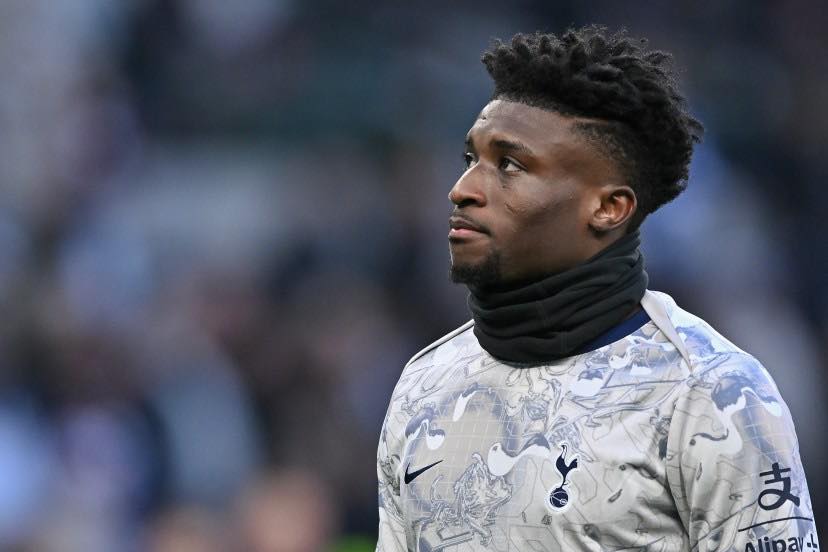
The question facing Carlos Queiroz is not whether Mohammed Kudus remains one of Ghana’s most important players. It is whether the timing is right to bring him back into the Black Stars fold.
Kudus has finally begun the difficult journey back from a lengthy injury layoff, making substitute appearances for Tottenham Hotspur after spending several months away from competitive football. His return is undoubtedly encouraging for Ghana, but it also presents Queiroz with a delicate selection decision ahead of the 2027 Africa Cup of Nations qualifiers.
Ghana are preparing to face Côte d’Ivoire and The Gambia, with Queiroz back in charge of the Black Stars after being reappointed by the Ghana Football Association.
The big question, therefore, is simple: Should Kudus be invited immediately, or should the coach allow him more time to regain his rhythm at club level?
Kudus is too important to ignore
There is a strong argument for including him.
When fully fit and playing regularly, Kudus is arguably one of Ghana’s most influential attacking players. His ability to carry the ball, beat defenders, create opportunities and score from midfield makes him a player opponents have to plan for.
Ghana have missed that individual quality during his absence.
Kudus’ previous injury problems were serious enough to keep him out of Ghana’s 2026 World Cup squad, making his recent return to action particularly significant. Reports indicated that he had missed around seven months of football before returning for Tottenham.
That alone makes his comeback something Ghanaian supporters will welcome.
But an international call-up is not necessarily the same thing as being ready to start competitive matches.
The concern is match sharpness
This is where Queiroz must be careful.
Kudus may have returned to the Tottenham bench, but two substitute appearances do not automatically mean he is back at his best.
After such a long injury layoff, the player still needs consistent minutes, confidence and physical conditioning. The difference between being medically fit and being fully match-ready can be significant.
A player can be cleared to play while still lacking the sharpness required to perform at his highest level.
For Ghana, that distinction matters.
The upcoming qualifiers are not friendly matches where Queiroz can simply experiment without consequences. The Black Stars are entering a new qualifying campaign, and every point will matter.
Queiroz therefore has to balance two competing priorities: getting one of Ghana’s best players back into the team and protecting him from being rushed too quickly.
There is a middle ground
Perhaps the best solution is not an outright decision between call him up and leave him out.
Queiroz could invite Kudus, assess his physical condition with the Tottenham medical team and Ghana’s own technical staff, and then determine how much responsibility he can handle.
A call-up does not mean Kudus must start both matches.
He could begin from the bench, depending on his fitness, and be introduced when the situation demands his qualities.
That could be particularly useful in a tight match where Ghana need someone capable of changing the rhythm of the game.
Kudus does not necessarily need to play 90 minutes to influence a match.
Even 20 or 30 minutes could give Ghana an attacking dimension that few other players in the squad can provide.
Queiroz must also think beyond these qualifiers
There is another reason why bringing Kudus into the squad could make sense.
Queiroz is not simply preparing Ghana for two matches. He is beginning another phase of his tenure and will need to establish the core of the team he wants to build.
The Portuguese coach was brought back partly because of his international experience and his familiarity with the Black Stars. His new mandate begins with the upcoming international window, which includes Ghana’s AFCON qualifying fixtures.
Kudus is likely to be an important part of that project if he can stay fit.
Therefore, having him around the team could be beneficial even if he is not ready to start.
It would allow Queiroz to work with him, monitor his progress and gradually integrate him into the tactical system.
But Ghana must avoid emotional selection
There is also a danger in making the decision purely from sentiment.
Kudus is a major Ghanaian talent. Nobody needs convincing about his importance when he is fit.
However, the national team cannot afford to select players simply because supporters want to see them back.
The medical and performance data must come first.
If Kudus is still struggling physically, has limited training time or is unable to withstand the intensity of international football, Queiroz should not hesitate to leave him out.
The objective should not be to get Kudus onto the pitch at all costs.
The objective should be to get the best version of Mohammed Kudus back on the pitch and keep him there.
So, should Queiroz invite him?
Yes — but with caution.
If Kudus continues to make progress at Tottenham and is medically cleared for international duty, there is a strong case for including him in the squad.
However, his selection should come with no guarantee of a starting role.
Queiroz can use the camp to assess his fitness, monitor his training load and decide whether he is ready for meaningful minutes.
If the midfielder is not yet at the required level, there should be no pressure to use him.
For Ghana, the bigger prize is not simply having Kudus available against Côte d’Ivoire or The Gambia. It is having a fully fit, confident and match-sharp Mohammed Kudus available for the long haul.
The qualifiers could be the beginning of that process.
After months on the sidelines, Kudus is finally moving again. Now Queiroz must decide whether to accelerate his return to the Black Stars or give him the time needed to complete it properly.
For a player of Kudus’ quality, Ghana will undoubtedly want him back. The real question is not whether he belongs in the Black Stars — it is whether his body is ready for the demands of international football again.