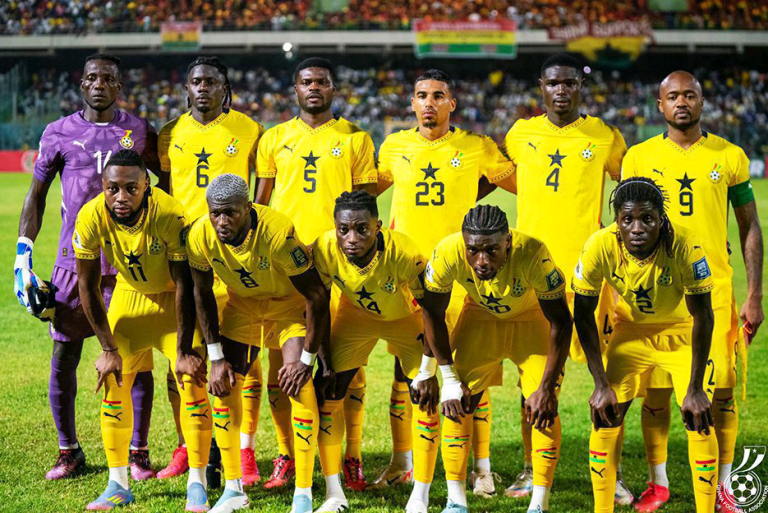


Few football teams in Africa carry the weight of history, pride, and expectation like the Ghana national football team. For decades, the Black Stars have been a symbol of excellence, resilience, and continental dominance. From producing world-class talents to achieving historic milestones on the global stage, Ghana’s football story is one of brilliance—but also one that now raises a pressing question: can the Black Stars rise again?
A Legacy Built on Greatness
The foundation of Ghana’s football greatness was laid long before many modern fans were born. The Black Stars quickly established themselves as a powerhouse in African football, winning the Africa Cup of Nations four times—in 1963, 1965, 1978, and 1982. These victories cemented Ghana’s reputation as one of the continent’s elite footballing nations.
Legends like Abedi Pele, Tony Yeboah, and Osei Kofi carried the nation’s hopes with skill, flair, and unmatched determination. Their performances didn’t just win trophies—they inspired generations.
The Golden Generation and Global Recognition
The early 2000s saw the emergence of what many call Ghana’s “Golden Generation.” Players like Michael Essien, Asamoah Gyan, Sulley Muntari, and Stephen Appiah took Ghanaian football to new heights.
Their biggest statement came at the 2010 FIFA World Cup, where Ghana became only the third African nation in history to reach the quarter-finals. That unforgettable clash against Uruguay remains one of the most dramatic moments in football history.
Ghana came agonizingly close to becoming the first African country to reach a World Cup semi-final. The heartbreak of that night—highlighted by a missed penalty and a cruel penalty shootout defeat—still lingers in the hearts of fans. Yet, it also marked Ghana as a global force.
Consistency at the Continental Level
Beyond the World Cup, Ghana maintained strong performances in AFCON tournaments, finishing as runners-up multiple times, including in 1992, 2010, and 2015. The team consistently reached the latter stages, proving their competitiveness even when trophies proved elusive.
Players like André Ayew and Jordan Ayew carried the torch into the next era, keeping Ghana relevant on the international stage.
Decline and Growing Concerns
In recent years, however, the story has shifted. The dominance that once defined the Black Stars has faded. Early exits in major tournaments, inconsistent performances, and questions about management and player commitment have raised concerns among fans and analysts.
The team that once struck fear into opponents now struggles for identity and cohesion. Tactical instability, administrative issues, and the transition between generations have all contributed to this decline.
Despite flashes of brilliance from emerging talents, the consistency that once defined Ghanaian football has been missing.
A New Generation, A New Hope?
There is, however, reason for cautious optimism. A new crop of players—many based in Europe—are beginning to emerge. Young talents bring energy, pace, and technical ability, offering hope for a revival.
The challenge lies in building a cohesive unit, restoring discipline, and rekindling the fighting spirit that once defined the Black Stars. Leadership—both on and off the pitch—will be critical.
Can the Black Stars Rise Again?
This is the question on every Ghanaian’s mind.
History shows that Ghana is capable of greatness. The legacy of past heroes, the passion of fans, and the abundance of talent suggest that a resurgence is possible. But football has evolved, and success now demands structure, long-term planning, and consistency.
The Black Stars are not just a football team—they are a symbol of national pride. Their rise once united a nation and inspired a continent.
Now, at a crossroads, Ghana must decide its next chapter.
Can the Black Stars return to the summit of African football? Can they once again shine on the world stage?
The answer lies not just in talent—but in vision, discipline, and belief.