

Ghana football does not need another slogan, another carefully rehearsed promise, another colourful launch, another grand speech about development, or another parade of administrators congratulating themselves while the game that once commanded respect across Africa continues to struggle with credibility, investment, talent development, competitive standards, and institutional accountability; what Ghana needs is a fundamental change in leadership priorities, a serious commitment to rebuilding the foundations of the sport, and a willingness by those entrusted with its administration to put personal ambition, political connections, financial interests, and the desire to remain in power aside for the good of the national game.
The painful reality is that Ghana is not a country without football history, talent, experience, or international recognition, because this is a nation that once stood among the giants of African football, produced legendary players, conquered continental competitions, dominated youth football, challenged the world’s strongest national teams, and inspired generations of young Africans to dream of becoming professional footballers, yet today, the country is repeatedly forced to explain disappointing performances, defend questionable administrative decisions, and search for quick solutions to problems that have been allowed to accumulate over several years.
The question that every genuine football stakeholder must confront is simple but uncomfortable: how did a country that once represented excellence, discipline, ambition, and competitive pride become so dependent on slogans, public relations campaigns, emergency appointments, and promises of a brighter future, while the very structures responsible for producing champions, developing young players, protecting the integrity of competitions, and strengthening domestic clubs continue to face serious questions about their effectiveness?
Ghana’s football crisis cannot be solved by changing a slogan on a banner, introducing a new campaign theme, organising another stakeholder meeting, or announcing another ambitious development programme whose impact is difficult to measure, because football development is not built on the vocabulary of progress but on the practical delivery of quality coaching, functioning academies, competitive leagues, reliable funding, modern infrastructure, transparent governance, and a football administration that understands that its first responsibility is to protect and advance the game rather than preserve individual influence.
Ghana’s glorious past remains a painful reminder of what has been lost
There was a time when Ghanaian football did not require elaborate publicity campaigns to convince the public that the country was serious about the game, because the achievements of the Black Stars, the Black Satellites, the Black Starlets, and the country’s leading club sides provided sufficient evidence of the quality of Ghanaian football, while the names of the players who represented the nation carried respect in dressing rooms, stadiums, and football communities across the continent and beyond.
Ghana’s four Africa Cup of Nations titles, won in 1963, 1965, 1978, and 1982, remain important landmarks in the country’s sporting history, representing generations of footballers who played with technical quality, tactical intelligence, determination, and national pride, and although football has evolved considerably since those triumphs, the achievements remain a reminder that Ghana once possessed the competitive foundations necessary to challenge the strongest teams in Africa.
The legendary players of those generations helped establish Ghana as a serious football nation, and subsequent stars, including Abedi Ayew Pele, Tony Yeboah, Samuel Kuffour, Stephen Appiah, Michael Essien, Sulley Muntari, Asamoah Gyan, and many others, carried that reputation into different eras, demonstrating that Ghana’s football identity was built not merely on attractive jerseys or motivational slogans but on talent identification, competitive ambition, international exposure, and the ability to produce players capable of performing at the highest level.
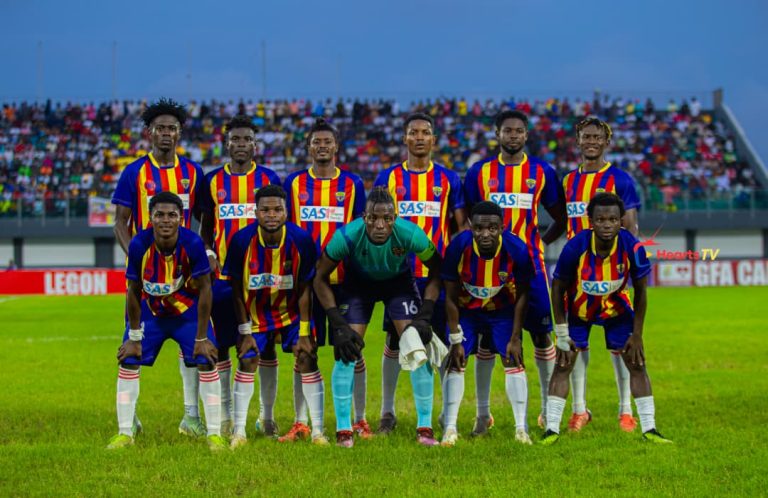
The story of Ghanaian club football is equally significant, particularly the achievements of Asante Kotoko and Accra Hearts of Oak, whose continental campaigns established them among Africa’s recognised clubs and helped build a fierce domestic rivalry that attracted supporters, generated national conversation, and gave Ghanaian football an identity extending beyond the Black Stars and international tournaments.
Asante Kotoko’s triumphs in the African Cup of Champions Clubs in 1970 and 1983 demonstrated that Ghanaian clubs could compete successfully against the leading sides from North Africa, Central Africa, and other football regions, while their repeated appearances in continental finals strengthened the club’s reputation and established Kumasi as an important centre of African football culture.
Accra Hearts of Oak also wrote a remarkable chapter in the country’s football history when the Phobians won the CAF Champions League in 2000, defeating Tunisia’s Espérance in the final, before going on to win the CAF Super Cup in 2001, achievements that demonstrated the capacity of Ghanaian clubs to build competitive squads, prepare for demanding continental fixtures, and translate domestic strength into international success.
Beyond the two biggest names, clubs such as Great Olympics, Ebusua Dwarfs, Sekondi Hasaacas, Real Tamale United, Obuasi Goldfields, now known as AshantiGold, and other historic sides contributed to the development of Ghanaian football through regional rivalries, local talent production, strong community identities, and competitive domestic football that gave young players opportunities to progress from neighbourhood pitches into organised professional competition.
The achievements of these clubs should not be remembered merely as nostalgic stories for elderly supporters to tell younger generations, because they represent a sporting inheritance that should have been protected, expanded, and converted into sustainable football institutions capable of competing consistently in Africa, developing players for international markets, improving club finances, and creating professional opportunities for thousands of people whose livelihoods depend directly or indirectly on the sport.
Instead, Ghanaian football supporters are increasingly confronted with questions about why the country struggles to reproduce the continental dominance of earlier generations, why some historic clubs face persistent financial and organisational difficulties, why domestic competitions frequently struggle to command the same attention as major foreign leagues, and why the achievements of the past appear increasingly distant from the present ambitions of the game.
Nostalgia alone cannot restore Ghana’s lost football standing, and the achievements of Kotoko, Hearts of Oak, Goldfields, Hasaacas, Dwarfs, and other historic clubs will not automatically translate into future success unless modern administrators invest in the foundations that allowed those institutions to command respect, including quality scouting, reliable coaching, effective recruitment, professional management, youth development, financial discipline, and competitive participation in African club tournaments.
The uncomfortable truth is that Ghana cannot continue to celebrate its historical achievements while neglecting the systems required to produce new ones, because a football nation that repeatedly looks backwards for evidence of greatness without addressing the structural problems affecting its present will eventually discover that history has become a substitute for progress rather than the foundation upon which progress is built.
The Black Stars and the painful contrast between ambition and delivery
Ghana’s international achievements also provide a powerful illustration of the difference between genuine football development and the public presentation of ambition, because the Black Stars reached the last 16 of the 2006 FIFA World Cup in Germany before advancing to the quarter-finals of the 2010 tournament in South Africa, where the country came within a penalty kick of reaching the semi-finals and potentially becoming the first African nation to achieve that milestone at a men’s senior World Cup.
That 2010 campaign remains one of the defining moments in Ghanaian sporting history, not simply because the team reached the quarter-finals but because it demonstrated that Ghanaian footballers could compete against elite international opposition, withstand intense pressure, and carry the hopes of an entire continent, with the painful defeat to Uruguay after a dramatic match reinforcing how narrow the margin can be between a historic achievement and an agonising exit.
The team of that era benefited from a combination of talented players, international experience, competitive exposure, disciplined preparation, and a generation that had already experienced success in youth football, while the presence of players competing in demanding leagues abroad strengthened the national team’s ability to handle the speed, physicality, tactical discipline, and psychological pressure associated with major international tournaments.
Yet the lesson from those achievements appears to have been inadequately translated into a lasting domestic development model, because reaching a World Cup quarter-final should have encouraged sustained investment in coaching education, sports science, academy development, youth competitions, scouting networks, and long-term technical planning, rather than creating an expectation that Ghana would automatically return to the highest level whenever another group of talented players emerged.
The Black Stars cannot remain competitive indefinitely on the strength of individual brilliance, historical reputation, and the availability of Ghanaian players developed by clubs and academies outside the country, because a sustainable national team must be supported by a domestic football system that consistently identifies talent, improves technical ability, develops tactical understanding, produces competitive players, and prepares footballers for the demands of modern international football.
Every disappointing national team campaign should therefore trigger a serious examination of player development, coaching preparation, tactical planning, administrative decision-making, and the relationship between the national team and domestic football, rather than another cycle of emotional promises, motivational speeches, and declarations that the country is ready to begin a new chapter without explaining precisely what will change.
When national team expectations repeatedly exceed the results delivered on the pitch, football authorities owe the public a clear explanation of the technical and administrative decisions behind those outcomes, including how coaches are appointed, how performance targets are established, how players are assessed, how resources are allocated, and what measurable changes will be introduced to prevent the same problems from recurring.
Ghana’s football leadership must understand that supporters do not demand perfection, because defeats are part of the game and even the most successful football nations experience difficult periods, but supporters are entitled to demand competence, transparency, coherent planning, accountability, and convincing evidence that every major setback is being used to improve the system rather than simply manage public anger until the next competition arrives.
The historic collapse of youth football
Perhaps the most disturbing aspect of Ghana’s football difficulties is the apparent weakening of the pathway that once transformed young players into international stars, because a country that became the first African nation to win the FIFA U-20 World Cup in 2009 should have treated that historic achievement as a foundation for a permanent youth development revolution, ensuring that every generation inherited stronger academies, better coaching, more competitive youth leagues, and more reliable opportunities to progress into senior football.
Ghana’s Black Satellites made history in Egypt in 2009 when they defeated Brazil on penalties after a goalless final to win the FIFA U-20 World Cup, with the victory establishing Ghana as the first African nation to capture the title and providing a powerful demonstration of the country’s capacity to produce technically gifted, mentally resilient, and tactically competitive young footballers.
That achievement was not an accident, because Ghana had already established a strong tradition in youth football, reaching the final of the same competition in 1993 and 2001, finishing fourth in 1997, and producing generations of players whose performances at junior level attracted international attention, creating expectations that the country could become a consistent force in the development of elite young footballers.
However, winning a youth world championship is only the beginning of a development process, not its final destination, and the real test of a football system is whether its young champions progress into productive senior careers, strengthen the national team, improve the domestic league, and inspire another generation of players through a functioning structure that supports them long after the celebrations and medal presentations have ended.
Ghana must therefore confront difficult questions about the state of school football, district competitions, regional youth leagues, academy funding, grassroots coaching, talent identification, and the availability of modern training facilities, because when these systems weaken, the consequences may not immediately appear in the senior national team but eventually emerge in the form of reduced depth, inconsistent technical quality, limited tactical maturity, and increased dependence on a small number of exceptional individuals.
The decline of youth development cannot be explained simply by a shortage of natural talent, because young Ghanaians continue to demonstrate athletic ability, creativity, ambition, and enthusiasm for football, while the greater concern is whether the structures surrounding those young people are sufficiently organised, professional, and adequately financed to convert raw ability into technically complete players capable of competing against the world’s best.
A country cannot claim to be serious about youth development when talented children must depend heavily on the financial sacrifices of their parents, the goodwill of individual coaches, or the uncertain resources of privately operated academies, because a credible national system should establish clear standards for youth coaching, protect children from exploitation, support grassroots competitions, and provide transparent pathways from school football to academies, professional clubs, and national youth teams.
The problem becomes even more serious when youth competitions are irregular, poorly funded, inadequately publicised, or treated as secondary activities rather than essential components of the football calendar, because young players need consistent competitive exposure to develop decision-making, game intelligence, tactical discipline, physical conditioning, and the emotional resilience required to succeed in professional football.
Ghana’s football authorities must also resist the temptation to treat youth teams primarily as short-term opportunities to win tournaments or produce headline-grabbing results, because a genuine development programme should measure success through the quality of coaching, the number of players progressing into senior football, educational protection, injury prevention, technical improvement, and the creation of sustainable opportunities for talented young people.
If the country wishes to reproduce the success of the 2009 Black Satellites, it must invest in the systems that make such achievements possible, rather than repeatedly invoking that generation’s triumph as evidence that Ghana possesses the capacity to succeed, because capacity without a functioning development structure remains potential that can be wasted by poor planning, inadequate resources, and administrative neglect.
When administration becomes more important than the game
One of the most damaging perceptions surrounding football administration is that relationships, political influence, personal loyalty, and internal power struggles can sometimes become more important than competence, fairness, and the sporting interests of clubs, creating an environment in which stakeholders may question whether decisions are being made according to transparent regulations or the preferences of influential individuals.
Questions surrounding promotion and relegation are particularly sensitive because the integrity of a league depends on every club believing that its fate will be determined by performances on the pitch, consistently applied competition rules, and properly constituted disciplinary procedures, rather than by backroom arrangements, selective enforcement, administrative manoeuvring, or relationships with those who exercise authority over the competition.
Allegations that football leaders can determine which clubs are relegated, which teams are promoted, or which sides receive favourable administrative treatment must never be accepted as established facts without credible evidence, but they must also not be dismissed casually when they arise, because the appropriate response to concerns about competition integrity is transparent investigation, published decisions, independent review, and clear explanations that allow the public to understand how the rules have been applied.
No football administrator should have the power to manipulate a competition for personal convenience, reward allies, punish critics, or protect a club because of its commercial value, historical status, political connections, or relationship with the governing authority, and any credible allegation of such conduct should be investigated through procedures that are independent, consistent, and open to scrutiny.
Promotion and relegation are among the most consequential events in professional football because they affect club revenues, sponsorship opportunities, employment, player contracts, supporter confidence, and the financial survival of institutions that may have spent years building their competitive identities, meaning that even the perception of unfair interference can damage the credibility of an entire league.
The Ghana Football Association and competition organisers must therefore ensure that league regulations are clear before competitions begin, that disciplinary processes are applied consistently, that clubs have access to appropriate appeals mechanisms, and that decisions affecting promotion, relegation, points deductions, eligibility, and competition participation are supported by publicly accessible explanations wherever regulations permit.
Leadership must also be separated from personal ownership of the game, because football administrators are custodians of institutions rather than permanent masters of them, and the measure of successful leadership should be the strength of the structures left behind, the quality of the competitions delivered, the confidence of stakeholders, and the ability of the system to function effectively regardless of who occupies a particular office.
Where internal elections, executive appointments, committee positions, and regional football structures become dominated by struggles for influence, there is a risk that energy which should be devoted to coaching development, club support, grassroots competitions, infrastructure, and commercial growth will instead be consumed by political calculations, factional disputes, and efforts to preserve individual positions.
Ghanaian football requires leadership capable of accepting criticism without treating every disagreement as an attack, engaging clubs and supporters without reducing consultation to ceremonial meetings, and allowing qualified technical professionals to make evidence-based decisions even when those decisions challenge established interests, because progress is impossible when protecting authority becomes more important than correcting mistakes.
Match-fixing scandals and the destruction of public trust
Ghana football’s credibility suffered a major blow in 2018 when the Number 12 investigative documentary brought allegations of bribery and corruption involving referees, football administrators, and other officials into the national spotlight, exposing the vulnerability of a sport whose credibility depends on the public’s confidence that matches are decided by the players on the field rather than financial inducements, personal relationships, or secret arrangements behind closed doors.
The controversy surrounding the investigation demonstrated how quickly public trust can deteriorate when allegations emerge that match officials may be influenced in the award of penalties, the issuing of cards, and other decisions capable of changing results, because supporters invest their money, emotions, time, and loyalty in competitions on the understanding that the rules will be applied fairly and that the outcome will be determined by sporting performance.
The consequences of match manipulation extend far beyond a single controversial decision or disputed result, because when supporters begin to suspect that a match may have been influenced by interests outside the pitch, the value of genuine sporting achievement diminishes, sponsorship becomes harder to secure, club rivalries become more hostile, and the credibility of referees, competition organisers, and football administrators comes under increasing pressure.
The appropriate response to such scandals cannot be limited to public statements condemning corruption, disciplinary announcements, temporary suspensions, or promises to restore confidence, because sustainable reform requires independent investigations, credible enforcement, effective whistle-blower protection, transparent referee appointments, proper monitoring of suspicious betting patterns, and meaningful consequences for individuals found responsible through fair and established procedures.
The Number 12 controversy should therefore remain an important lesson for Ghanaian football, not as an excuse to condemn every administrator or match official, but as a warning that institutions must be designed to prevent misconduct, detect irregularities, investigate complaints fairly, and demonstrate through consistent action that no individual, club, official, or governing body is above the rules.
Why slogans cannot replace real investment
Ghana football does not need another slogan promising a new era unless that slogan is supported by measurable commitments to fund youth competitions, improve coaching standards, strengthen club finances, modernise training facilities, protect match integrity, and establish transparent administrative systems, because a compelling phrase cannot pay the wages of a coach, maintain a training ground, purchase medical equipment, finance a youth tournament, or guarantee that a talented teenager will receive the professional guidance needed to develop into an international footballer.
Real investment means creating a football development plan with clear targets, published budgets, independent financial audits, measurable performance indicators, and accountability for results, while encouraging private-sector partnerships, improving the commercial appeal of the Ghana Premier League, strengthening club academies, supporting school competitions, developing qualified coaches and referees, and ensuring that resources are allocated according to genuine football needs rather than the personal preferences of individuals who control the system.
Ultimately, Ghana football will not recover its former standing through slogans, public relations exercises, ceremonial launches, or the repeated invocation of past glories, but through a painful yet necessary commitment to institutional reform, sustained investment, transparent competition management, credible enforcement against corruption, stronger youth development, financially stable clubs, and leaders willing to sacrifice personal interests for the future of the game; the country that once conquered Africa through Asante Kotoko and Hearts of Oak, lifted the FIFA U-20 World Cup as the continent’s first champion in 2009, and came within touching distance of a World Cup semi-final in 2010 must now decide whether those achievements will remain distant memories or become the foundation of a carefully rebuilt football system, because the greatest betrayal of Ghana’s football heritage would not simply be losing matches or missing tournaments, but allowing another generation of talented young people to inherit a weakened system while those entrusted with restoring it continue to celebrate promises that never become progress.
What must change if Ghana football is to recover?
The path forward requires more than criticism. It requires specific, measurable reforms.
- Grassroots and youth football: Establish a dependable calendar of school, district, regional, and national youth competitions, with funding and technical oversight.
- Club development: Improve financial transparency, academy standards, training facilities, player welfare, and long-term commercial planning.
- Competition integrity: Publish disciplinary decisions, apply promotion and relegation rules consistently, and investigate credible allegations of match manipulation independently.
- Leadership accountability: Evaluate administrators against publicly stated targets, strengthen conflict-of-interest safeguards, and make leadership transitions orderly and transparent.
- Technical development: Invest in coach education, scouting, sports science, medical support, tactical preparation, and continuous player development.
- Continental ambition: Support clubs participating in CAF competitions through improved preparation, sustainable financing, recruitment, and professional management.
- Public confidence: Communicate honestly about setbacks, disclose measurable progress, and demonstrate that the rules apply equally to influential and less influential stakeholders.
Ghana’s football history proves that the country can produce exceptional players and achieve remarkable results. The challenge is to build institutions capable of reproducing those achievements consistently. Until investment, accountability, integrity, and long-term planning become more important than slogans and personal interests, promises of revival will remain promises, and the distance between Ghana’s glorious past and its footballing ambitions will continue to demand answers.