

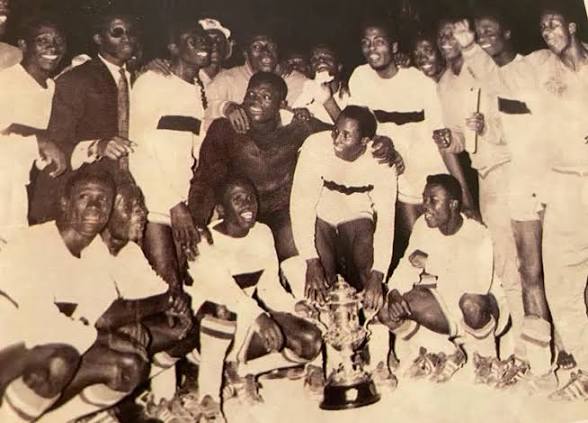
It has been over four decades since Ghana last lifted a major senior football trophy, a drought that has left fans longing for the glory days of the Black Stars. The nation’s last triumph came in 1982, when Ghana emerged victorious at the Africa Cup of Nations (AFCON), a campaign that symbolized the country’s rise as a footballing powerhouse. That victory was more than just a sporting achievement; it was a defining moment for Ghanaian football, a time when players became national heroes and the country celebrated a golden era of talent, teamwork, and continental dominance. The sense of unity, national pride, and optimism that accompanied the 1982 AFCON victory created high expectations for the generations that followed, setting the bar for what it meant to be a Black Star.
Since that historic win, Ghana has endured a prolonged period without major senior silverware, a drought that has tested the patience and resilience of players, coaches, and supporters alike. Despite assembling some of the most talented squads in African football, the Black Stars have repeatedly come close to success only to fall short at crucial moments. This prolonged absence from the winner’s podium has created a narrative of near-misses, where every promising campaign seems to end in heartbreak. It is a story of immense talent facing the challenges of consistency, competition, and the fine margins that separate champions from contenders.
Ghana’s journey in AFCON finals after 1982 underscores the cruel nature of competitive football. In 1992, the Black Stars reached the final in Senegal, facing Ivory Coast in a match that was tense, tactical, and emotionally charged. Despite putting in a valiant performance, Ghana ultimately lost, succumbing in a penalty shootout that shattered the hopes of fans. This defeat marked the first in a series of heartbreaking near-misses, highlighting both the promise of Ghanaian football and the unpredictable nature of knockout tournaments, where one moment can define an entire campaign.
The 1990s saw Ghana steadily building its reputation as a competitive force in African football. The domestic league produced a wealth of talent, while the national team nurtured a generation of players capable of competing against the continent’s elite. Yet, the promise of trophy success remained just out of reach. As the Black Stars continued to compete at a high level, fans became accustomed to a bittersweet pattern: strong performances, memorable matches, and the constant sense that victory was tantalizingly close but unattainable.
The 2010 AFCON in Angola offered another opportunity for redemption. Ghana arrived at the tournament with a squad blending experience, skill, and youthful energy. Fans believed that this might be the campaign to finally reclaim continental supremacy. The Black Stars fought valiantly through the tournament, demonstrating tactical intelligence and attacking flair. However, in the final against Egypt, Ghana fell short once again. The heartbreak was acute, not only for players but for an entire nation that had hoped to witness the end of a decades-long drought.
In 2015, Ghana reached yet another AFCON final, this time against Ivory Coast. The team displayed remarkable cohesion, resilience, and attacking prowess throughout the tournament, igniting hope that the drought might finally end. The final was tightly contested, with Ghana pushing their limits to seize victory. Yet, in a narrow defeat, the Black Stars once again fell short of lifting the trophy. This second disappointment in five years reinforced the narrative of Ghana as a nation capable of competing with Africa’s best, but one that struggled to secure the ultimate prize.
Despite these setbacks at the senior level, Ghanaian football has continued to flourish in terms of talent development and international recognition. The country has consistently produced world-class players who have made their mark in Europe and beyond. Legendary figures such as Abedi Pele, Michael Essien, Asamoah Gyan, and Thomas Partey have showcased Ghanaian skill, determination, and tactical intelligence on the global stage, ensuring that the nation’s footballing reputation remains intact despite the lack of silverware at home.
Ghana’s success at youth levels has been particularly remarkable and provides a contrast to the senior team’s struggles. The nation has captured the U17 World Cup four times, as well as the U20 World Cup once, achievements that underline the exceptional quality of its football development programs. These victories have not only brought joy to the country but have also produced players who would go on to strengthen the senior team and compete at the highest levels in Europe and Africa.
These youth triumphs illustrate the country’s ability to cultivate world-class talent, even if translating that success to the senior level has been a persistent challenge. Players emerging from these victorious squads bring with them experience, confidence, and the winning mentality, yet the transition to senior football has not always been smooth. The Black Stars have repeatedly faced the harsh reality of Africa’s competitive environment, where talent alone is not enough to secure victory.
Ghana’s performances on the global stage also reflect the country’s footballing pedigree. The Black Stars have qualified for the FIFA World Cup four times—in 2006, 2010, 2014, and 2022—with a fifth qualification in the works for 2026. Each appearance has showcased the nation’s tactical sophistication, resilience, and ability to challenge the world’s best teams. The 2010 World Cup in South Africa remains particularly memorable, with Ghana reaching the quarterfinals and narrowly missing out on the semifinals after a dramatic penalty shootout against Uruguay. That match has become emblematic of both the team’s potential and the heartbreak that has defined much of its senior-level history.
The contrast between Ghana’s youth success, World Cup qualifications, and the senior trophy drought highlights the complexity of football development. While the country has consistently produced top-level talent, factors such as tournament pressure, strategic decisions, and fine margins have repeatedly denied the Black Stars the continental crown. These challenges serve as both lessons and motivators for subsequent generations, emphasizing the need for mental fortitude alongside technical skill.
The history of Ghanaian football is rich, complex, and filled with both triumph and adversity. From the glory days of the 1960s, 70s, and 1980s to the near-misses of recent decades, the narrative is one of resilience, national pride, and a relentless pursuit of excellence. The Black Stars’ story is inseparable from the nation’s identity, with football serving as a source of unity, joy, and collective aspiration.
Domestic clubs have played a critical role in nurturing talent, providing the foundation for players to progress to professional levels both at home and abroad. Many of the country’s most celebrated footballers began their careers in local leagues before making the leap to European clubs, where they honed their skills and gained exposure to higher levels of competition. This migration has strengthened the national team but has also introduced challenges in building a cohesive squad for major tournaments.
The trophy drought is also a reflection of the increasing competitiveness of African football. Nations like Egypt, Nigeria, Senegal, and Morocco have risen to prominence, making continental tournaments more unpredictable and challenging. In this context, Ghana’s repeated near-misses reflect not a lack of quality but the high stakes and fine margins that define knockout competitions.
Despite the frustration, Ghanaian fans remain unwavering in their support. The 40-plus-year wait has not diminished enthusiasm; rather, it has intensified the collective desire for victory. Each new AFCON tournament carries the weight of history and expectation, with the nation’s hopes pinned on the current crop of Black Stars to finally deliver the elusive triumph.
The current generation of Ghanaian players is uniquely positioned to end the drought. With a blend of domestically developed talent and young stars gaining experience in top European leagues, the squad possesses both skill and maturity. Coaches are focused on leveraging past lessons, ensuring that players are tactically and mentally prepared for high-pressure situations in finals and crucial matches.
This emphasis on preparation extends beyond physical training. Mental fortitude, strategic awareness, and the ability to handle the psychological pressures of finals have become central to Ghana’s approach. Learning from past disappointments, the coaching staff aims to instill confidence and resilience, turning decades of near-misses into motivation for success.
The youth system continues to be a source of hope for Ghanaian football. Programs at U17 and U20 levels ensure a steady stream of talent, providing future stars who have already experienced international success and understand the mindset required to win. These players bring energy, creativity, and ambition, key ingredients for breaking the senior trophy drought.
At the senior level, Ghanaian football authorities are keen to build squads that combine experience with youthful exuberance. Veterans provide leadership and composure, while young players inject pace, dynamism, and fearlessness. This balance is crucial in navigating the pressures of continental tournaments, where matches are often decided by small margins.
The Black Stars’ participation in multiple FIFA World Cups further underscores Ghana’s footballing strength. While senior trophies have been elusive, competing against the world’s best has elevated the standard of the team, exposing players to high-pressure environments and elite tactical systems that can be applied in continental competitions.
Every near-miss and every loss has contributed to the evolution of Ghanaian football. The lessons learned from penalties, late goals, and tight finals have been incorporated into training, scouting, and preparation, ensuring that the mistakes of the past inform the strategies of the future.
The trophy drought is more than a statistic; it is a reflection of Ghanaian football’s history, challenges, and potential. Each campaign, whether successful or heartbreaking, has strengthened the team’s identity and reinforced the national passion for the sport. Fans continue to hope that the next AFCON or major tournament will finally end this long wait.
With the combination of experienced leaders, emerging talents, and lessons from decades of competition, the Black Stars are poised to challenge for glory more convincingly than ever. The coming tournaments represent both an opportunity and a responsibility—to honor the legacy of past generations while delivering the triumph that has eluded the nation for over 40 years.
The story of Ghanaian football is one of resilience, ambition, and unwavering national pride. Despite the drought, the Black Stars remain a symbol of hope, a reflection of the country’s talent, and a source of inspiration for millions of fans.
Ultimately, ending the trophy drought will not just be about winning a tournament; it will symbolize the culmination of decades of effort, ambition, and passion. It will be the moment when Ghana reclaims its place at the pinnacle of African football and fulfills the expectations of generations that have waited patiently for senior-level success.
Ghanaian fans continue to believe. The victories at youth levels, the near-misses at AFCON finals, and the historic World Cup runs all serve as reminders of what is possible. The next generation of Black Stars carries not just the hope of winning a trophy but the weight of national pride and a rich footballing legacy.
For now, the 40-plus-year drought remains a central chapter in Ghanaian football history. Yet it is also a story of potential, determination, and unwavering faith. Every match, every tournament, and every squad brings the country closer to ending the wait, creating anticipation that the next victory may finally arrive.
Ghana’s footballing journey is far from over. With the right blend of talent, leadership, and preparation, the Black Stars are on the cusp of a new era—one in which the decades of longing, near-misses, and heartbreak may finally be replaced with celebrations, trophies, and the ultimate vindication of Ghanaian football’s enduring excellence.