

Ghanaian football has reached another uncomfortable crossroads, and this time the question confronting the nation is bigger than the departure of one coach, bigger than one humiliating result and certainly bigger than the tactical decisions made during one disappointing ninety minutes. The Black Stars have once again entered a period of uncertainty after the latest collapse under Carlos Queiroz, a development that has forced supporters, former players, football administrators and observers to ask a question that has become increasingly difficult to avoid: what exactly is happening to Ghana’s senior national team, and why does changing the man on the touchline repeatedly fail to change the fortunes of the team?
For years, the Black Stars were regarded as the principal symbol of Ghanaian football excellence, a national team whose identity was built on technically gifted players, competitive spirit, attacking imagination and an extraordinary ability to produce footballers capable of competing at the highest level of the international game. That reputation has not disappeared overnight, but the distance between the Black Stars of Ghana’s proud past and the team struggling to establish consistency today has become impossible to ignore, particularly when every new coaching appointment arrives with promises of rebuilding only for the same structural problems to return after a few matches.
Since Kurt Okraku assumed the presidency of the Ghana Football Association, the senior national team has gone through a succession of coaching changes involving Kwesi Appiah, C.K. Akonnor, Milovan Rajevac, Otto Addo, Chris Hughton and Carlos Queiroz, with Otto Addo returning for a second spell after Hughton’s departure. The exact number can therefore be described differently depending on whether individual coaching spells or distinct coaches are being counted, but the central issue remains unchanged: Ghana has repeatedly changed the technical leadership of its most important football institution without establishing the kind of sustained technical continuity that allows a national team to develop a recognizable identity over several competitive cycles.
That revolving door should concern Ghana far more than the personality of the latest coach because national-team football is not supposed to operate like a club that can simply change managers every few months and expect an entirely different product to emerge. A national team requires long-term scouting, player development, tactical continuity, succession planning, integration of emerging talent, careful management of senior players and a clearly defined football philosophy that remains intact even when one coach leaves and another arrives, because without those structures every appointment becomes another isolated experiment rather than another chapter in a coherent national football project.
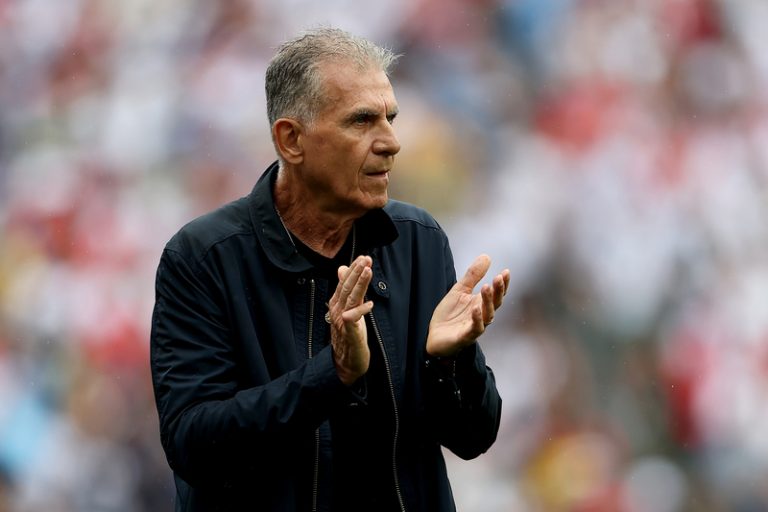
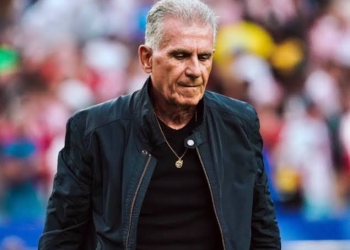
Carlos Queiroz therefore became more than just another coach when he arrived in Ghana; he became another test of whether the country’s football leadership had finally found a sustainable solution to a problem that had already outlived several managers. His international reputation, extensive World Cup experience and long coaching career gave the appointment considerable weight, but the circumstances surrounding his arrival also exposed one of the fundamental weaknesses in Ghana’s football planning because he was brought in shortly before the 2026 World Cup, leaving limited time to transform a team whose problems had already been visible for some time.
The decision to entrust the Black Stars to an experienced international coach so close to a major tournament was understandable from one perspective because Ghana needed immediate stability and could not afford an extended rebuilding exercise before the World Cup. Yet the same decision created another problem because a coach arriving under intense time pressure has very little opportunity to introduce an entirely new football philosophy, properly assess the depth of the squad, develop young players, establish tactical partnerships and build the kind of institutional relationship with the national setup that can survive beyond one tournament.
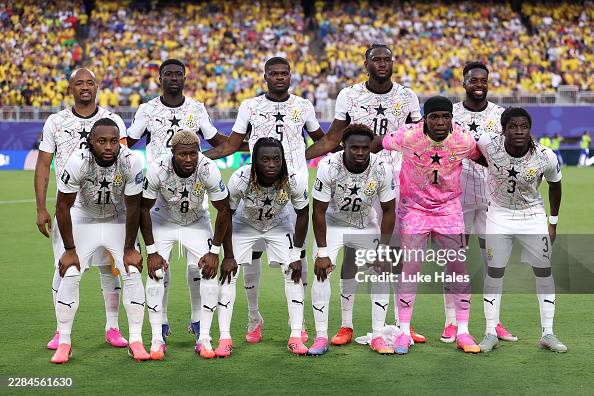
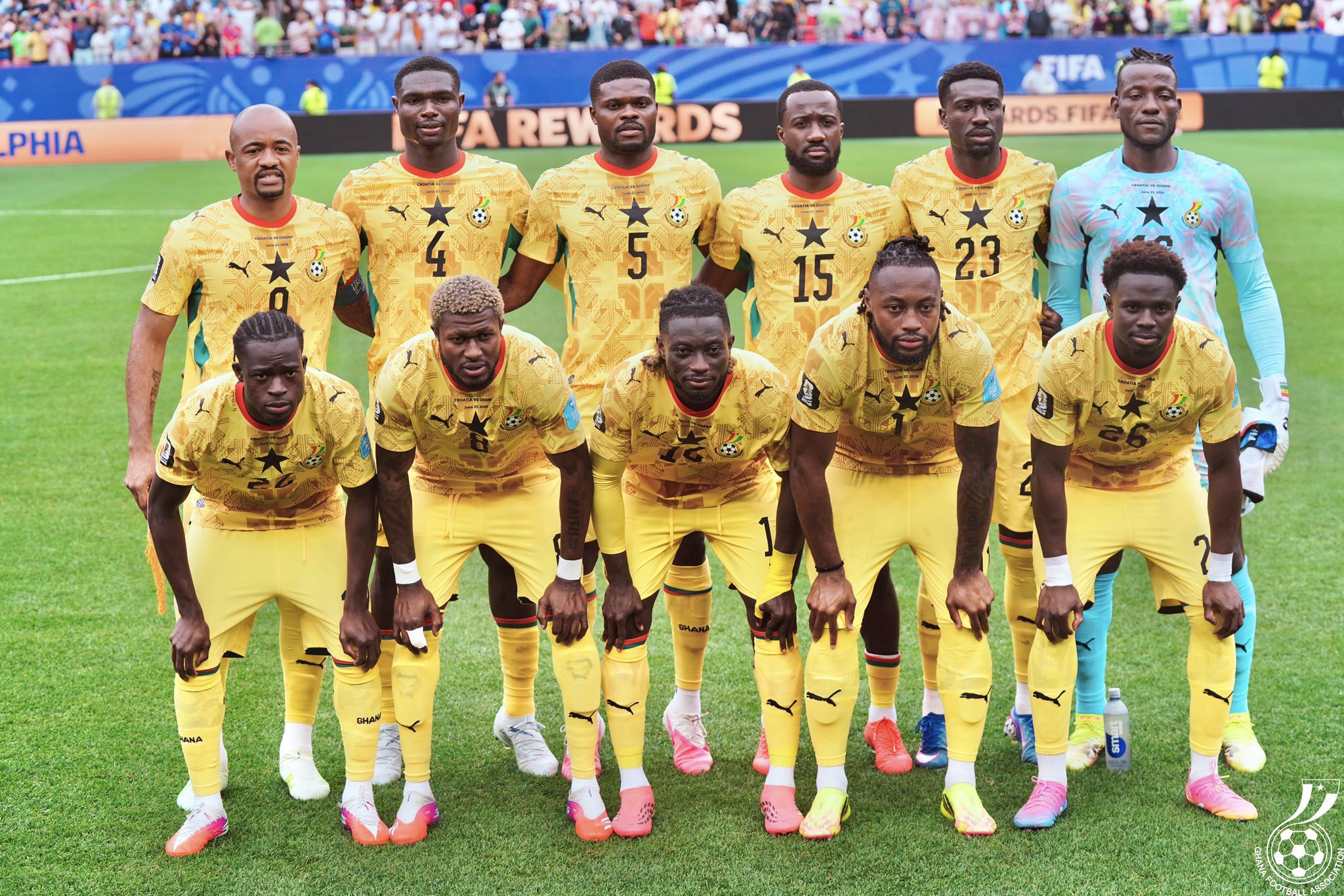
Queiroz nevertheless managed to guide Ghana into the knockout stage of the 2026 World Cup, reaching the Round of 32 before the Black Stars were eliminated by Colombia. That achievement provided an important argument for continuity, particularly because Ghana had failed to progress beyond the group stage at several recent major tournaments and the World Cup campaign offered at least one indication that the team could still compete effectively on the biggest stage when properly organized.
But international football is judged not only by isolated moments of progress; it is judged by consistency, trajectory and the ability to convert opportunities into sustained improvement. Ghana therefore faced a difficult question after the World Cup: was Queiroz being retained because the football authorities genuinely believed he was the right person to build the next generation of the Black Stars, or was continuity simply the easiest administrative option at a time when another coaching search would have created another layer of uncertainty?
The Ghana Football Association ultimately retained Queiroz for the next phase of the programme, with the decision coming after discussions involving the GFA and the Ministry of Sports and Recreation. The reasoning presented publicly was built around his experience, technical expertise and knowledge of the Black Stars, but the subsequent results made that decision far more difficult to defend on footballing grounds because Ghana began its 2027 Africa Cup of Nations qualifying campaign with a 2-0 defeat to Côte d’Ivoire in Bouaké before suffering an even more damaging 4-2 defeat to The Gambia in Accra.
The defeat to The Gambia was particularly painful because Ghana had appeared to have the match under control after taking a two-goal lead, only for the Black Stars to concede four times and surrender a position from which victory had appeared highly achievable. Queiroz accepted responsibility for the result, describing it as a terrible day for Ghanaian football and apologising to supporters, but his admission also highlighted the larger problem facing the country: when a coach repeatedly accepts responsibility for failures, the football authorities must still determine whether the problem ends with the coach or whether the coach is merely the latest person carrying the weight of a deeper institutional crisis.
And that is where the conversation about Ghana’s Black Stars must become more mature, because reducing every failure to the coach is convenient but increasingly difficult to sustain. Coaches make mistakes, tactical decisions can be questioned, substitutions can fail, team selection can be debated and training methods can be criticized, but when different coaches arrive with different backgrounds and the same structural problems repeatedly reappear, the possibility of a deeper problem must be examined seriously rather than dismissed as another managerial failure.
The first question Ghana must therefore ask is whether the Ghana Football Association has created an environment in which coaches can actually succeed. A coach can be held responsible for tactics, selection, preparation and match management, but he cannot single-handedly create a generation of elite players, repair the domestic development system, solve administrative weaknesses, build youth academies across the country, determine how scouting is conducted or manufacture a competitive pool of players when the underlying football ecosystem is not producing enough of them.
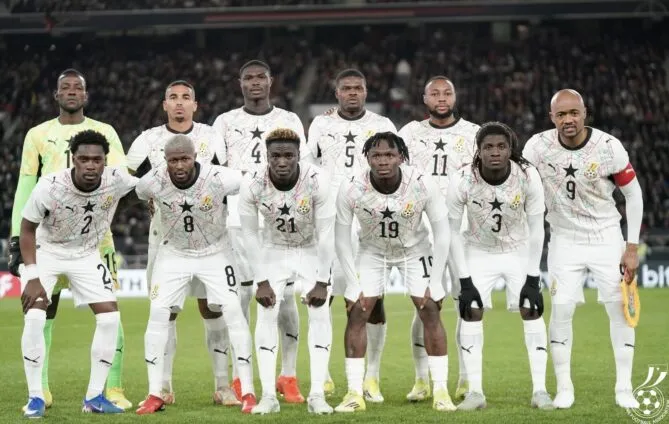
The second question is whether Ghana genuinely possesses the quality and depth of players required to compete consistently against the continent’s strongest nations. This question may be uncomfortable because Ghana has historically produced outstanding footballers, but nostalgia cannot be used as evidence of current quality. The names of Abedi Pele, Tony Yeboah, Samuel Kuffour, Stephen Appiah, Michael Essien, Sulley Muntari, Asamoah Gyan and many others cannot play for the present Black Stars, and the existence of talented individuals in European leagues does not automatically mean Ghana possesses the balanced, deep and tactically compatible squad required to compete at the highest international level.
There is also a major difference between having talented players and having a complete national team. Ghana may have individuals capable of producing moments of brilliance, but international football demands far more than individual quality because successful teams require reliable goalkeepers, disciplined defenders, midfielders capable of controlling games, forwards who can consistently convert opportunities and a collective understanding that allows eleven players to function as one unit rather than eleven talented individuals attempting to solve the same problem independently.
That distinction became increasingly visible during the recent period because Ghana has often appeared capable of producing good moments without being able to sustain them for an entire match. A team that can score twice and still lose by two goals has demonstrated that the problem is not simply an inability to create chances; it can also indicate weaknesses in game management, defensive organization, concentration, tactical adaptation and psychological resilience, all of which require examination across the technical team and the wider football structure.
The third question is whether Ghana has been appointing coaches based on a coherent technical philosophy or simply reacting to pressure. When one coach leaves after a disappointing tournament, another is brought in to repair the damage, and that coach is then removed after another poor run, the cycle creates a dangerous illusion that the next appointment will automatically solve the previous administration’s problems. Football history, however, repeatedly shows that coaching changes without structural reform often produce temporary improvements without addressing the reasons the team fell into decline in the first place.
The Black Stars need a football identity that is bigger than the personality of the head coach. Ghana must determine what kind of football it wants to play, what qualities it expects from its players, how young players will graduate into the senior team, how domestic talent will be scouted and how the national teams at different age levels will connect with one another. Until those questions are answered, every incoming coach will arrive with his own ideas, his own preferred players and his own tactical philosophy, forcing Ghana to restart the process each time there is a change in the technical area.
This is also why the argument over foreign coaches versus Ghanaian coaches should not become another distraction. Nationality does not automatically make a coach competent or incompetent, just as international reputation does not automatically guarantee success. What matters is whether the coach has the technical ability, authority, support structure, player pool and institutional environment necessary to implement a sustainable football programme, because Ghana’s repeated disappointments have occurred under coaches with very different backgrounds.
The same argument applies to player selection. It is tempting whenever the Black Stars struggle to accuse coaches of selecting the wrong players, but selection itself is only one part of the equation. A coach can only select from the players available, and if the pool is not sufficiently competitive in certain positions, the manager may be forced to choose between imperfect options rather than selecting from a group of equally strong alternatives.
Ghana therefore needs to examine its youth development system with the same seriousness with which it examines the Black Stars. If the national team is expected to remain competitive for the next ten or fifteen years, the country cannot depend almost entirely on players discovered abroad or on young talents who happen to break into European academies. The domestic system must consistently identify, train and develop technically gifted players capable of entering the senior national team with a level of preparation that reduces the burden on every new coach.
One of the most important criticisms surrounding Ghana’s football development has been the apparent difficulty of producing a steady stream of young players who move from the junior national teams into permanent senior-team roles. That concern goes beyond the Black Stars because it speaks directly to the health of the entire football pyramid. If youth teams win occasional tournaments or qualify for competitions but their players do not consistently graduate into the senior side, then Ghana must ask whether the development system is producing players for international competition or merely producing short-term tournament results.
The domestic league must also form part of this conversation. The Ghana Premier League remains one of the most important potential sources of talent for the national team, yet the relationship between the league and the Black Stars cannot be based simply on occasional invitations. There must be a deliberate pathway through which outstanding domestic players are identified, monitored and integrated into national-team structures, because a country that ignores its own football ecosystem eventually becomes dependent on whatever talent happens to emerge elsewhere.
There is also the question of scouting, and this may be one of the least discussed but most important areas of Ghana’s football crisis. Modern international football requires detailed information about players, their positions, physical profiles, tactical suitability, development trajectories and performance levels. The Black Stars cannot rely solely on reputation, agents, previous appearances or the fact that a player is attached to a famous club; selection must be supported by a professional scouting and analysis system capable of identifying what each player actually contributes to the national team’s tactical requirements.
Then comes the question of preparation. Ghana has too often appeared to enter major matches carrying the burden of uncertainty, whether through late coaching appointments, disrupted squads, injuries, administrative disagreements or inadequate preparation time. Some circumstances are unavoidable in international football, but a professional football administration must reduce avoidable uncertainty as much as possible because preparation becomes particularly important when a team does not possess an overwhelming concentration of world-class talent.
The cancelled international friendlies involving Ghana also provide another example of why administration and football performance cannot be separated completely. Friendly matches are not merely exhibition games for national teams; they provide opportunities to test systems, introduce players, assess combinations and prepare for competitive fixtures. When such opportunities disappear because of organizational difficulties, the consequences eventually reach the pitch, even if the problem itself originated far away from the technical area.
Ghana must therefore stop treating every crisis as an isolated event. The coaching changes, inconsistent performances, player-selection controversies, preparation difficulties, youth-development concerns and administrative disputes should be examined as connected parts of one larger football ecosystem. A country can survive one poor coach, one bad generation of players or one disappointing tournament, but when the same problems repeatedly emerge across different coaches and different squads, the possibility of systemic weakness becomes too significant to ignore.
Yet it would also be unfair to place every responsibility on the GFA while pretending the players carry none. International footballers are professionals, and once they enter the field they have a responsibility to execute instructions, maintain concentration, show discipline and fight for the national shirt. Players cannot hide behind administrative problems forever because there have been matches in which Ghana possessed enough quality to win but failed because of individual errors, poor decision-making, missed chances or lapses in concentration.
The responsibility of senior players is particularly important because leadership cannot exist only through the captain’s armband. Experienced footballers must provide direction during difficult moments, calm younger teammates when matches become chaotic and demonstrate the standards expected of players representing millions of people. If the Black Stars are to rebuild, the senior core must become part of that rebuilding process rather than simply waiting for another coach to arrive and solve everything.
At the same time, the coaches must accept their share of responsibility. A manager cannot spend every press conference explaining structural problems while the team’s tactical weaknesses remain unresolved on the pitch. Coaches must be judged on their preparation, tactical flexibility, substitutions, player development, ability to respond to opponents and capacity to build a team that performs consistently rather than occasionally producing attractive football.
The difficulty for Ghana is that changing coaches has become almost instinctive whenever the Black Stars fail. It creates immediate political and emotional satisfaction because supporters see a visible action being taken, but the danger is that the country eventually mistakes movement for progress. Removing a coach is a decision; building a sustainable national football structure is a strategy, and Ghana needs the latter far more than it needs another short-term reaction.
This is why the latest coaching departure should not trigger another rushed appointment merely to calm public anger. The next coach must be selected as part of a clearly articulated football project, with measurable objectives, realistic expectations, technical authority and an agreed pathway for player development. If Ghana simply appoints another famous name, gives him a short contract and expects him to repair years of accumulated problems within a few international windows, the country may simply be preparing the ground for another dismissal.
The GFA must also be prepared to examine its own decision-making honestly. Every coach cannot be presented as the solution when appointed and later described as the problem when results deteriorate. If an appointment was considered appropriate after a serious recruitment process, the football authorities must explain what changed, what evidence informed the decision to terminate the relationship and what lessons were learned before the next appointment was made.
That accountability is particularly important because the Black Stars are not an ordinary football team. They are one of Ghana’s most visible national institutions, and their successes and failures influence public confidence in the country’s football administration. When the national team repeatedly disappoints, the damage extends beyond the scoreline because supporters begin to question whether the people managing the game understand the scale of the responsibility placed in their hands.
The coming period should therefore be treated as an opportunity for a national football audit rather than another coaching audition. Ghana needs to examine its player-development structures, coaching education, scouting networks, domestic competitions, national-team preparation, sports science, data analysis, youth pathways and administrative decision-making, because only a comprehensive assessment can reveal whether the crisis is primarily technical, developmental, administrative or a combination of all three.
The debate over whether the problem is the GFA, the players or the coaches should consequently not be reduced to a simple choice between three options. The more credible possibility is that Ghana’s difficulties are interconnected: weaknesses in development affect the quality of players available to coaches; inconsistent administration affects preparation and continuity; coaching changes affect tactical development; and poor results then create public pressure that encourages further changes, producing a cycle in which every part of the system contributes to the next crisis.
That cycle must be broken deliberately. Ghana cannot continue changing coaches while expecting the same institutional arrangements to produce different outcomes, just as it cannot continue blaming players without examining how those players were developed and selected. The country also cannot demand attractive, modern and technically sophisticated football from the Black Stars if the broader football system has not established the structures required to produce players and coaches capable of delivering it.
So what comes next for the Black Stars? The first answer should be clarity. Ghana needs to know what kind of national team it wants to become, what football philosophy will guide its senior and youth teams, what standards players must meet before selection and what measurable objectives will determine whether the next technical team is succeeding or failing.
The second answer should be continuity. Continuity does not mean keeping every coach regardless of results, nor does it mean protecting officials from criticism; it means creating a system in which the departure of one individual does not force the entire national-team programme to begin again from zero. Ghana needs institutional memory, technical succession planning and a football philosophy that survives personnel changes.
The third answer should be accountability. The coach must answer for tactical decisions, players must answer for their performances and the GFA must answer for the decisions it makes regarding appointments, preparation and football development. Accountability becomes meaningless when responsibility is permanently transferred to the latest person at the centre of the crisis, because leadership means accepting responsibility for the environment in which decisions are made.
The fourth answer should be development. Ghana must invest seriously in the pathway from youth football to the senior national team, strengthen domestic scouting and coaching, improve facilities and create a system that identifies talent before other countries do. The Black Stars cannot be rebuilt every two years; they must be continuously renewed through a football development structure that produces new players before the old generation disappears.
The fifth answer should be patience, but patience with conditions. Ghanaian supporters cannot reasonably be asked to wait indefinitely while officials repeat the same mistakes, but they can understand a rebuilding process if the objectives are transparent, the milestones are measurable and the people responsible are honest about what is being done. Patience without accountability becomes complacency, while accountability without a long-term plan becomes another cycle of panic.
Ultimately, the crisis surrounding the Black Stars is no longer just about whether Carlos Queiroz was the right coach or whether the next coach will be better. It is about whether Ghana has the courage to look beyond the dugout and examine the entire structure that produces, prepares, selects and manages its national team. If the answer is always another coach, another contract, another tactical system and another promise that things will improve, then the country risks repeating the same story with different characters.
Ghana has reached a point where the question should not simply be, “Who will coach the Black Stars next?” The more important questions are much harder: What football identity does Ghana want? What kind of players does the country want to develop? Why are successive coaching regimes struggling to create consistency? Are the GFA’s recruitment and technical decisions producing the desired results? Is the domestic system developing enough elite talent? Are the players taking sufficient responsibility? And, most importantly, who is prepared to accept responsibility for answering all these questions honestly?
The next coach will undoubtedly arrive with a new voice, a new formation, new selections and a new promise of revival, but the real test for Ghanaian football will begin long before that coach walks onto the touchline. It will begin with whether the country’s football leadership has learned from the repeated failures of the past several years and whether it is willing to build a system in which coaches are supported, players are developed, decisions are accountable and the Black Stars are no longer treated as a team that must be rescued every time a crisis arrives.
For Ghana, therefore, what comes next must be bigger than another appointment. The Black Stars need a reset that reaches from the GFA boardroom to the training ground, from the youth academies to the Ghana Premier League, from scouting departments to sports science, and from the youngest aspiring footballer to the most experienced player wearing the national shirt. Until that happens, Ghana may continue to produce talented footballers and appoint experienced coaches, yet still find itself returning to the same painful question after every major disappointment: why does a country with such a rich football history continue to struggle to build a consistently successful national team?
That is the question the latest coaching crisis has placed firmly before Ghana, and the answer cannot be found simply by looking at the man standing on the touchline. The Black Stars belong to an entire football system, and if the system is not functioning properly, changing one component will never be enough. Ghana must now decide whether it wants another temporary solution or whether it is finally prepared to confront the deeper problems, accept uncomfortable truths, make difficult reforms and build a Black Stars programme capable of competing not merely for one tournament, but for a generation.