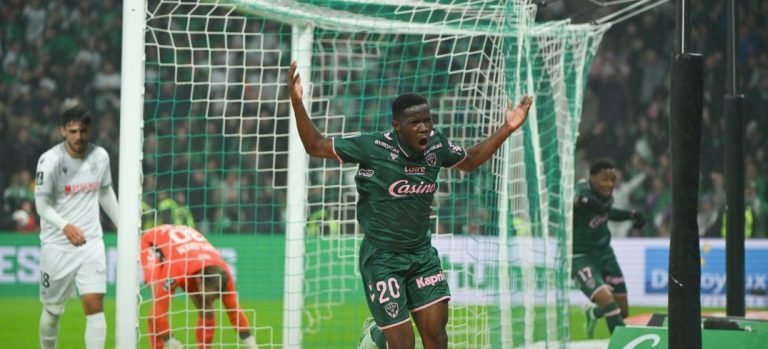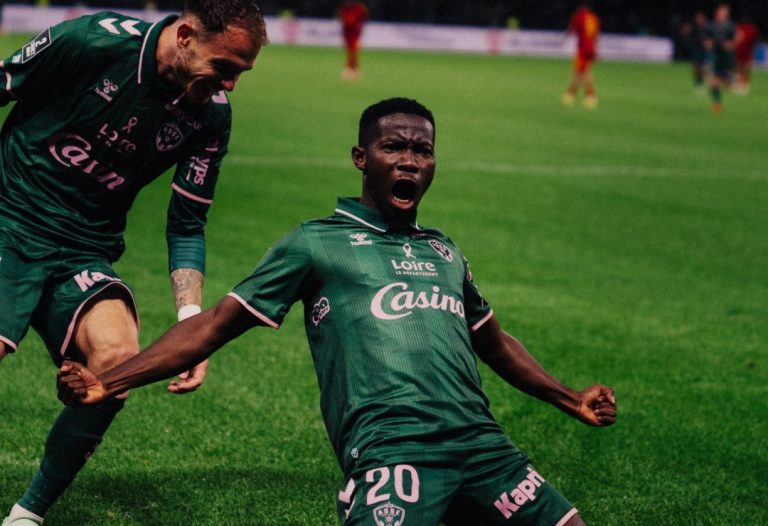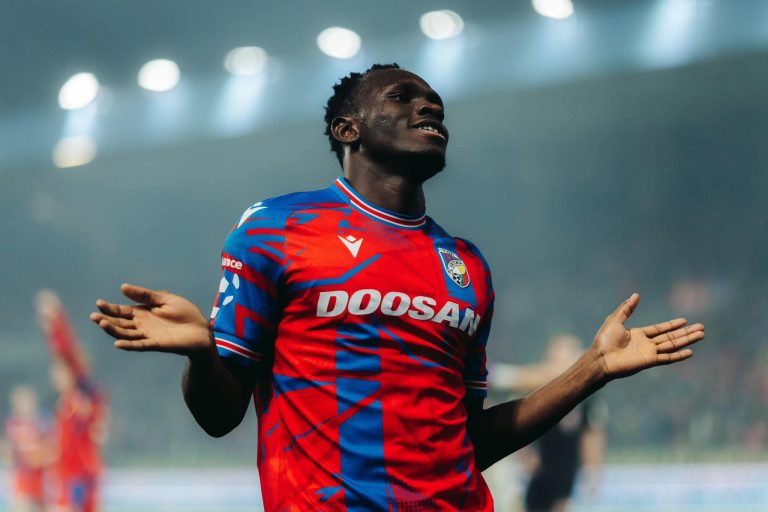


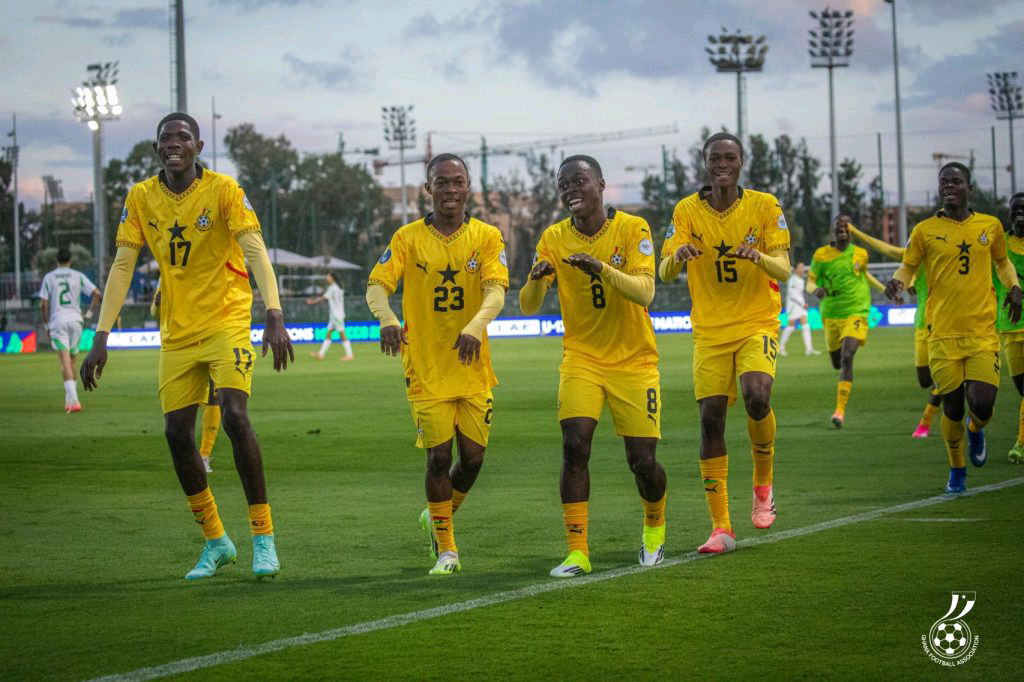
Algeria and Ghana served up one of the most gripping encounters of the round, ending in a 2–2 draw that felt like two completely different matches stitched together. For Ghana, it was a performance that began with authority, slipped into uncertainty, and ultimately ended in frustration — leaving behind a deeper tactical and developmental question: what next for the Black Starlets after surrendering a commanding lead?
The Ghana U-17 national team started the match with sharp intent and clinical execution. Their high press immediately unsettled Algeria, forcing errors in dangerous areas. The breakthrough came in the 6th minute when Isaac Barfo reacted quickly to a defensive lapse, finishing with composure to give Ghana an early advantage. Barely had Algeria settled when Ghana struck again.
In the 11th minute, Eric Gyamfi doubled the lead, completing a rapid attacking move that exposed Algeria’s defensive disorganisation. At that stage, Ghana were in full control — energetic in midfield, direct in attack, and seemingly capable of overwhelming their opponents. A 2–0 lead inside 11 minutes suggested dominance, maturity, and tactical clarity.
However, football at youth level often exposes not just talent, but emotional control and game management — and that became the turning point of the match.
The Collapse of Control
After the blistering start, Ghana gradually lost their grip on tempo and structure. Instead of managing the game through possession and rhythm control, the Black Starlets allowed Algeria to grow into the contest. The North Africans, initially stunned, began to assert themselves with more aggressive pressing and quicker transitions.
The warning signs were visible even before the breakthrough. Ghana’s defensive shape became stretched, the midfield lost compactness, and the backline began to drop deeper under pressure rather than stepping out to compress space.
Algeria’s persistence eventually paid off in the 58th minute when Ilyes Grini pulled one back with a composed finish following sustained attacking pressure. That goal was not just a scoreline change — it was psychological. Ghana’s earlier confidence visibly drained as Algeria sensed vulnerability.
Just two minutes later, the match flipped completely. Melwane Zaidi capitalised on defensive hesitation to level the score at 2–2, completing a rapid turnaround that stunned the Ghanaian bench and shifted momentum entirely.
From a position of dominance, Ghana were suddenly fighting to survive.
Game Management: The Missing Ingredient
What followed was a tense, end-to-end final phase. Ghana attempted to regain control, pushing forward in search of a winner, but the structure that had defined their opening 15 minutes never fully returned. Algeria, now emboldened, matched them physically and tactically.
This is where Ghana’s challenge becomes clearer beyond the result itself.
At youth level, talent is rarely the issue for Ghana. Technical ability, attacking instinct, and individual creativity were all evident in the opening spell. The concern lies elsewhere — in game management, emotional control, and defensive organisation under pressure.
Surrendering a 2–0 lead in such rapid fashion suggests a recurring developmental gap: the ability to manage transitions in momentum. Once Algeria adjusted their pressing intensity, Ghana struggled to reset their rhythm or slow the game down effectively.
Where Does Ghana Go From Here?
This result leaves Ghana at a tactical crossroads rather than a purely mathematical one.
First, the Black Starlets must address mid-game control. Building a lead is one phase; sustaining it requires a different footballing intelligence — game tempo management, possession retention under pressure, and strategic fouling or game-breaking interventions when momentum shifts.
Second, defensive structure must be reinforced, particularly in rest-defence positioning. Ghana’s vulnerability during transitions allowed Algeria to exploit spaces between midfield and defence with increasing ease as the match progressed.
Third, there is a psychological dimension. Youth tournaments are often decided not just by skill, but by composure. Ghana showed early confidence but lacked the emotional stability to withstand adversity once the momentum changed.
Finally, the coaching staff will need to reassess in-game adaptability. Algeria’s second-half adjustments exposed Ghana’s inability to respond quickly with tactical changes — whether through substitution timing, shape adjustment, or slowing the tempo.
A Draw That Feels Like a Lesson
While the 2–2 result will be recorded as a shared point, for Ghana it feels more like a cautionary tale than a neutral outcome. The match highlighted both the promise of the team and the fragility that still exists within their structure.
There is undeniable attacking potential — the opening 11 minutes proved that Ghana can dismantle opponents at this level. But the second half revealed a more pressing truth: potential alone is not enough in tournament football.
As the Black Starlets move forward in the competition, the real test is no longer whether they can score goals quickly. It is whether they can control matches when it matters most — and transform early dominance into full 90-minute authority.