

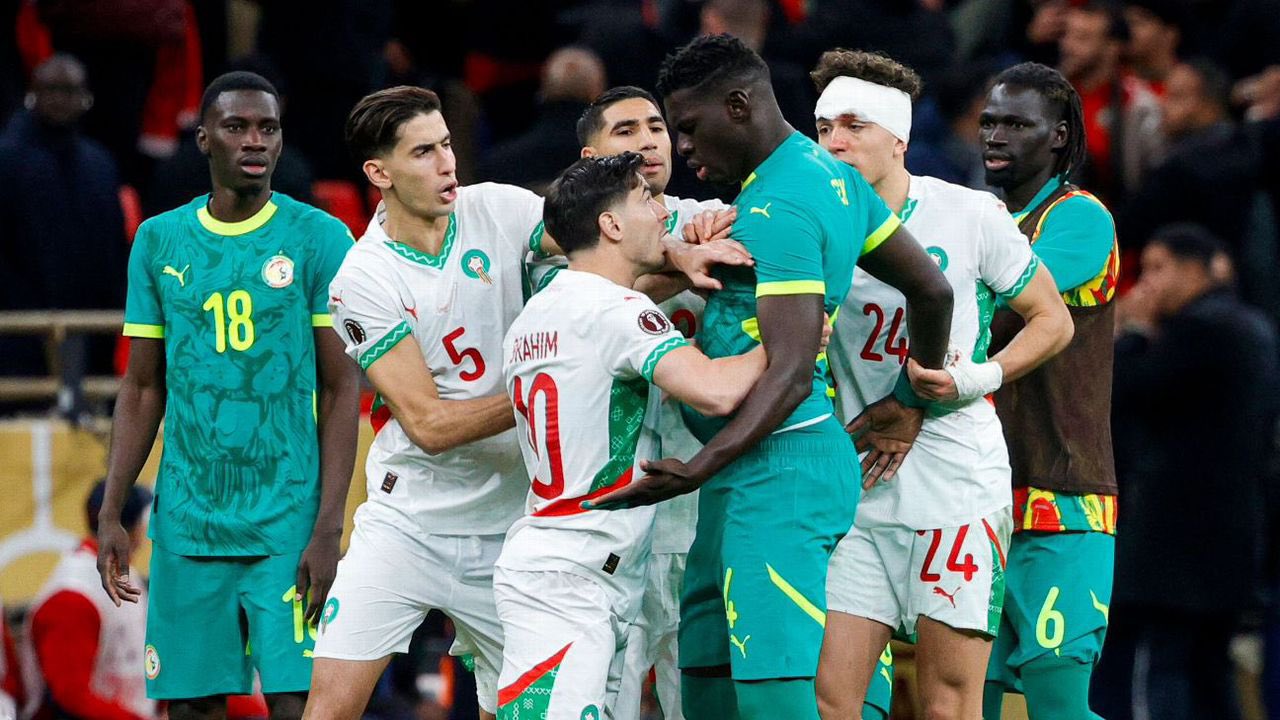
The Confederation of African Football has come under even greater scrutiny after its Appeals Board not only stripped Senegal of the 2025 Africa Cup of Nations title but also reduced several sanctions earlier imposed on Morocco, intensifying concerns over fairness and consistency.
The latest rulings have added a new layer of controversy to an already heated situation, with many questioning the balance and credibility of the decisions taken at different levels of CAF’s disciplinary system.
Among the most debated outcomes is the reduction of the ban handed to Moroccan player Saibari, whose suspension for interfering with the Senegal goalkeeper’s towel was cut from three matches to two, while his initial one hundred thousand dollar fine was completely cancelled.
This decision has sparked criticism from observers who believe such actions during a high-stakes final should have attracted firm and uncompromising punishment to protect the integrity of the game.
Further controversy surrounds the reduction of the financial penalty imposed on Morocco for the conduct of ball boys during the final, with the fine slashed significantly from two hundred thousand dollars to fifty thousand dollars.
Analysts argue that such a sharp reduction sends the wrong message about discipline and accountability in major tournaments, especially during matches of global importance.
In addition, the fine related to the use of lasers by Moroccan supporters was also reduced, dropping from fifteen thousand dollars to ten thousand dollars, a move that has raised further concerns about the enforcement of fan conduct regulations.
For many stakeholders, these decisions appear to reflect inconsistency, particularly when compared to the severe outcome faced by Senegal, who were stripped of the title entirely.
The contrast between the punishment given to Senegal and the easing of sanctions against Morocco has fueled debates about fairness and equal treatment within African football governance.
Critics insist that disciplinary measures must be applied evenly to maintain trust and credibility, especially in competitions as prestigious as the Africa Cup of Nations.
The situation has also reignited broader concerns about transparency in CAF’s decision-making processes, with calls for clearer explanations and stronger justification for such significant changes.
Many believe that without proper communication, such rulings risk being perceived as arbitrary, further damaging confidence in the institution.
As the controversy continues to unfold, the spotlight remains firmly on CAF, with growing pressure to restore integrity, consistency, and accountability in its handling of disciplinary matters.
Ultimately, these developments have not only overshadowed the AFCON 2025 final but have also raised critical questions about the future direction of governance in African football.