


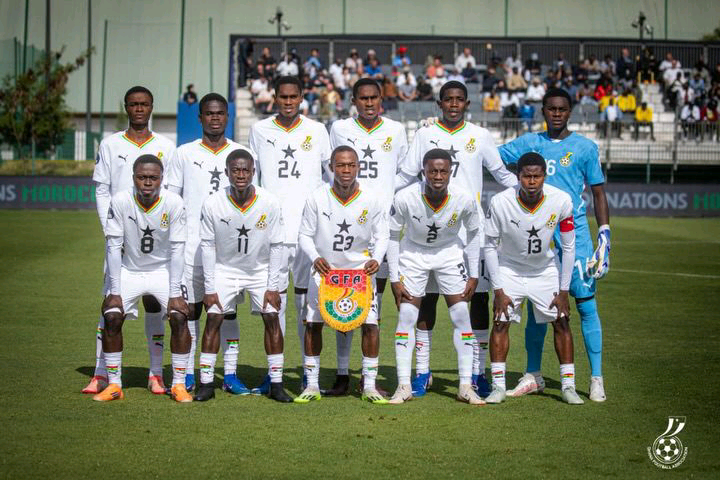
CAF’s U-17 Africa Cup of Nations regulations have come under intense criticism following the painful elimination of Ghana’s Black Starlets, despite the team recording a superior disciplinary record compared to their direct rivals.
The controversy has sparked widespread debate across African football circles, with many supporters, analysts, and former players questioning why the Confederation of African Football (CAF) still excludes fair play points from its tiebreaking criteria — a system already adopted by FIFA and many major international competitions.
Ghana’s exit from the tournament was not solely determined by footballing performance on the pitch, but rather by a little-known technicality buried within CAF’s competition regulations. The Black Starlets finished level on points with their rivals, creating a deadlock situation that required the tournament’s tiebreaking procedures to separate the teams.
Under CAF’s current U-17 AFCON rules, rankings between tied teams are determined using the following order:
• Head-to-head points
• Goal difference
• Goals scored
• Drawing of lots
Shockingly, there is no provision for fair play or disciplinary records before the final resort of drawing lots.
That omission ultimately proved costly for Ghana.
While the Black Starlets accumulated fewer yellow cards and maintained a cleaner disciplinary record throughout the group stage, the achievement carried absolutely no value under CAF’s regulations. Once the teams remained inseparable after the standard criteria, the rules skipped straight to the random process of drawing lots — effectively leaving qualification to chance rather than sporting conduct.
The development has left many football followers stunned, especially because FIFA competitions already recognize fair play points as a crucial tiebreaker before any draw is considered.
Under FIFA regulations, disciplinary records are calculated as follows:
🟨 Yellow card: minus 1 point
🟥 Indirect red card: minus 3 points
🟥 Direct red card: minus 4 points
🟨🟥 Yellow card followed by direct red: minus 5 points
This system rewards discipline, sportsmanship, and controlled play, ensuring teams are encouraged to compete fairly while reducing unnecessary aggression on the field.
Had CAF adopted a similar structure, Ghana would have held a decisive advantage due to receiving one fewer yellow card than their rivals. Instead, the Black Starlets were denied any benefit from their superior conduct and saw their tournament journey end in heartbreaking fashion.
The situation has reignited discussions about whether CAF’s youth competition regulations are outdated and in urgent need of reform. Critics argue that relying on a draw of lots in modern football undermines the integrity of competition, especially when measurable sporting criteria such as discipline records are available.
Many observers believe fair play should naturally take precedence over luck.
Across social media, frustration among Ghanaian supporters has been immense. Several fans described the elimination as “cruel,” “archaic,” and “unfair,” insisting that tournaments designed to develop young talent should prioritize sporting values over randomness.
Others pointed to the irony of FIFA promoting discipline globally while CAF continues to operate under a framework that can disregard fair conduct entirely at decisive moments.
The debate also extends beyond Ghana alone. Analysts warn that any African nation could eventually become a victim of the same loophole unless CAF updates its rules to align with international standards.
In recent years, football governing bodies worldwide have increasingly emphasized discipline, ethics, and sportsmanship as core components of the game. FIFA famously used fair play points during the group stage of the 2018 FIFA World Cup, where Japan advanced ahead of Senegal because they accumulated fewer yellow cards.
That historic moment demonstrated how disciplinary records can provide a transparent and football-related solution before resorting to random selection methods.
For Ghana, however, no such protection existed.
The Black Starlets now leave the competition with lingering questions surrounding a system many feel failed to adequately reward merit. While the players fought bravely on the pitch and maintained better discipline, the regulations offered them no pathway to benefit from that advantage.
The controversy is likely to increase pressure on CAF to revisit its tournament rules ahead of future youth competitions. Football stakeholders across the continent are expected to demand clearer, fairer, and more modern tiebreaking measures that reflect global standards.
Until then, Ghana’s painful elimination may remain one of the clearest examples of how outdated regulations can overshadow performances on the field — and how, in African youth football, luck can still triumph over discipline.