

Few debates in Ghanaian football stir as much passion, nostalgia, and genuine tactical disagreement as the question that has consumed the country’s football discourse for months leading up to the 2026 World Cup squad announcement: should André “Dede” Ayew be included in Ghana’s 26-man squad for the 2026 FIFA World Cup?Remove ads
It is a question that has drawn in politicians, former coaches, fans, and pundits, each arguing their corner with conviction. And it is a question that sits at the uncomfortable intersection of sentiment and cold, hard football logic.
The Legend and What He Represents

To understand the intensity of this debate, you must first understand what André Ayew means to Ghana. Over nearly two decades of service, Dede has not merely played for the Black Stars, he has bled for the team. Since making his debut for the Black Stars in 2007, he has gone on to win 120 caps, making him Ghana’s most capped player. He has featured in three FIFA World Cups (2010, 2014, and 2022), and eight Africa Cup of Nations tournaments.
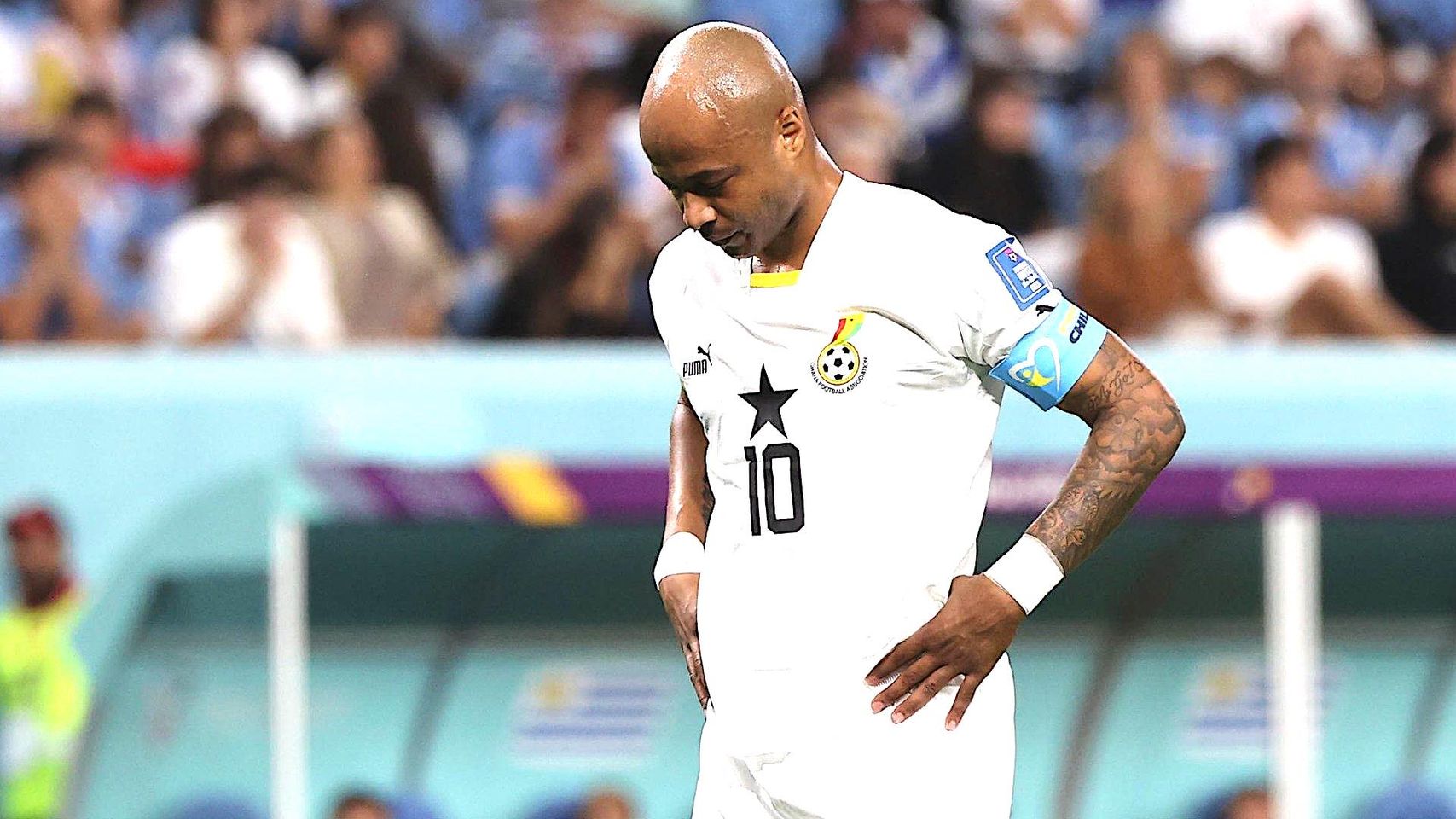
At the 2022 World Cup in Qatar, it was Dede who scored against Portugal and who carried the ball forward when others shrank. When he missed that crucial penalty against Uruguay, the weight of a nation’s heartbreak was transferred squarely onto his shoulders and he bore it. That is the measure of the man.
The Case For Inclusion

The argument for Ayew’s inclusion rests on several pillars. First, experience. Ghana are heading into a demanding Group L, facing England, Croatia, and Panama and will need players who do not buckle under pressure. Ghana’s current squad, while spectacularly talented, is relatively young.
Mohammed Kudus, Antoine Semenyo, Fatawu Issahaku, Kamaldeen Sulemana are thrilling players, but most of them have limited experience in elimination-round football.
Second, his hunger. After a six-month spell without a club following his departure from Le Havre, Ayew signed for NAC Breda in the Dutch Eredivisie in December 2025. He scored his first goal for the club in March 2026, a trademark header in a 3–3 draw against Feyenoord. A lesser man would have retired. Ayew is still running.
Third, the versatility of a 26-man squad. The expanded format provides room for players who may not start every game but bring crucial value in moments of crisis. An experienced substitute who can read a game, calm nerves, and provide leadership from the bench is worth his weight in gold.
The Case Against

Yet, the counter-argument is equally compelling and arguably more grounded in the realities of modern football.
The numbers back him up. Ayew has made just four starts in nine matches for NAC Breda, a club fighting relegation in the Dutch top flight, not competing in the Champions League. One goal in ten appearances is not the form of a player ready to influence games at a World Cup. By contrast, Ghana’s attacking options are among the most exciting in African football right now.Remove ads
Antoine Semenyo has been sensational, scoring 15 Premier League goals before his move to Manchester City. Mohammed Kudus, when fit, is arguably one of the most creative players in European football. Jordan Ayew, captaining the attack, was Ghana’s top scorer in qualifying with seven goals. Inaki Williams, Fatawu Issahaku, Kamaldeen Sulemana, and Ernest Nuamah all offer pace, directness, and energy that suits the high-tempo game Ghana have been building.
Ghana scored 23 goals in 10 qualifying matches, at least two per game. The attack is not broken. It does not need fixing with a 36-year-old whose best days, through no fault of his own, are behind him.
Sentiment vs. Selection

The most dangerous argument for Ayew’s inclusion is the one made by politicians and fans: that he deserves to be rewarded for his loyalty. Football squads are not lifetime achievement awards. Selecting a player on the basis of past service, rather than present contribution, is precisely the kind of sentimental decision that has cost African nations at major tournaments.
Every spot in a 26-man squad is precious. If Ayew takes a place, another player does not travel, a player who may be sharper, hungrier, and more aligned with the tactical demands of the tournament.
With new head coach Carlos Queiroz now at the helm following Otto Addo’s departure, there is renewed speculation about whether Dede might receive a late reprieve. Queiroz has a reputation for valuing experienced campaigners. But even he will struggle to justify inclusion on form alone.
The VerdictRemove ads

André Ayew is a Ghanaian football icon. His career deserves every superlative thrown at it. But the 2026 World Cup squad should be built for Ghana’s future, not as a monument to the past. The Black Stars have the talent, the depth, and the momentum to make a real impact this summer and that progress is best protected by a cold, meritocratic selection.
Unless Ayew can demonstrate, between now and the June 1 deadline for the squad announcement, that he is genuinely ahead of the young attackers competing for his spot, the kindest and most respectful thing Ghana football can do for its legend is to let him watch this World Cup from the stands, proud, honoured, and having left everything on the pitch; and also the best thing Dede can do for himself, is to bow out when the applause is loudest.
Written By: JOSEPH OKAN-MENSAH KHARTEY, ESQ
SPORTS ENTHUSIAST AND TRAINEE ASSOCIATE, AFRIMORE ADVISORS PRUC.