

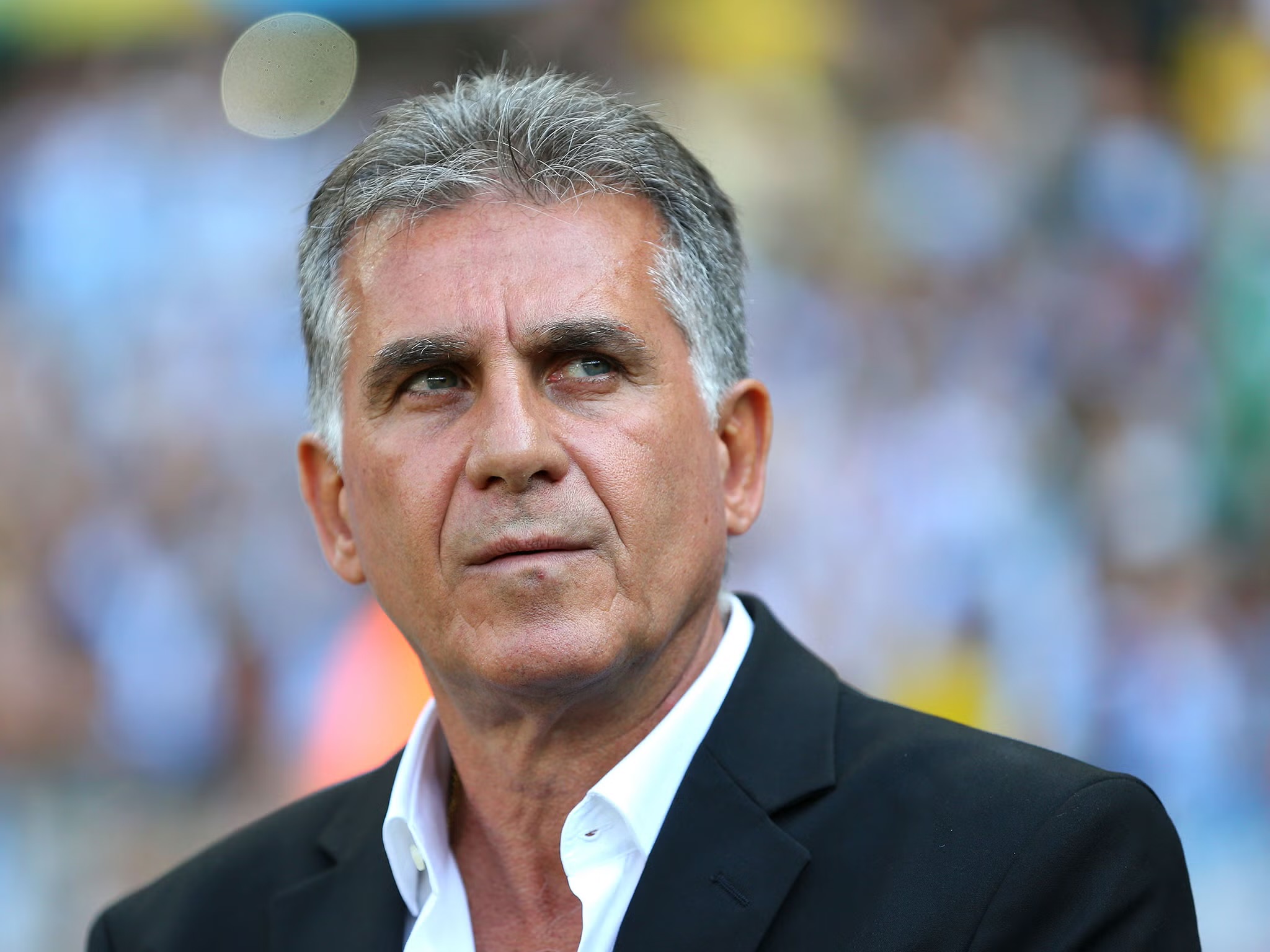
Carlos Queiroz arrives in Ghana with one of the most extensive World Cup resumes in modern international football. Few coaches have managed as many different national teams on the biggest stage. Yet beneath the experience and reputation lies a consistent statistical and tactical pattern that raises serious questions about whether he is the right man to elevate Ghana beyond its current ceiling at the 2026 FIFA World Cup.
This is not a dismissal of his career. Instead, it is an evidence-based examination of recurring limitations that have followed him across multiple World Cup cycles.
The Pattern Behind Queiroz’s World Cup Record
Across South Africa (2002), Portugal (2010), and Iran (2014 & 2018), Queiroz’s teams share a clear identity:
- Low-scoring matches
- Deep defensive blocks
- Limited attacking transitions
- Dependence on individual brilliance
- Conservative game management
While this approach has made his teams difficult to beat, it has also produced a troubling trend:
consistent group-stage exits or early knockout elimination in nearly every World Cup campaign he has led.
Only once has he reached the Round of 16 (Portugal, 2010). In all other tournaments as head coach, his teams have failed to progress.
Defensive Stability Without Progress
Queiroz is widely respected for tactical organisation. His Iran teams in 2014 and 2018 are often cited as examples of defensive excellence:
- Narrow defeats to elite teams like Argentina and Spain
- Disciplined structure
- Compact midfield blocking systems
But the core issue is not defence—it is progression beyond it.
His World Cup teams have repeatedly shown:
- Difficulty scoring goals in open play
- Limited attacking creativity
- Over-reliance on counter-attacks
- Conservative substitutions when chasing games
At tournament level, especially in modern football, defensive discipline alone rarely guarantees advancement.
The Attack Problem: A Long-Standing Weakness
A critical concern for Ghana is Queiroz’s historical struggle to build fluid attacking systems.
At every World Cup he has coached in, his teams have averaged:
- Low goals per match output
- Few high-quality chances created
- Minimal attacking risk-taking
Even when he had elite attackers at his disposal (Portugal 2010, with Cristiano Ronaldo in his prime), the system remained cautious and rigid.
For Ghana—a team traditionally built on flair, pace, and attacking freedom—this clash in philosophy could become a major structural problem.
Short-Term Tournament Manager, Not Long-Term Builder
Another consistent feature of Queiroz’s career is that he performs better in organisation than evolution.
His coaching profile suggests:
- Strong immediate defensive impact
- Quick structural discipline
- Limited long-term tactical growth within tournaments
World Cups today require adaptive coaches—managers who can change systems mid-tournament. Queiroz’s historical record shows:
a tendency toward fixed tactical structures rather than dynamic in-tournament evolution.
This rigidity has often left his teams predictable by the second or third group match.
Psychological and Game-State Conservatism
Queiroz’s approach is heavily influenced by risk minimisation:
- Protecting draws
- Prioritising narrow margins
- Avoiding open transitions
While this can frustrate stronger opponents, it also creates a psychological limitation:
Teams often enter matches focused more on not losing than on winning.
In World Cup group stages—where goal difference and attacking urgency matter—this mindset can become restrictive.
Historical Tournament Ceiling
A review of his World Cup outcomes shows a clear ceiling:
- 2002 – Group stage (South Africa)
- 2010 – Round of 16 (Portugal)
- 2014 – Group stage (Iran, strong defensive showing)
- 2018 – Group stage (Iran, 4 points but still eliminated)
Despite improving weaker teams, Queiroz has never taken a non-elite nation deep into the tournament.
That pattern is central to the debate about Ghana:
Can he break a ceiling he has never previously overcome?
The Ghana Context: A Clash of Identity?
Ghana enters the 2026 World Cup with:
- Young attacking talent
- High-speed transition players
- Historically expressive football identity
- A fanbase expecting bold performances
Queiroz brings:
- Structured defensive discipline
- Controlled tempo football
- Risk-averse game planning
This creates a philosophical tension:
Ghana’s natural football DNA vs Queiroz’s tactical conservatism.
If not carefully balanced, this mismatch could limit Ghana’s attacking expression in crucial matches against teams like England and Croatia.
The Core Concern: Will Pragmatism Become Limitation?
The biggest concern is not Queiroz’s experience—it is whether his successful defensive model can still compete in modern World Cup football, where:
- High pressing dominates
- Goals are essential for progression
- Tactical flexibility is crucial
His historical record suggests stability, but not breakthrough success.
Final Assessment: Experience vs Evolution
Carlos Queiroz is not a weak coach. His career proves the opposite—he is highly experienced, tactically disciplined, and respected globally.
But World Cup history also shows a consistent pattern:
Strong organisation without deep tournament progression.
For Ghana, the risk is clear:
- He may make them harder to beat
- But not necessarily good enough to advance
Conclusion
Queiroz’s appointment represents a calculated gamble by the Ghana Football Association—choosing structure over spontaneity, experience over experimentation.
However, based on his World Cup history alone, the concern remains:
his teams are built to survive tournaments, not necessarily to win them.
Whether Ghana can break that pattern in 2026 will define not just his legacy—but Ghana’s football direction for years to come.