

Carlos Queiroz’s unveiling was a clinic of straightforwardness. He made no wild promises and stuck to what he has always known, while telling Ghanaians to “be ready to suffer” as he aims to rebuild a national team in free fall…
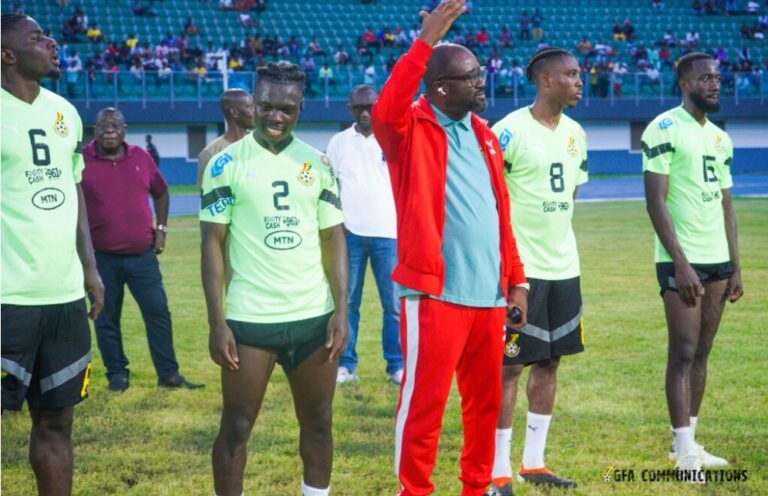
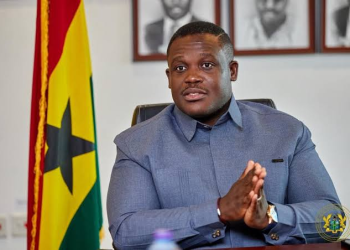
Carlos Queiroz’s smile was telling. From his short visit to the Minister for Sports and Recreation, Kofi Adams, to his unveiling, he looked the part of a man who felt at home.
If he had expected a hostile reception from a nation frustrated by years of underperformance, this was anything but. He received a shindig reception at the airport on his arrival, and here, at his unveiling, it was convivial.

Head Coach of the Black Stars, Carlos Queiroz in a handshake with Sports Minister, Kofi Adams. Image: Ghana Football Association
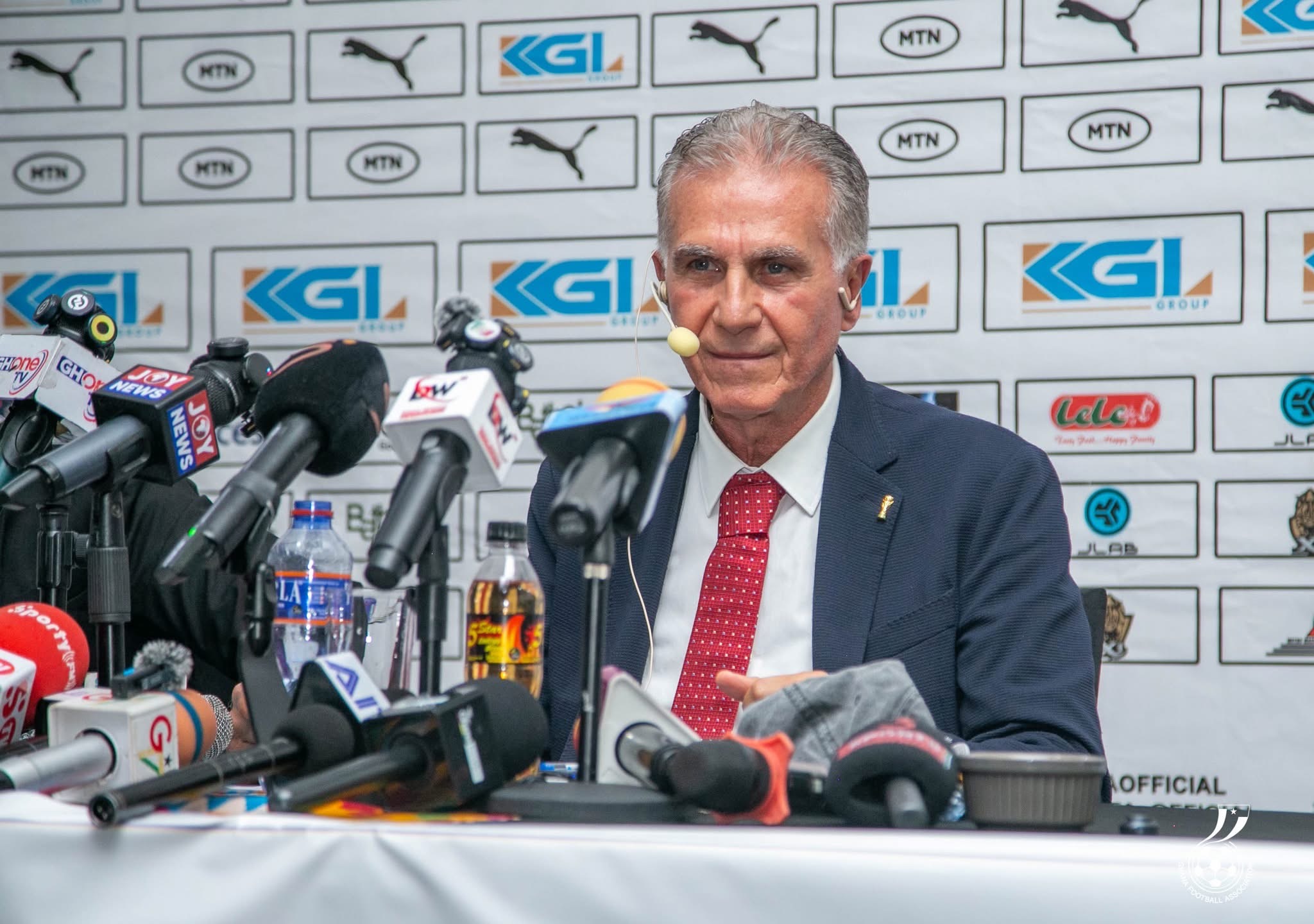
As Queiroz sat across from hundreds of journalists to field questions, one thing stood out: He was thoroughly prepared for the challenge ahead.
He seemed to have done his homework and had answers for each question. His reference to Ghana having 33 million coaches – a local joke – symbolises as much. Queiroz said all the right things, too, at least from a coaching perspective.
But more than mere clichés, he stuck to his principles. “If we play as a team, as one Ghana, we can beat any opponent in this world,” he rallied.
Known for his disciplined approach and vast experience, the Portuguese tactician used his first public appearance to outline a vision centred not just on tactics, but on teamwork, hard work, unity and having a siege mentality.

Black Stars head coach, Carlos Queiroz. Image: Ghana Football Association
Standing before the media and GFA officials, Queiroz made it clear that his primary task extends beyond formations and match preparation. It was as if he couldn’t wait to be asked if he were a defensive coach.
And when that question was finally thrown at him, the 73-year-old seized the opportunity to highlight why winning trumps any style or approach.
“In modern football, there are no defensive or attacking coaches. The minimum that the Ghana national team expects from me is to win. I’m a winning coach,” Queiroz said.
For a Ghana side that has historically blended flair with inconsistency, this message struck a deliberate tone. Queiroz is aiming to instil resilience, focus and a winning mindset – qualities that the Black Stars have lacked in recent years but that are essential for success at the highest level.
The timing of his appointment may not be ideal – he has barely two months to prepare the team before their opening game of the 2026 World Cup against Panama – but it is crucial for the future of this team. With the World Cup looming on the horizon, expectations are already mounting.

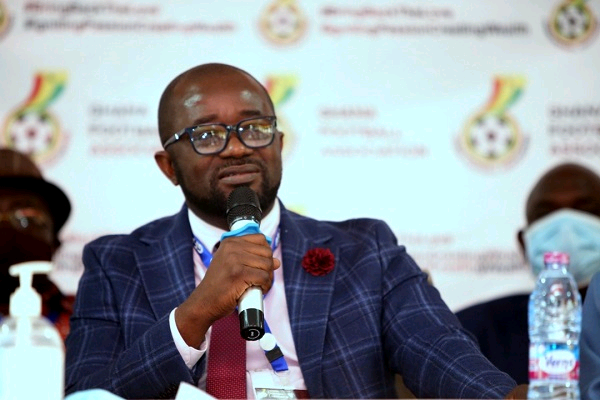
Kurt Okraku, GFA President. Image: Ghana Football Association
Ghana has a proud World Cup history, including memorable performances that captivated global audiences. However, recent campaigns have fallen short of those heights. Queiroz acknowledged this gap, noting that competing at the World Cup is not merely about participation but about demonstrating identity and purpose.
“If we have the ball, we have to attack. If we don’t have the ball, we have to fight together as a team to win,” he emphasised.
Queiroz’s words suggest a shift toward accountability, where individual brilliance is harnessed within a collective framework. It’s a philosophy that has defined his previous roles with national teams like Portugal, South Africa and Iran, where organisation and discipline often took precedence over spontaneity.
One of the most delicate challenges Queiroz addressed was the management of player egos – an inevitable factor in modern football. Ghana boasts a pool of players playing at clubs across Europe and beyond, each bringing their own expectations and status. For Queiroz, balancing these personalities will be critical.
“I have no problem with egos,” he said. “We need them. That’s why these players are in the national team. My job is to ensure those egos are channelled into the service of the team. That is my responsibility.”

Black Stars head coach, Carlos Queiroz. Image: Ghana Football Association
His approach appears rooted in clarity and structure: clearly defined roles, transparent communication and merit-based selection. By establishing firm boundaries while maintaining respect for individual contributions, Queiroz aims to create an environment where competition drives performance rather than division. A squad that rewards performance, irrespective of whether the player plays in the Ghana Premier League or in Europe.
“A national team is a house without windows and doors. There are no shortcuts to it. Whether you play locally or abroad is irrelevant; what matters is quality. If local players show they are good enough, they will absolutely be included.”
He also highlighted the importance of national pride as a unifying force, suggesting that success on the pitch must reflect a shared sense of purpose off it.

Head Coach of the Black Stars, Carlos Queiroz. Image: Ghana Football Association
Tactically, while he avoided revealing specific plans, Queiroz hinted at a pragmatic approach tailored to Ghana’s strengths. His past teams have often been characterised by defensive organisation and quick transitions – an approach that could suit the Ghanaian squad if he’s able to find the right mix of athleticism and attacking pace. However, he was careful to stress adaptability, noting that modern football demands flexibility and constant evolution.
The reaction to Queiroz’s appointment has been mixed but largely optimistic. Ghanaians recognise his pedigree, having managed several national teams and worked at the highest levels of club football. Yet there is also awareness that success will depend on how well his methods resonate with Ghana’s unique football culture and squad.

Carlos Queiroz addressing hundreds of media personalities at the Alisa Hotel during his official unveiling. Image: Ghana Football Association
In an ideal situation, Queiroz’s unveiling would’ve been less about immediate results and more about laying a foundation. But with a World Cup 49 days away, the Portuguese doesn’t have that luxury. And, as Adom TV’s Countryman Songo clearly told him, Ghanaians will “fire him” if he delivers anything short of advancing to the knockout stage.
Queiroz’s focus on mentality, discipline and unity suggests he’s ready to make the most of what is at his disposal, even as short-term pressures loom. If he can successfully align Ghana’s talent with his structured approach, the Black Stars could re-emerge as a formidable force on the global stage.
I should be concluding this article by writing “Welcome, Carlos Queiroz.”
But that would be inaccurate. For it is the other way round.
So, welcome to the Carlos Queiroz way, Ghanaians!
By EMMANUEL AYAMGA