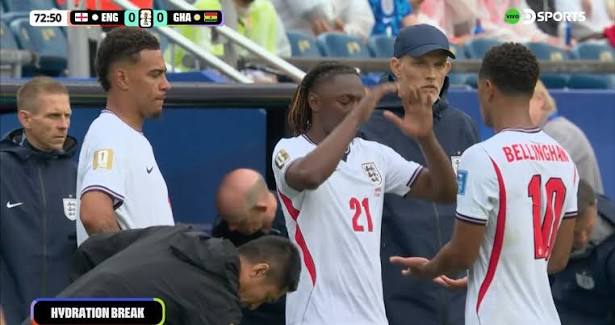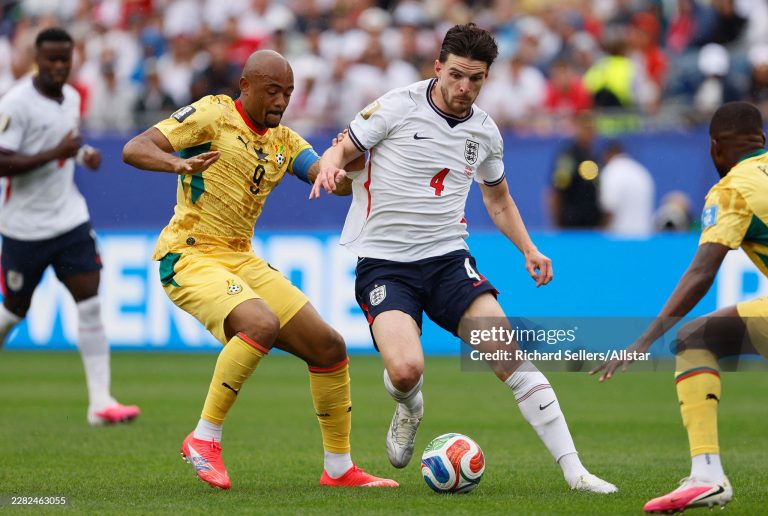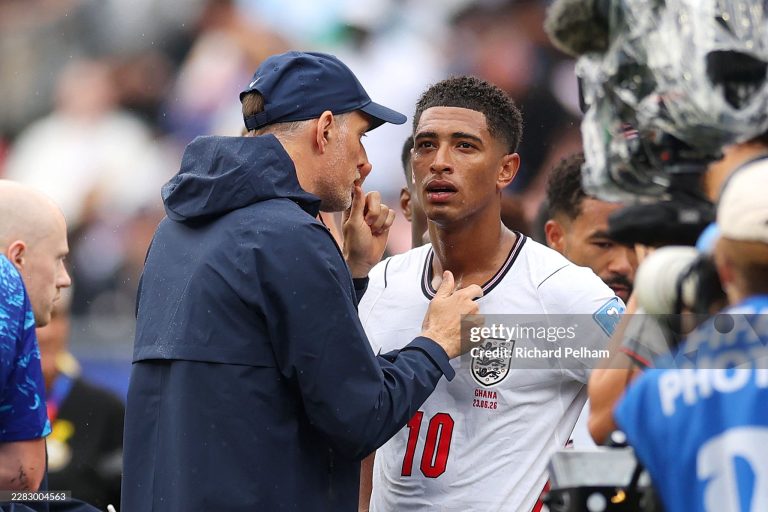


Wayne Rooney has delivered a sharp critique of England defender Ezri Konsa, describing a key second-half incident as a “huge risk” during England’s 0-0 World Cup Group L draw with Ghana in Boston.
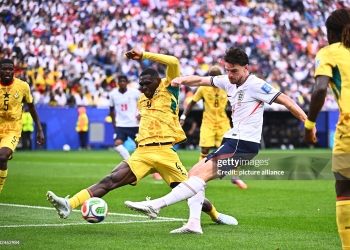
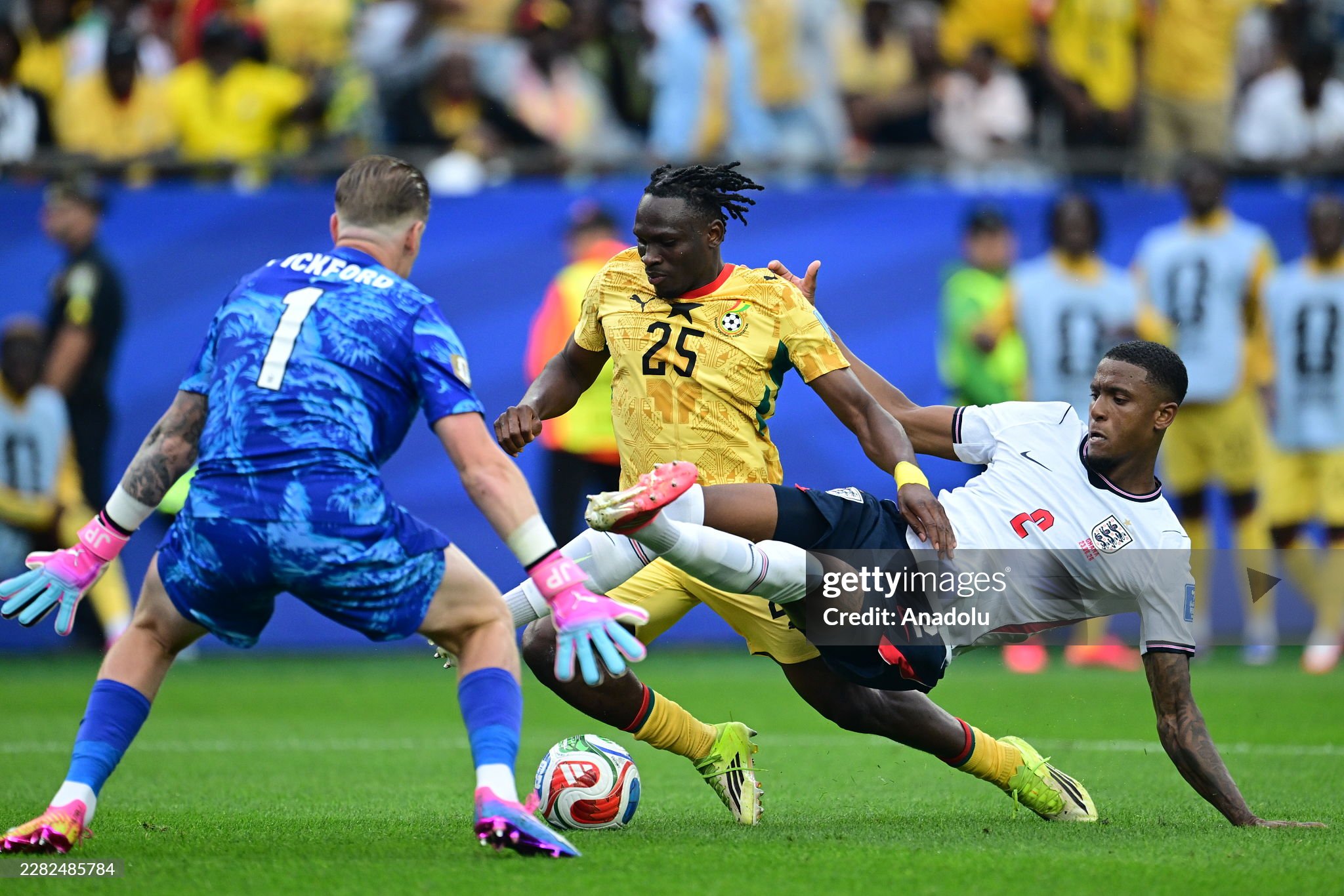
The moment in question came when Ghana substitute Prince Kwabena Adu broke clear on goal, appearing to be through on the England defence in a dangerous attacking position.
Konsa rushed across and launched into a flying challenge inside the penalty area, wiping out the forward in what initially looked like a clear penalty—and potentially a red card offence.
However, after furious appeals from the Ghana players, the officials ruled that Adu had been marginally offside in the buildup. That decision ultimately spared Konsa and England from what could have been a costly concession.
Rooney: “He takes a huge risk”
Speaking on BBC punditry duty, Rooney did not hold back in his assessment of the defensive decision-making.
“I think that’s a penalty,” Rooney said. “Konsa takes a huge risk. His feet are off the floor when he comes flying in and he gets the man, not the ball.”
The former England captain’s comments reflected wider concern about the timing and aggression of the challenge, which many felt was unnecessarily reckless given the situation.
England escape as Ghana frustration grows
The decision proved pivotal, as England avoided what would have been a damaging defeat in their final Group L match. The match instead ended goalless, with both sides sharing the points in a tightly contested encounter.
While England secured progression hopes with the draw, the incident has sparked debate over defensive discipline within Thomas Tuchel’s squad, particularly when dealing with pace in behind.
Defensive concerns under the spotlight
Although England remain well-placed in the group, the Konsa incident has intensified scrutiny over their defensive structure, especially in high-pressure knockout-style moments.
With the tournament entering its decisive phase, questions are now being asked about whether England’s backline can maintain composure when exposed to quick transitions and one-on-one situations.