

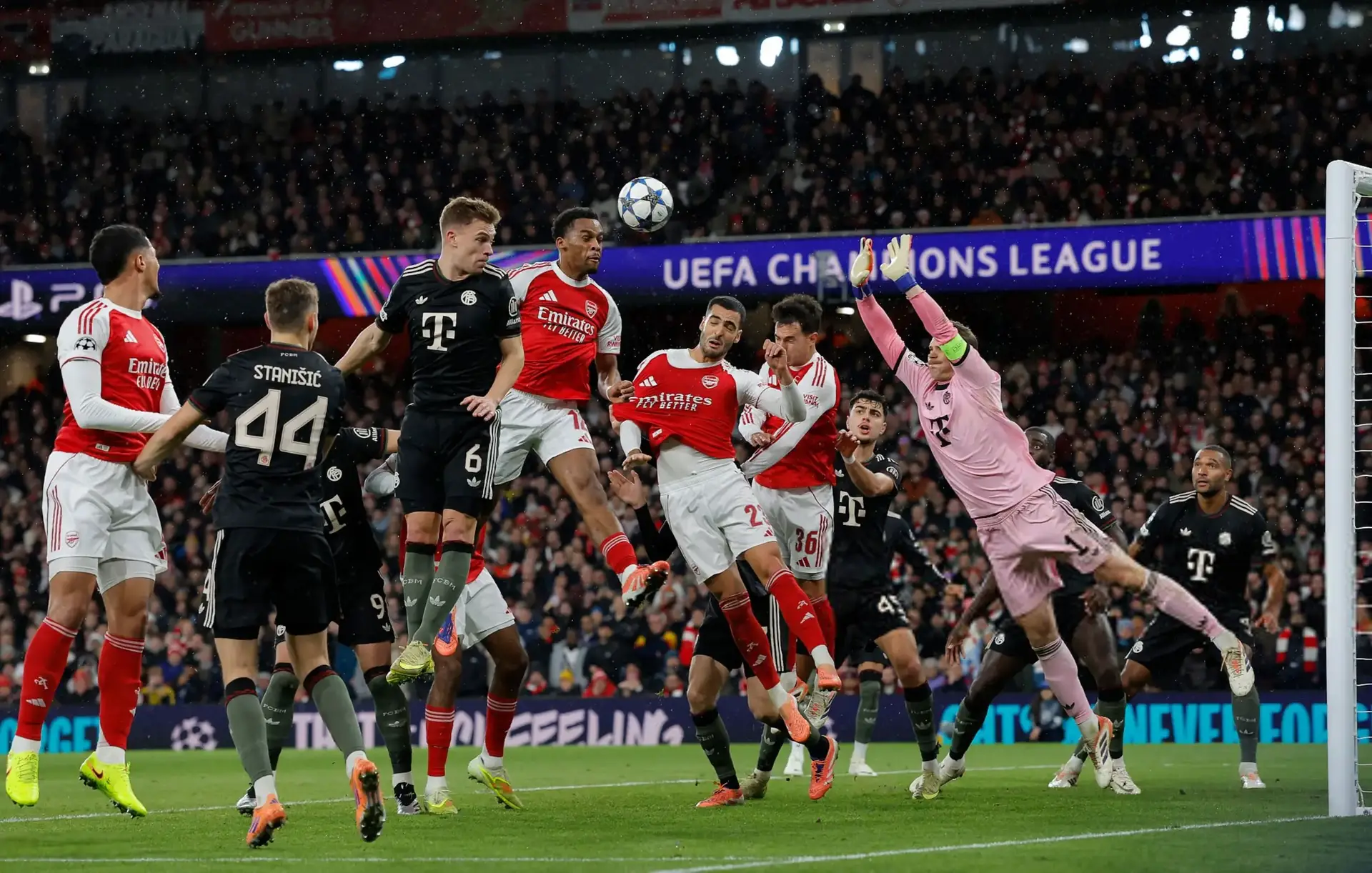
There are duels that feel big not only because of the names involved, but because they reveal something true about both teams. That is exactly the feeling surrounding this second leg between Bayern and Real Madrid. Bayern won the first match at the Bernabeu 2–1, and that result alone has already shifted the balance of the tie. Not only because Bayern now hold the advantage, but because the first leg showed that Real are not just facing another giant, but a side that, at this moment, knows exactly what it is, how it wants to play, and how to sustain pressure over long periods.
That is what makes this matchup so compelling. Real Madrid are a club that, over many years in the Champions League, have turned near-defeats into entire stories. This time, Bayern are testing that famous art of survival more severely than many teams before them.
The real question is not simply whether Real Madrid can turn the tie around. Of course they can. This is a team that has won too many European nights against the logic of the game to be written off in a knockout stage. The real question runs deeper. Will Real Madrid’s greatest strength — survival, resilience, the ability to wait for the moment when the game shifts — be enough when standing on the other side is not just another great name, but perhaps the most complete team in Europe today?
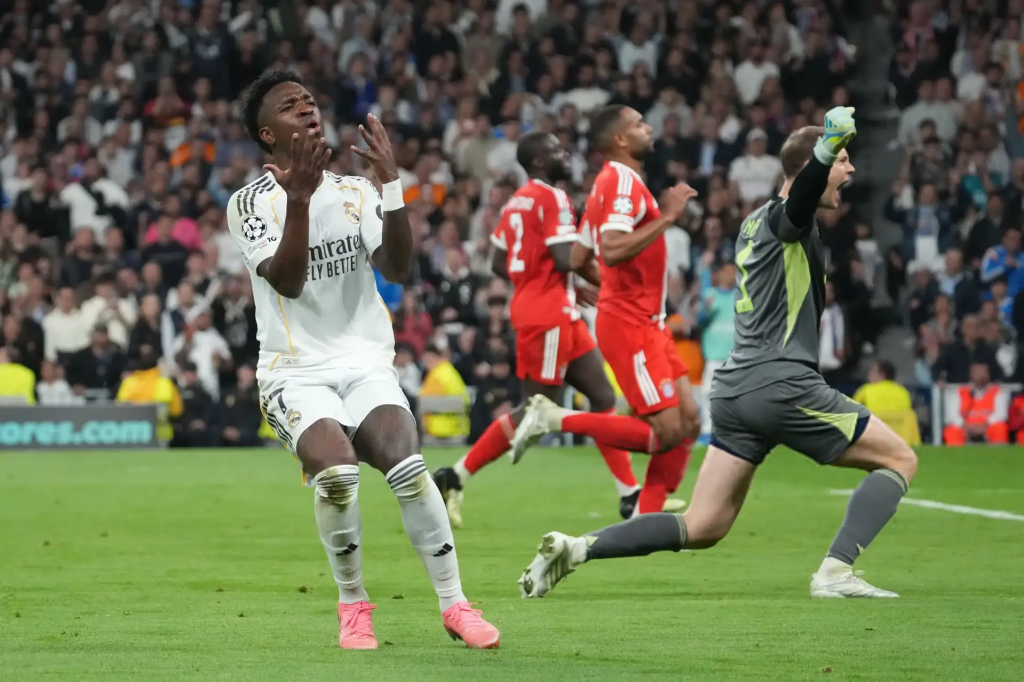
This is exactly where the intensity of this matchup lies. For Bayern, it is not only about reaching the semi-finals, but about confirming their own ambitions. For Real Madrid, it is something even more fundamental. It is about whether this club remains the same one that in Europe is defined not primarily by control, but by endurance, patience, and that almost insulting ability to snatch victory from games precisely when others already believe they are decided.
The real art of survival has never been just a myth – it is a genuine quality
When people talk about Real Madrid in the Champions League, they quickly fall back on the same phrases. This club never dies. This team is never truly finished. Madrid do not need much to turn a game around. These lines often sound like narrative convenience, sometimes even cliché. But in truth, there is something real behind them. Real Madrid’s greatest European strength in recent years has rarely been constant dominance. It has much more often been the ability to prevent games from slipping out of control, even when they are not going their way.
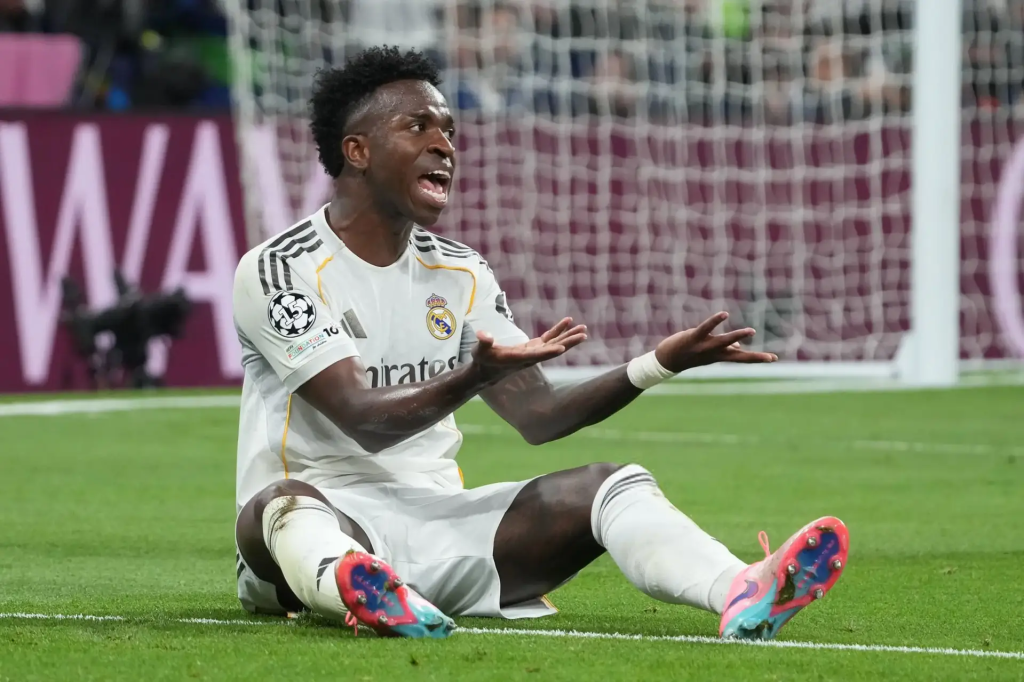
Real Madrid did not need to be the better team on many big European nights in order to remain the more dangerous one. That distinction is crucial. The team could suffer without collapsing. It could withstand phases of pressure from opponents without falling apart internally. It could concede possession, defend space, endure difficult stretches, and still maintain the sense that the game was not decided. This is where that almost mythical aura in Europe was born. But that aura was never pure magic. It was tied to a team that, in decisive moments, stayed calm and understood that knockout football is not always decided by the better plan.
That is why Bayern are the right opponent to truly test this strength. Many teams can put Real Madrid under pressure. Many teams can have stronger phases. Few can sustain that pressure for so long, so cleanly, and so rhythmically that even Madrid’s logic of survival begins to break down. That is what makes Bayern so dangerous.
It is not only Bayern’s strength that matters, but how awkward it is for Real Madrid
The 2–1 at the Bernabéu was not a random result explained by two or three isolated moments. Bayern did not win only through individual incidents, but because for long stretches they looked clearer. They had more rhythm, more structure, more cohesion in possession, and a sharper sense of how to move the game into their preferred zones. Bayern were not just brave — they were prepared. And that is exactly what makes the task so difficult for Real Madrid.
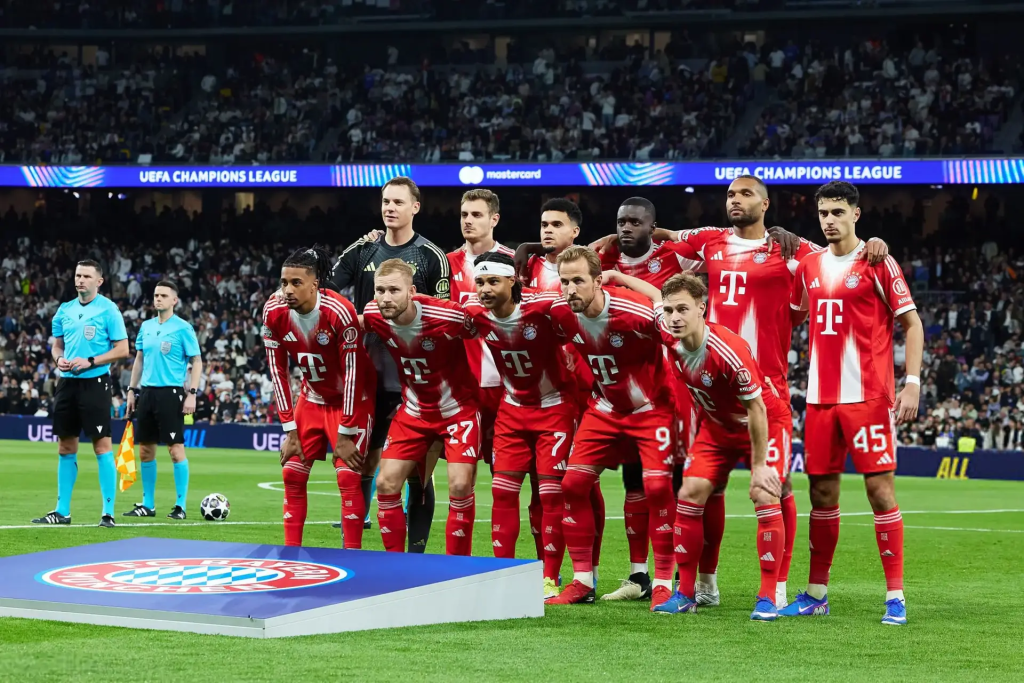
There are strong opponents who threaten Real Madrid through individual quality. There are others who rely on physical intensity. Bayern currently combine several elements at once. This team can produce long pressing phases without losing balance. It can compress the pitch territorially. It can occupy half-spaces, progress down the flanks, combine cleanly in the final third, and still possess enough individual quality to turn seemingly harmless situations into real danger. For Real Madrid, this is exactly the uncomfortable combination: not just an opponent with good players, but one that operates in multiple game states.
This is crucial in knockout matches. Real Madrid can cope with open games. Real Madrid can cope with chaos. They can even cope with deep defensive phases. But Bayern do not just force opponents into one state. They often force them to constantly switch between states: long spells of possession against them, then phases of second balls, then width and speed down the flanks, then transitions where space suddenly appears behind the first line. This is the particular brutality of this opponent. Real Madrid do not just need answers to a strong team — they need answers to a team that repeatedly changes the nature of the game.
Bayern’s current level makes this a tougher tie, but not a lost cause
On paper, the momentum initially leans towards Bayern. The team arrives with strong confidence for this second leg. The attack produces high numbers, the Bundesliga has been dominated with authority, and the first leg against Real Madrid was exactly the kind of performance that reinforces the feeling that Bayern are not only good right now, but coherent. That is why it would be too simplistic to frame this second leg as just another stage for a classic Madrid comeback. The situation is genuinely more difficult than in some of their famous European turnarounds.
And yet there is already an important counterpoint. Bayern are strong, but not flawless. That is precisely what this piece must make clear. Anyone describing Bayern as a perfect machine is not writing serious analysis, but a promotion. This team has weaknesses. The question is not whether they exist — it is whether Real Madrid can magnify them to the highest level in the second leg.
Arsenal exposed Bayern’s weaknesses against organised defensive pressure
One of the clearest examples of Bayern’s fragility was the 1–3 defeat to Arsenal. What mattered was not only the result, but the way Bayern lost. Arsenal were clearer, more active, and more dangerous in key zones. Bayern did not just concede three goals — at times they looked too open, too reactive, and above all vulnerable when Arsenal accelerated transitions and attacked space behind the defensive line.
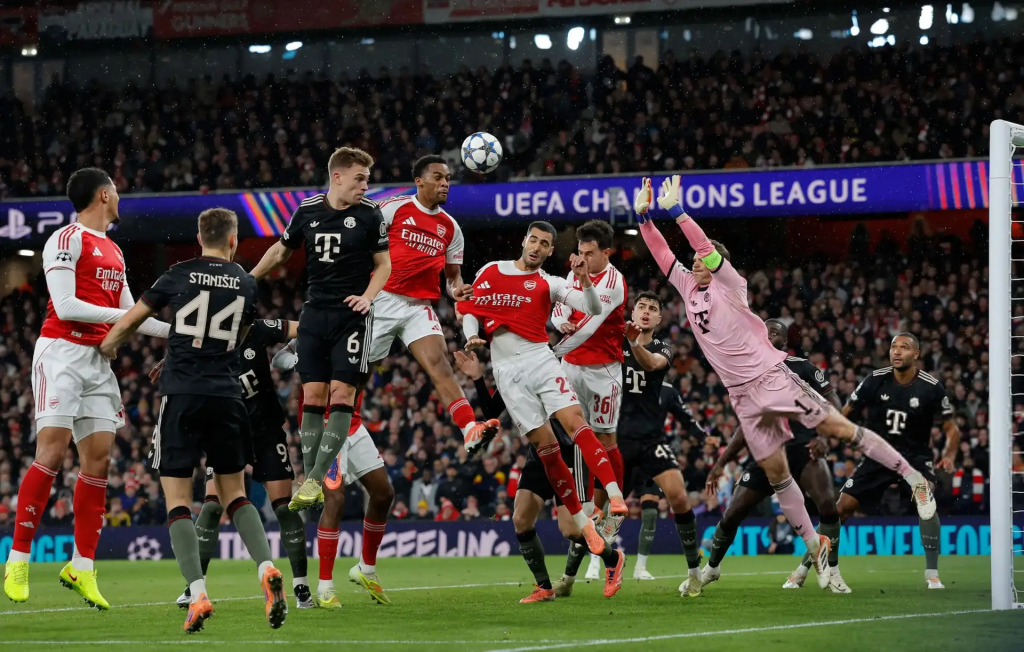
This moment is particularly interesting for Real Madrid. Bayern’s aggressive base positioning creates pressure, but in certain phases it also opens space. When the game is going in their direction, this is a strength. But if the opponent breaks the first line, wins second balls, or can accelerate into open space, that strength quickly turns into a risk. This was clearly visible in the match against Arsenal. Bayern lost too many transitional duels and were unable to properly control the dynamics on the flanks and in the spaces between the lines.
For Real Madrid, this observation is central. Because if there is one team in Europe that can instantly punish loose defensive structures, it is this one. Mbappé does not need many open chances. Bellingham does not need many gaps. And Valverde often only needs to win a second ball for a defensive action to turn into a Madrid counterattack. Bayern are not vulnerable because they are fundamentally unstable — they are vulnerable when their dominance is not fully secured.
Augsburg exposed another flaw: Bayern become less confident when the rhythm is broken
Perhaps even more telling than the defeat to Arsenal was the 2–1 loss to Augsburg. This was not about a European elite opponent, but something different: a game in which Bayern, after taking the lead, lost control and allowed the match to shift into a more physical, direct, and less structured direction. That is what made the game so revealing. Bayern still had possession, and still maintained structure in many normal phases — but it no longer helped when the match became emotionally chaotic and physically intense.
Augsburg won more direct duels, increased pressure, made the game uncomfortable, and pulled Bayern out of the clean rhythm in which they look strongest. This is an important signal for Real Madrid. Bayern look impressive when the game flows their way. But they become more vulnerable when opponents disrupt the rhythm, aggressively contest second balls, and force Bayern into longer defensive phases without perfect organisation.
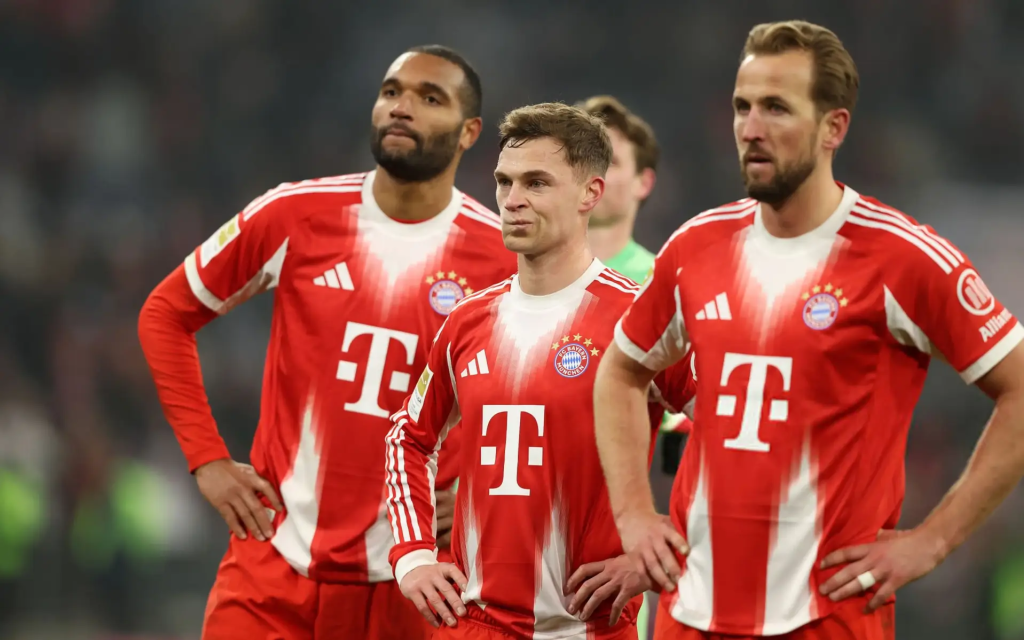
That is why the second leg for Real Madrid is not necessarily tied to a single condition. Madrid do not have to control Bayern for ninety minutes. They may not even need longer periods of superiority. But they do need to find ways to disrupt Bayern’s clear rhythm and exploit the transitional spaces this team inevitably offers when it raises its pressing intensity to the maximum.
Real Madrid do not need an aesthetically better plan, but the right tactical approach
This is perhaps the most important analytical point from a Madrid perspective. Real do not need to win the second leg through dominance. They do not need to win through possession. They may not even need to be the “better team” in terms of overall play. Their path lies elsewhere: in the ability to withstand Bayern’s strong phases without damage, and then punish open moments with maximum efficiency.
That is where hope emerges. Bayern will again have phases in which they look clearer. They will again push Real deep into their own half or force them into long defensive spells. The question is whether Madrid simply defend in those moments, or are already waiting for the instant when a turnover creates space. Real Madrid have lived in Europe for years not by reacting to the flow of games, but by exploiting their weak points. And Bayern will offer those openings — not constantly, but often enough.
The simplest path to Madrid success would not be to take Bayern’s game away entirely. The more realistic path would be to allow Bayern just enough control for them to commit forward — and then extract decisive space from that. It sounds passive, but it is not. It is another form of control: not control over every pass, but control over the moments that actually decide knockout matches.
Mbappe matters – but he may not be the true key
Of course, every major Real Madrid match will first be discussed through Mbappe. And that is understandable. He is the player who can turn a single open space into an entirely new game. If Bayern push too high, if their rest defence is even slightly stretched, or if a second ball can be played forward instantly, then Mbappe becomes the most ruthless presence on the pitch.
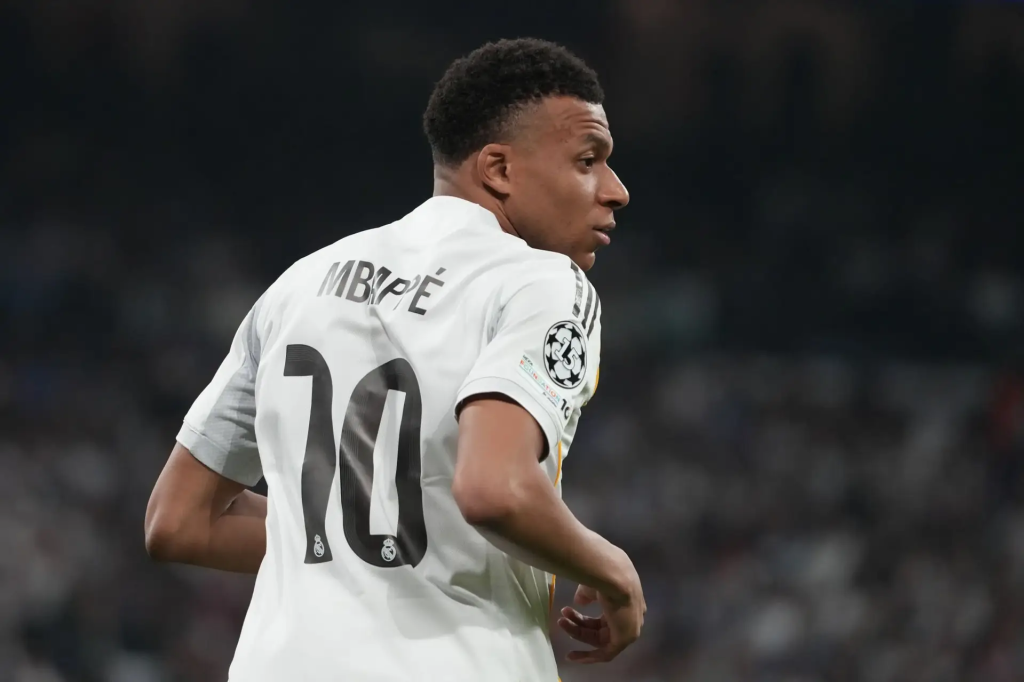
But that is precisely why another player may be decisive. Federico Valverde could be structurally even more important in this second leg than any pure superstar — not because he is more spectacular, but because he connects exactly what Madrid need: survival and counterattack, pressing resistance and the first vertical impulse, chaos and order.
Valverde closes lanes, tracks runs, intercepts transitions, and can still instantly create depth from ball recoveries. If Real Madrid want to change the game not through elegant control but through ruthless efficiency, then they need exactly this kind of player. Bellingham will be decisive for his presence between the lines. Mbappé for the open spaces. But Valverde could be the player who turns Bayern’s pressure into the very situations where Madrid can strike.
In games like this, Bellingham is not a bonus – he is a necessity
Against Bayern, Real Madrid need players who do not only decide isolated actions, but who can connect phases of the game. That is why Bellingham is so important: he does not operate only in the final third, but stretches the entire match. He can carry the ball from deep areas, appear in half-spaces, make penalty-box runs, and still maintain balance during pressing phases.
When Bayern inevitably increase sustained pressure again, Real Madrid need someone who not only produces a single decisive moment, but enables the transitions between phases in the first place. Bellingham is almost perfect for that role — not a classic playmaker, and not just a finisher, but one of those players who can subtly shift a knockout tie in multiple directions at once.
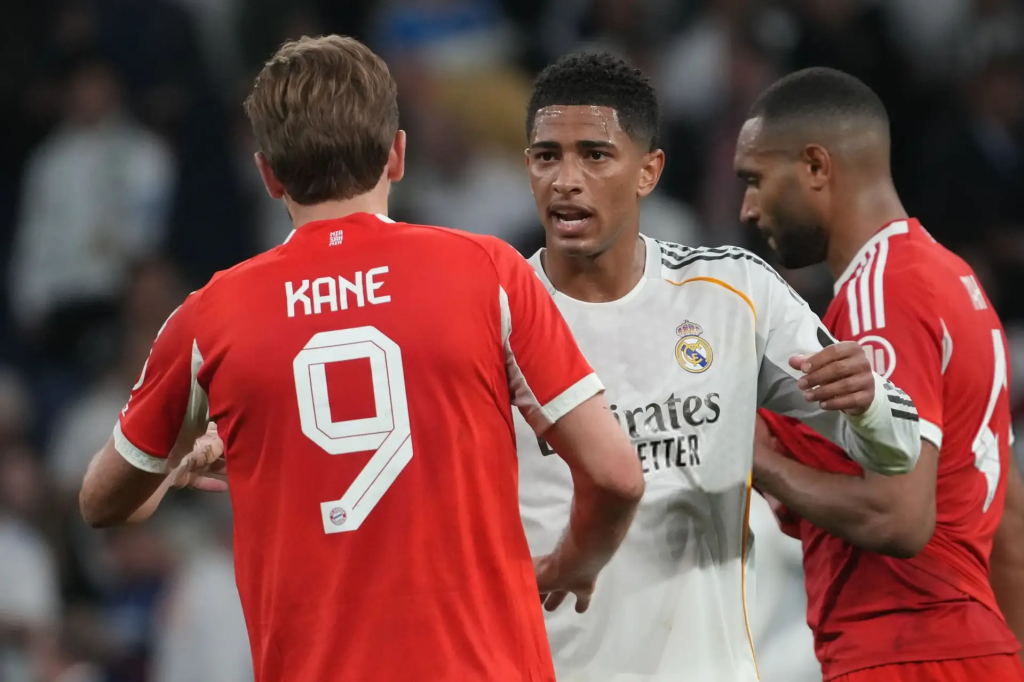
To avoid this matchup sounding like a purely bleak diagnosis, the other side must also be clearly stated: Real Madrid can absolutely win this second leg. Not out of courtesy or myth, but for concrete footballing reasons.
Firstly, because Bayern offer open moments. The defeats against Arsenal and Augsburg show that this team can become vulnerable under sustained pressure phases from the opponent or when its rhythm is disrupted. Secondly, because Real Madrid have exactly the players to punish Bayern’s attacking intent — Mbappé, Bellingham, and Valverde are perfectly suited to exploit those spaces. Thirdly, because the second leg can drift into that psychological zone where Bayern’s structural clarity becomes less valuable than Madrid’s experience in chaotic knockout situations.

Real Madrid do not need to suddenly become a more structured team. They do not need to dominate the game. It may already be enough to make Bayern impatient at key moments. An early goal, a match that becomes more tense, more second balls, more open runs, more emotion in the stadium — all of this pushes the tie in a direction where Madrid’s European identity is at its strongest.
This is where the next important line must be drawn. Real Madrid can turn this around. But it will not be easy for a long time. And that is exactly what separates this tie from some other famous European comebacks.
Bayern are not a fragile team of leaders. They are not a side that collapses at the first sign of difficulty. At the moment, they are not only dominant, but also resilient. That is why it would be wrong to treat this as a classic “Bernabéu miracle” scenario that almost writes itself. Bayern bring not only quality, but also consistency — and that habit makes Madrid’s task so difficult.
The structural difference remains: Bayern are currently the clearer team. This does not mean they will automatically go through. But it does mean Real Madrid cannot rely on their opponent becoming disorganised by themselves. Madrid will not only have to withstand Bayern’s strong phases, but actively neutralise them. And that is difficult at this level.
The Freiburg night was a warning for Madrid: Bayern can come back even from difficult situations
Anyone who sees Bayern only as a dominant but nervy team is also ignoring an important signal from recent weeks. In the 3–2 win against Freiburg, Bayern were trailing 0–2 until the final minutes, before turning the game around with three late goals. This was not just an emotional comeback. It was also a statement: this team can respond in critical moments. They do not automatically lose composure when the game goes against them.
Especially in the second leg, this becomes even more important. One of Real Madrid’s classic comeback patterns is to unsettle the opponent early, disrupt their emotional balance, and then strike repeatedly in the moments that follow the first break in structure. Against many teams, this works. Against this version of Bayern, even that pathway is not straightforward. The night in Freiburg showed that Bayern can recover their belief even from disadvantageous situations.
This makes the second leg even more compelling. Real Madrid are not playing against a cold, administrative opponent, nor against a nervous favourite. They are playing against a team that currently combines both qualities: dominance and resilience.
The real greatness of this matchup comes from the clash between modern football and European memory
Perhaps the essence of this tie can be expressed as follows: Bayern represent modern football; Real Madrid represent the memory of how Europe still sometimes works.
Bayern are the team with the clearer structure, higher tempo, more consistent pressing, and a more complete collective game. They look like one of the best examples of modern elite football when structure, quality, and rhythm align. Real Madrid symbolise something else. They represent the idea that in Europe, it is not always the better-executed team that wins. That knockout matches can shift even when one side appears more organised. That experience, composure, and patience can take on a force that is difficult to explain through conventional logic.
That is why this second leg is more than a sporting contest. It is a collision between two versions of truth. The current truth is that Bayern look more complete. And the older Champions League truth is that Real Madrid can still turn even the most logical game into something unpredictable.
Who is the favourite? The answer is straightforward for some, but more dangerous than Bayern fans might think
If everything is brought together, the conclusion remains uncomfortably clear yet complex: Bayern are the clear sporting favourites. Not because of the name, and not because Real Madrid have lost their aura, but because Bayern currently bring more structure, more form, and more attacking clarity onto the pitch.
But against Real Madrid, the status of favourite is always the least comforting label. Madrid do not need perfect control to overturn a tie like this. They only need enough life in the game, enough open space, enough emotional instability, and enough players capable of exploiting those moments with ruthless efficiency. And that is where Bayern become vulnerable.
Put simply: Bayern are the better team right now. Real Madrid remain the team that can turn even the most logical verdict into a bad prediction.
In the end, everything comes down to one question: can Real Madrid, against an opponent like Bayern, still do what has so often made them unbreakable in Europe? Can they absorb long periods of pressure, wait long enough, and then turn the tie in the few moments when everything opens up?
If they do, they will once again confirm their unique status in Europe. It will again be clear that even the strongest team of the moment is not immune to Madrid’s brutality in knockout nights. But if they fail, this second leg could become the moment when one of the club’s most famous qualities reaches its limit — not against just any opponent, but against a Bayern side that may be the first capable of breaking Real Madrid’s survival model.
And that is exactly why this second leg is so big. Not only because Bayern lead. Not only because Real Madrid are still alive. But because it may decide whether Madrid’s greatest European strength still holds at its historical level — or whether Bayern are already strong enough to dismantle it.
Source: Olga Kravchenko