

The Black Stars Are Ready, Now They Have to Prove They Have Evolved
Evolution or Stagnation — Ghana’s Moment of Truth
Football is evolving fast, with tactical sophistication, data-drivenpreparation, and early talent development raising the bar globally. The teams that can’t keep up risk being left behind. For Ghana, the 2026 World Cup is an opportunity to demonstrate that the country is adapting to thechanges and challenges of modern football and that a new era is beginning.
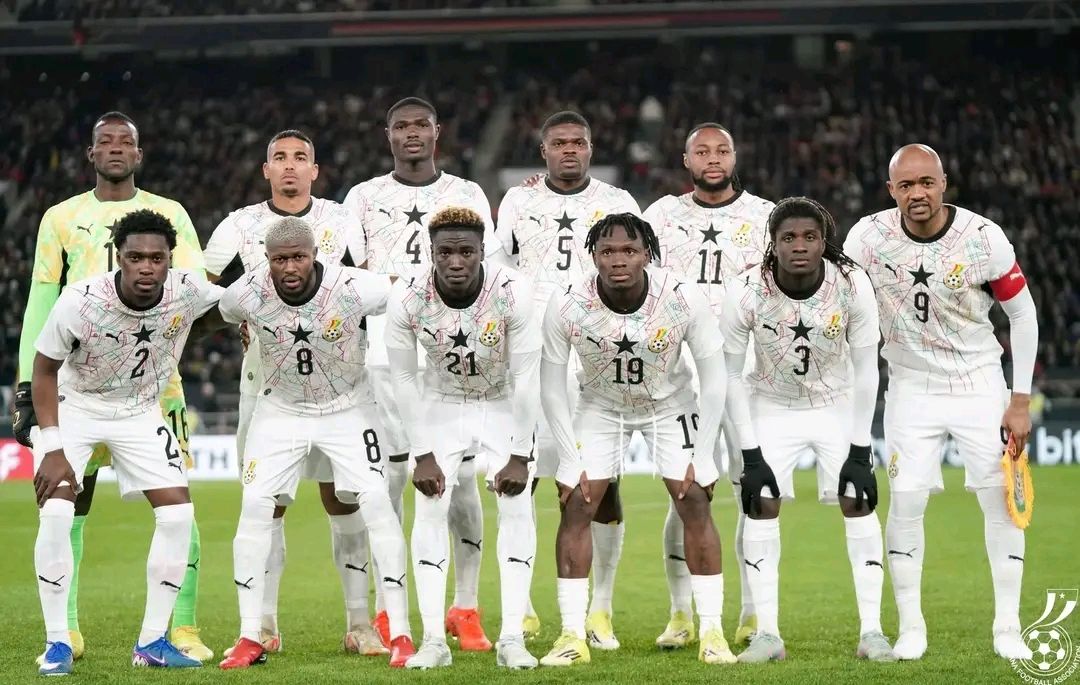
The Black Stars have appeared at four World Cups, with their 2010 campaign in South Africa standing as the high watermark — a quarterfinalrun that ended in heartbreak against Uruguay and remains one of the mostmemorable stories of that tournament. This will be their fifth appearance, and the expectations surrounding this squad are higher than they’ve been in years.
Ghana secured qualification through a strong African qualifying campaign, and the Ghana World Cup 2026 squad reflects the depth of talent thisgeneration has produced. Mohammed Kudus at Tottenham, Antoine Semenyo at Manchester City, Thomas Partey at Villarreal, and KamaldeenSulemana at Atalanta — these are players competing regularly at the highestlevel of club football in Europe. That profile is the clearest evidence yet thatGhana in the World Cup is entering a new chapter, one defined by technicaland tactical quality rather than purely physical attributes.
The most significant and controversial indicator of that shift was thedecision to fire Otto Addo. Despite Addo being the manager who had led the team to qualify for the 2026 tournament. To replace him, the Federationhired Carlos Queiroz, a coach who has taken part in five consecutive World Cups, previously managed Real Madrid and Manchester United, and specializes in developing tactical frameworks for major tournaments. Werecognize the sound rationale behind this coaching change.
How Important Is This World Cup for Ghana’s Long-Term Football Development?
The stakes extend well beyond the pitch since a strong campaign wouldaccelerate investment in Ghanaian football at every level, infrastructure, grassroots development, and commercial partnerships. FIFA’s financialstructure already guarantees $9 million to Ghana just for qualifying, plus anadditional $1.5 million for preparation costs. A deep run multiplies thatfigure and, more importantly, multiplies the attention.
What Has Changed in Ghana’s National Team Since the Last World Cup?
If we look at the World Cup 2026 guide, the transformation since the lastWorld Cup has been significant, though not without turbulence. A humiliating 5-1 defeat away to Austria, followed by a 2-1 loss to Germany, ended Addo’s tenure and forced a reset. But the squad that has emerged from that difficult period looks better balanced — experienced Ghana players for 2026 World Cup alongside emerging talent, a more definedtactical identity, and a coaching staff with genuine international pedigree.
The one concern heading into the tournament is the failure to qualify for theAfrica Cup of Nations, which denied the squad competitive matches at a critical preparation stage. It’s a gap in the calendar that Queiroz will need tohave managed carefully before going into action.
What Role Could Ghana’s Young Players Have in theTournament?
Ghana’s young players for the 2026 World Cup are strategically importantbeyond the starting eleven. Queiroz is likely to use the group stage to rotateintelligently — deploying younger options against Panama, the mostaccessible opponent in the group, before unleashing the senior playersagainst England and Croatia. It would be a sensible approach, and the youngplayers involved are capable of handling it. Abdul Fatawu, the 22-year-old Leicester City winger, is one of the most dangerous attacking threats in thesquad — explosive, direct, and capable of beating defenders in tight spaces.
Who Are the Key Leaders Expected To Guide Ghana at the 2026 World Cup?
Jordan Ayew is the emotional spine of this team. At 34, he has spent 15 years in the national setup, played at Brazil 2014 and Qatar 2022, and arrives at this tournament with one remaining ambition — scoring at a World Cup. He contributed important goals during qualifying and remainseffective at club level with Leicester. Alongside him, Antoine Semenyo has emerged as one of the squad’s most exciting figures after a breakthroughseason at Manchester City.
The Ghana World Cup 2026 campaign carries a heavy weight for thecountry since a group stage exit would be a disappointment for a squad withthis quality. While advancing would validate the federation’s decisions, accelerate investment in the sport, and confirm what many who followAfrican football already believe, that the Black Stars are no longer justparticipants at this level. They’re contenders.