

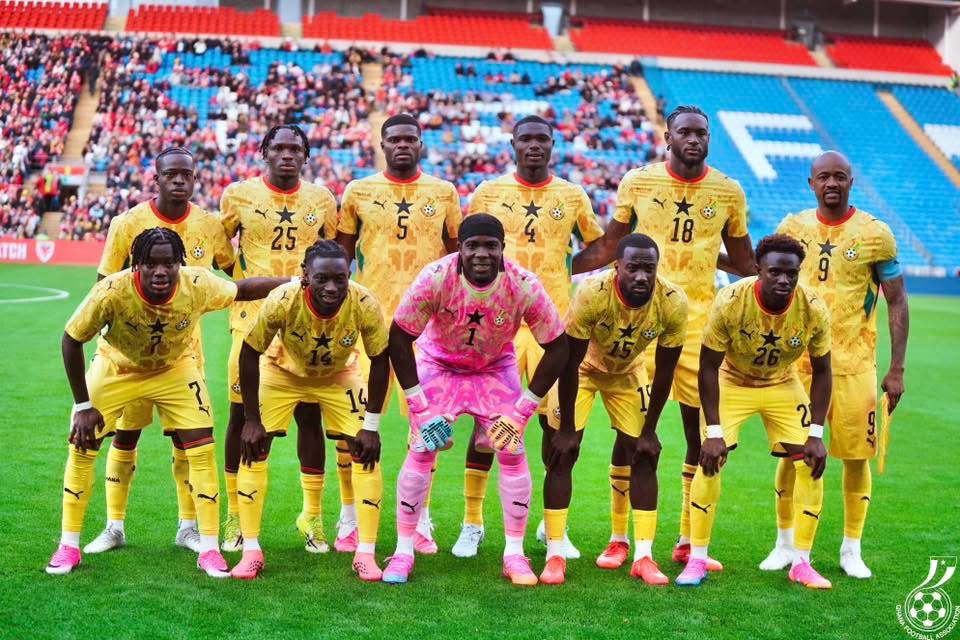
Ghana’s final preparatory match before the 2026 FIFA World Cup ended in a 1-1 draw against Wales in Cardiff. While the result itself may not have set pulses racing, the performance offered plenty of talking points for coach Carlos Queiroz as he continues shaping his preferred starting eleven ahead of the tournament opener.
From impressive individual displays to lingering concerns in key areas, here are 13 major observations from the encounter.
1. Lawrence Ati Zigi Delivered a Goalkeeping Masterclass
If there was one player who significantly boosted his World Cup credentials, it was Lawrence Ati Zigi. The St. Gallen goalkeeper produced arguably his finest performance in a Black Stars shirt, especially during a first half in which Wales repeatedly threatened.
His shot-stopping, command of the penalty area, positioning, and composure under pressure were all exceptional. He made several crucial interventions that kept Ghana in the game and showed the kind of confidence expected from a first-choice goalkeeper at a World Cup.
For many observers, this performance may have settled the debate regarding Ghana’s number one spot heading into the tournament.
2. Benjamin Asare Faces an Unfortunate Reality
Benjamin Asare had little opportunity to influence proceedings after replacing Ati Zigi. Wales did not create many clear openings during his time on the pitch.
However, the one decisive moment came in stoppage time when Lewis Koumas found the equaliser. While opinions differ on whether Asare should have done better, the defending in front of him was far from ideal.
Still, football can be cruel. Goalkeepers are often judged by decisive moments, and unfortunately for Asare, the late goal may overshadow the fact that he had very little involvement otherwise.
Verdict: Ati Zigi vs Asare
Based solely on this match, Ati Zigi was comfortably the superior performer. His display was influential, commanding and potentially career-defining.
3. Marvin Senaya Continues to Impress
Marvin Senaya’s rise within the Black Stars setup has been one of the pleasant surprises of recent months.
Against Wales, the French-born defender once again demonstrated why coaches increasingly trust him. He defended aggressively, recovered possession effectively and constantly provided an attacking outlet on the flank.
His work rate stood out throughout the first half as he covered enormous distances both offensively and defensively.
Most importantly, Senaya continues to show consistency. Since making his debut for Ghana in March, he has rarely looked out of place. That reliability could become invaluable during the World Cup.
4. Jerome Opoku Quietly Got the Job Done
Jerome Opoku is not the type of defender who attracts headlines through flashy moments. Instead, he thrives on solid, disciplined defending.
The towering centre-back handled aerial situations confidently and looked comfortable dealing with Wales’ physical forwards.
His height and strength could prove especially important against teams such as England and Panama, who frequently utilize crosses and set-piece situations.
Sometimes the best defenders are those who go unnoticed. Opoku’s performance fell into that category.
5. Kamaldeen Sulemana’s Questions Remain Unanswered
Kamaldeen Sulemana remains one of Ghana’s most gifted athletes. His explosive pace is undeniable.
However, football at the highest level requires more than speed.
Against Wales, his decision-making, final ball and overall effectiveness left much to be desired. There were moments when he found himself in promising positions but failed to make the most of them.
At 24 years old, discussions about “potential” are becoming increasingly difficult to justify. Ghana needs production, not merely promise.
Unless the coaching staff sees a specific tactical role for him, his place in the strongest starting lineup remains questionable.
6. Jordan Ayew Is No Longer the Same Player
Jordan Ayew remains one of Ghana’s most important players, and his qualification campaign statistics speak for themselves.
Seven goals and seven assists during qualification underline his value.
However, the version of Jordan seen against Wales looked different from the one who terrorized opponents during qualification.
His hold-up play, once a major weapon, now appears slower and less effective. His decision-making has also become less sharp, and the loss of pace is increasingly noticeable.
While his experience remains valuable, Ghana must carefully consider whether he fits the quick-transition style Carlos Queiroz appears eager to implement.
7. Ernest Nuamah Edges Fatawu Issahaku
Both players offer excitement and unpredictability, but Ernest Nuamah appeared more effective against Wales.
His direct running troubled defenders and injected urgency into Ghana’s attacks.
Fatawu Issahaku showed flashes of quality but occasionally held onto the ball for too long, allowing Wales to recover their defensive shape.
That said, Nuamah is still working his way back to peak condition following a lengthy injury absence.
The competition between both wingers remains one of the most fascinating battles within the squad.
8. Gideon Mensah Strengthened His Claim
Gideon Mensah delivered a solid and dependable performance at left-back.
He balanced his defensive responsibilities well while also contributing when Ghana moved forward.
The concern with Mensah has never been his ability; it has been consistency. On some occasions he can be excellent, while on others he can struggle badly.
Fortunately for Ghana, Cardiff witnessed one of his better performances.
9. Baba Rahman’s Return Was Mixed
After years away from the national team setup, Baba Rahman finally made his return.
For much of the game, he was relatively untroubled. Wales rarely attacked down his side with sustained intensity.
Unfortunately, the lasting image from his return may be his involvement in the build-up to the Welsh equaliser, where he was beaten during the move that ultimately led to the goal.
It was not a disastrous performance, but it certainly was not a flawless comeback either.
10. Thomas Partey’s Situation Is Becoming Concerning
Perhaps the most worrying individual storyline surrounds Thomas Partey.
At his best, Partey controls games through intelligence, anticipation and technical quality. Against Wales, however, those qualities were largely absent.
His passing lacked authority, his movement appeared laboured and his usual ability to dictate tempo was missing.
The lack of regular club football seems evident.
The challenge for Carlos Queiroz is obvious. Partey remains one of Ghana’s most experienced and talented players, yet his current form does not justify automatic selection.
It is a dilemma that could define Ghana’s tournament.
11. Caleb Yirenkyi Announced Himself on the Big Stage
Few players enhanced their reputation more than Caleb Yirenkyi.
The young midfielder showcased energy, creativity, intelligence and maturity beyond his years. His goal capped a performance that highlighted exactly why many have tipped him as Ghana’s breakout star.
His ability to drive forward, create opportunities and influence play from midfield was particularly impressive.
Former Ghana captain Michael Essien, who watched from the stands, would have been encouraged by comparisons linking Yirenkyi to his own style of play.
One thing is becoming increasingly clear: Yirenkyi belongs in this team.
12. Jonas Adjetey Responded to His Critics
After receiving criticism for previous displays against Germany and Austria, Jonas Adjetey needed a strong response.
He delivered one.
The defender looked composed, organized the backline effectively and won numerous duels throughout the match.
There is still room for improvement in possession, where he occasionally lacks confidence, but overall this was a much-needed confidence-building performance.
13. The Team Looked More Comfortable Overall
Beyond individual performances, there were encouraging signs regarding the team’s collective play.
After a nervous opening 15 minutes, Ghana settled into the contest and began enjoying longer spells of possession.
The players looked calmer on the ball, more structured defensively and more willing to build attacks patiently.
Compared to some recent performances, there was noticeable progress.
However, improvement should not be confused with readiness.
+1. Are Ghana Truly Ready for the World Cup?
The simple answer is no.
This draw should not create unrealistic expectations.
There were positive signs. There were standout individual performances. There was evidence of tactical progress.
But there were also visible weaknesses, particularly in midfield creativity, defensive concentration and attacking efficiency.
What this result does provide is something equally important: belief.
The Black Stars avoided defeat, competed well against a capable European opponent and showed resilience. For a team that had become accustomed to disappointing outcomes under previous management, that psychological boost could prove valuable.
Carlos Queiroz still has significant work ahead of him before Ghana’s World Cup opener. But for the first time in a while, there are genuine reasons for cautious optimism.
The road to North America continues, and Cardiff may ultimately be remembered as an important step in Ghana’s preparation rather than merely another international friendly.